Click to watch (08:41) or scroll down to read more
Hey there, innovation champions!
Loud Enough for Earplugs
I just spent four days in Austin at my third Influence — the National Speakers Association’s annual conference. Eight hundred speakers in one hotel. An introvert’s nightmare, honestly.
The noise in the grand ballroom got so loud from overlapping conversations that I pulled out the concert earplugs I keep in my handbag for loud music venues — just so I could hear myself talk at my own table.
The Moment I Noticed What I Already Knew
Every year I’ve gone to this conference, I’ve come home with a notebook full of things to learn. New tactics. New frameworks. New ways to grow the business.
This year, flipping back through my notes, I noticed something different: how much of it I already knew.
More than once, I walked into a breakout session, sat down, and within ten minutes realized it wasn’t what I needed. Past Melissa would have stayed anyway — because leaving felt impolite, and finishing what you start felt like the responsible thing to do.
Present Melissa got up and left. Even knowing the next session might be a dud too.
Permission to Leave
Here’s what I’ve come to believe: staying in something that isn’t working, purely so it looks like commitment, isn’t discipline. It’s just a slower way of learning the same thing you already knew ten minutes in.
The useful question was never “should I have stuck it out?” It was “what would I do differently, right now, with what I just noticed?”
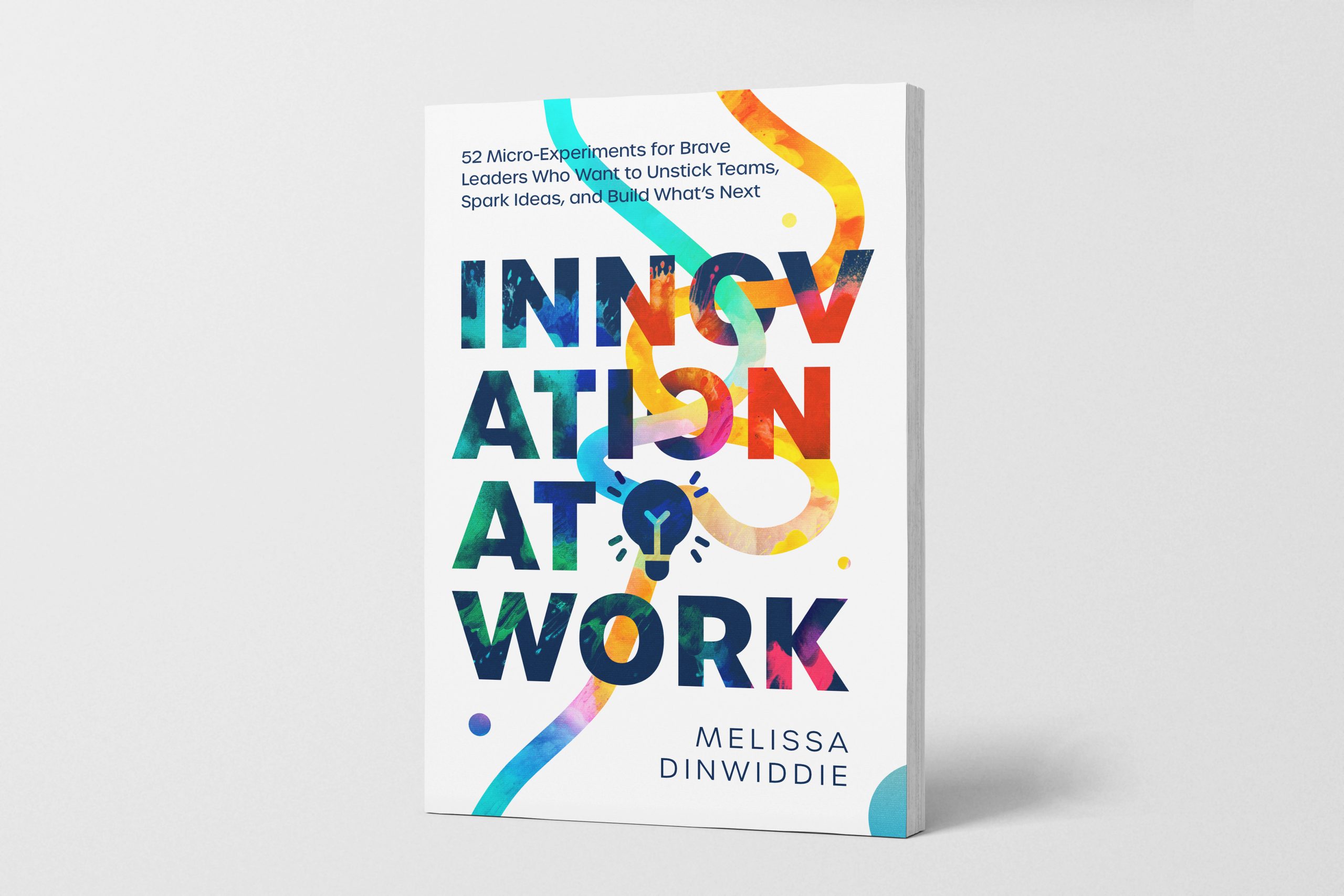
That’s not a new idea I picked up in Austin. It’s Experiment #5 from my book, Innovation at Work, and it’s one I use on myself constantly.
🧪 Steal This: The Learning Autopsy (Experiment #5)
⏱ Time: 10–15 minutes 👥 Works solo or with a team 🏠 Remote-friendly: Yes
The setup: After any setback — a session that flopped, a project that stalled, a conversation that went sideways — ask one question: “What would we do differently if we could replay this?”
Not “whose fault was it.” Not “what went wrong.” Just: what’s the adjustment?
Why it works: Blame shuts people down. Curiosity opens them up. Teams that default to autopsy over blame build the kind of psychological safety that makes people willing to try the next thing — instead of quietly protecting themselves from the last one.
I ran a version of this on myself in real time, in a hotel conference room, in under sixty seconds: This isn’t landing. What would I do differently? Leave. Try the next one. No committee meeting required.
The Real Reason I Go
Here’s the thing about conferences: the content, I can get online. The connections are the actual reason I show up.
So at every meal, I played a small game with myself: put my plate down at a table full of strangers, and nudge my introvert self into a conversation.
Some of those conversations were duds. Most were perfectly pleasant. A few turned into the kind of connection that makes the whole trip worth it.
That’s the same math as the Learning Autopsy, really. You don’t know which table, which session, which conversation is the one — until you’ve tried it, noticed what happened, and adjusted. Fast.
Where This Shows Up at Work
I see the “stay out of politeness” instinct constantly with teams — the meeting that’s clearly not productive but nobody ends early. The project update everyone privately knows isn’t working, but no one names it out loud. The initiative that’s quietly failing while the team keeps “giving it more time.”
Giving people explicit permission to run a fast, blameless autopsy — and act on it — is one of the simplest ways I know to build a team that actually learns instead of just enduring.
If you’re sitting on a team that’s polite about problems instead of fast about fixing them, that’s exactly the kind of thing I’d love to dig into with you.
👉 Book an Innovation Strategy Session and let’s talk about where your team might be staying too long in something that isn’t working.