
Click to watch (09:55) or scroll down to read more
Hey there, innovation champions!
The Compliment I Almost Just Took
Sunday morning, I led songs at a Flag Day event. Afterward, a woman who sings in my father’s choir came up to me.
“You have such a strong voice,” she said. “You’re a wonderful song leader.”
I said thank you — I’ve trained myself to actually receive a compliment instead of deflecting it. But then, because she’s a singer too, I told her something most people don’t want to hear.
“This voice,” I said, “isn’t natural. It’s the product of about fifteen minutes a day, for years.”
She looked at me like I’d grown a second head.
Singing Gets a Free Pass (And It Shouldn’t)
Here’s the strange thing about how we think about skill.
Nobody’s surprised that guitar takes practice. Or piano, or trumpet. We accept that fingers — and lips, and lungs — need training before they do anything useful with an instrument.
But everyone is born with a voice. We’re singing “Twinkle, Twinkle, Little Star” in nursery school. So somewhere along the way, we decided singing must be different: either you have it, or you don’t.
I had some of it — decent pitch, decent timing, right out of the gate. What I didn’t have was a voice that worked above a certain point. The moment I crossed into what singers call head voice, my sound thinned out to almost nothing. So for years, I just avoided those notes.
Fifteen Minutes Nobody Saw
Eventually I started working with a vocal coach who had zero interest in letting me keep avoiding my head voice.
She gave me exercises — daily, about fifteen minutes — built specifically to strengthen the muscles in that register. I didn’t believe it would work. I remember thinking, politely, that she was wrong.
She told me that one day, the gap between my chest voice and my head voice would simply stop being a gap. The two would blend.
It took a few years. Fifteen minutes, most days. And then — she was right. The blend just showed up.
Talent Story vs. Training Story
Most of us are walking around with two competing stories about how skill works.
The Talent Story says: some people have it, some don’t, and the gap is permanent. Either your voice is good or it isn’t. Either your team is innovative or it isn’t.
The Training Story says: the gap is just untrained range — and it closes, not through one big event, but through small, specific reps, repeated until the blend appears.
Every team I’ve worked with is operating on the Talent Story by default, even when nobody would say it out loud. “We’re just not a creative team.” “Innovation isn’t really our culture.” Sound familiar?
That’s not a culture problem. That’s an untrained head voice.
What Happens After the Offsite Ends
When a leader gets handed an innovation mandate, the instinct is almost always the same: go big. Book the venue. Plan the three-day offsite. Bring in a speaker (hi). Generate the energy.
I love designing and facilitating these days — and from the feedback I get, people leave them genuinely lit up. That energy is real.
It’s a lot like a great music workshop, or the music camps I go to for a week over the summer. You walk in at one level, and by the end of the immersive experience, you can suddenly do things you couldn’t before. The breakthrough happened. Nobody imagined it.
Here’s the part nobody likes: if there’s nothing to practice between now and the next time you try, that new level you’ve achieved doesn’t stick. The workshop didn’t fail — it just didn’t have anything to land on.
Then Monday hits, the backlog is still there, and the “innovation culture” quietly fades— not because the big day was wrong, but because nothing was built to catch what it unlocked.
I’ve watched that opening crack happen in as little as 45 minutes — most memorably with 125 project managers who would have told you, accurately, that “play” had nothing to do with their jobs. No slides. Just structured experiments. By the end, something had genuinely shifted. The room felt different.
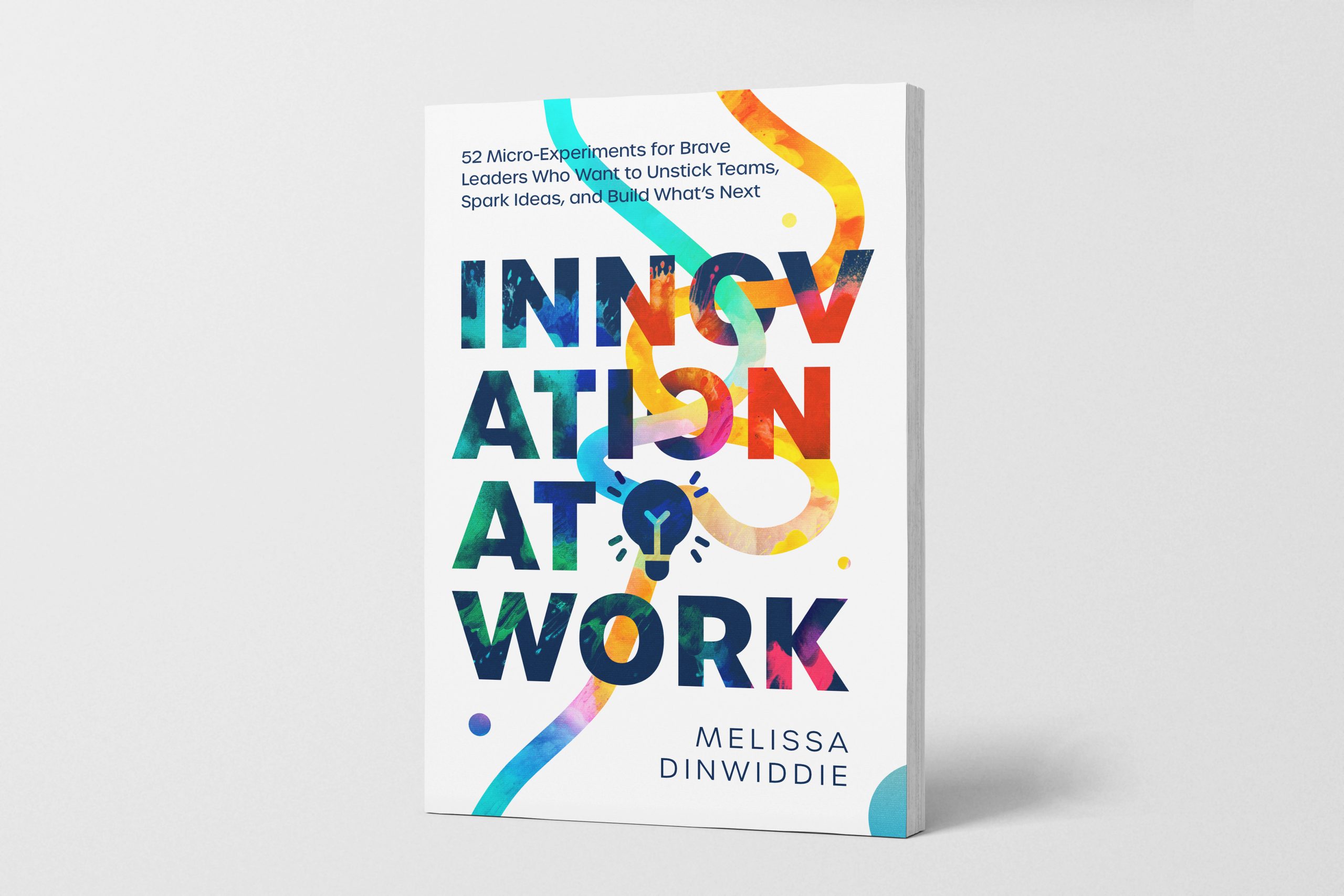
That’s the power of the right concentrated experience. What the book is designed to answer is the question nobody asks in that moment: what do you do on Tuesday?
Closing
I think about that woman’s face a lot — the two-heads look. It’s the same look I get from leaders when I tell them the offsite isn’t the finish line. It’s the kickoff.
The fifteen minutes — on purpose, on a schedule, for longer than feels reasonable — is what turns a great day into a lasting capability. Skip it, and the energy is real but temporary. Build it in, and the big day becomes the moment everything else clicks into place.
Innovation isn’t a value. It’s a practice. And the best offsites are where that practice gets its running start.