Quick note: I had an amazing time facilitating an interactive session in Oakland for PMI San Francisco Bay Area this weekend! And October 8 I’m leading a virtual session for AMA New Jersey on “Communicating for Influence: A Taste of the Toolkit.” It’s a busy week!
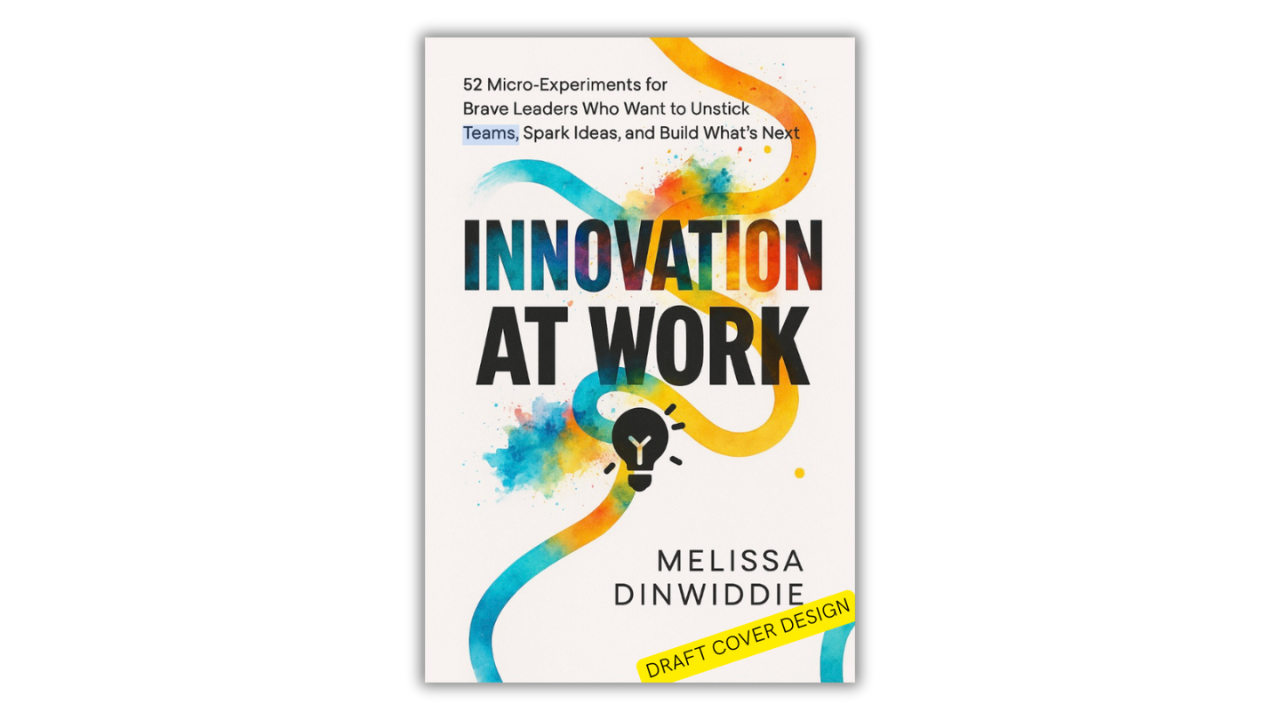
No video this week, aside from client work, I’m head-down working on my second book, Innovation at Work. I’ve cleared my calendar to devote every spare minute to book production, which meant making some hard choices!
Watch for videos to return in a few weeks. In the meantime, enjoy this week’s article!
Hey there, innovation champions!
Here’s a moment that changed everything for a research team I was working with at Meta.
They’d been struggling for months to get their algorithmic insights heard by product teams. Every presentation felt like speaking different languages. But during one of our communication exercises, Dr. Sarah had a breakthrough: “I’ve been focusing on technical efficiency,” she said, “when they need to understand user impact.”
That realization—multiplied across the team—transformed how they approached every future collaboration. It wasn’t just about fixing one communication problem. They’d learned to systematically extract insights from every interaction and apply them going forward.
This is “Learn Fast” in action: turning every experience—especially the uncomfortable ones—into competitive intelligence.
The Learning Velocity Problem
Most teams treat learning like an accident that occasionally happens during retrospectives. But in rapidly changing markets, the teams that systematically extract intelligence from every experiment, setback, and unexpected outcome consistently outperform those with better initial strategies.
Why? Because learning velocity compounds. Teams that get 1% better at extracting insights from each iteration quickly outpace teams that execute perfect plans but adapt slowly to new information.
The difference isn’t intelligence or resources—it’s systematic practice in converting experience into actionable knowledge.
The Micro-Experiment Revolution
Traditional innovation approaches test big ideas with big investments over long timeframes. By the time you learn whether something works, competitors have already moved on to new opportunities.
But what if you could test core assumptions in 5 minutes? What if every team meeting became a learning laboratory? What if failures became your competitive advantage because you extracted intelligence faster than anyone else?
This is the power of micro-experiments: rapid, low-risk tests that generate maximum learning with minimum resource investment. A 15-minute exercise can reveal communication gaps that would otherwise take months to surface. A 5-minute prototype can validate assumptions that might otherwise require weeks of analysis.
The Science of Systematic Learning
Neuroscience research reveals something crucial about how teams process failure: when setbacks trigger blame and defensiveness, they activate threat-detection systems that actually prevent learning extraction. But when failures are framed as intelligence-gathering, teams access cognitive networks associated with pattern recognition and strategic thinking.
This explains why some teams get stronger through adversity while others get stuck repeating the same mistakes. It’s not about the quality of failures—it’s about the systematic practice of learning extraction.
When teams operate in what researchers call “learning mode,” they naturally identify patterns, connect insights across different contexts, and build capabilities that transfer to new challenges.
The Learning Autopsy Method
One of the most powerful tools I’ve developed with teams is what I call the “Learning Autopsy.” After any setback—missed deadline, failed experiment, miscommunication, budget overrun—spend 10 minutes asking one question: “What would we do differently if we could replay this situation?”
The key is focusing exclusively on future behavior changes, never on blame assignment. This isn’t about who made mistakes—it’s about what the team learned that will make them smarter next time.
Teams that practice this systematically stop repeating the same categories of mistakes. They build organizational memory that compounds over time.
When Learning Becomes Competitive Advantage
Here’s what systematic learning looks like in practice:
Amazon’s “failure resume” culture: Teams document what didn’t work as carefully as what did, creating organizational knowledge that prevents others from repeating expensive mistakes.
Atlassian’s “fail fast, learn faster” approach: They run rapid experiments knowing most will fail, but extract learning velocity that enables them to iterate toward solutions faster than competitors.
Netflix’s culture of intelligent risk-taking: They systematically analyze both successes and failures to understand what drives user engagement, turning every piece of content into market research.
The pattern? These companies treat learning extraction as a core competency, not an occasional activity.
The Perspective Trading Breakthrough
One of my favorite learning acceleration techniques is what I call “Trade a Problem.” Each person writes down a current challenge they’re facing, then randomly trades problems with someone else. Each person brainstorms solutions for their new problem in 8 minutes.
What’s fascinating is how much clearer thinking becomes when you’re not emotionally attached to the problem. Teams consistently discover solutions that seemed impossible when they were stuck inside their own perspective.
This works because emotional detachment enables pattern recognition. The same cognitive biases that make you protective of your own approach help you see obvious solutions to someone else’s challenge.
Your Learn Fast Reality Check
Ask yourself:
- When did your team last extract specific learning from a setback and apply it to prevent future problems?
- How often do insights from one project get transferred to improve other initiatives?
- What percentage of your team’s intelligence comes from systematic learning extraction versus accidental discovery?
If your team treats learning like something that happens to you rather than something you manufacture, you’re probably leaving competitive advantage on the table.
The Create the Impossible™ Framework Acceleration
Learn Fast is the third principle of my Create the Impossible™ framework because it transforms the first two principles from individual activities into systematic capabilities. When teams Play Hard (explore with psychological safety) and Make Crap (embrace productive failure), but then systematically extract learning from every experience, they build innovation muscle that compounds over time.
This is how teams move from occasional breakthrough moments to consistent competitive advantage.
What’s Coming Next Week
Next week, I’ll show you how all three principles—Play Hard, Make Crap, and Learn Fast—combine into the Create the Impossible™ system for systematic innovation. Because individual experiments are just the beginning. The real transformation happens when teams embed breakthrough thinking into their daily operations.
The goal isn’t just to learn from experience. It’s to learn faster than your competition can adapt.
Ready to help your team build systematic learning capabilities that compound over time? My forthcoming book Innovation at Work: 52 Micro-Experiments for Brave Leaders Who Want to Unstick Teams, Spark Ideas, and Build What’s Next provides the exact methods for extracting maximum intelligence from every team experience. Join the early access list for insights and preview content.