Click to watch (08:12) or scroll down to read more
Hey there, innovation champions!
Two weeks. Two virtual sessions. Two teams of researchers — analytical, a little introverted, equally uncertain about what they’d signed up for.
On paper, identical.
In practice, worlds apart.
Two Sessions, Two Worlds
Both sessions opened the same way: participants jotted down three personal strengths, then doodled a “future forecast” — themselves five years from now, using those strengths to be absolutely crushing it at work. Low stakes. A little playful. Designed to ease people in.
In Session A, the manager joined in.
She picked up her pen, identified her strengths, drew her doodle, and shared it with the group — her vision, her aspirations, her slightly wobbly drawing. She let herself be seen. Not as the boss hovering at the edge of the room, but as a person, in the room, doing the thing alongside her team.
In Session B, the manager watched.
Pleasant. Attentive. Present — but separate. A little like a parent at a school recital: warm, supportive, fundamentally not participating.
The Difference
The difference in those two rooms was palpable.
Session A loosened as the hour went on. People got a little silly — not chaotically, but freely. When the activities gave them an opening to be playful, they took it. Because their manager had already shown them it was safe. She’d been silly first. She’d been imperfect first. She’d been human first.
Session B stayed polite. Contained. Careful.
And honestly? They were being surveilled — they knew it, even if no one said so. Their manager’s position outside the activity was a message, whether he meant it that way or not: I’m watching. I’m evaluating. I’m not one of you.
You can’t build psychological safety from the bleachers.
What Struck Me
Here’s what struck me most about the Session A manager: she wasn’t oblivious to the risk she was taking. Joining in meant potentially looking undignified. Being imperfect in front of people she evaluates. Losing the altitude that comes with being the one in charge.
She did it anyway.
My read? She’d made a quiet decision that being human was her greatest leadership asset — that showing up as a full person would build her authority, not erode it.
The Session B manager seemed to be holding authority tightly precisely because he was afraid of losing it. But of the two rooms, the manager who let her guard down commanded more genuine respect. The one who kept his guard up got compliance.
There’s a difference.
Your Team Is Watching
Your team is watching you. Not for the grand speech. Not for the polished vision deck.
For whether you’ll take the same kinds of risks you’re asking them to take.
Will you share the half-formed idea? Will you draw the wobbly doodle? Will you let yourself be seen as a person — imperfect, in-progress, figuring it out alongside them?
Brave leadership isn’t a grand gesture. It’s a small, visible choice, made in an ordinary moment, that tells your team everything about whether it’s safe to be human here.
That choice costs you almost nothing.
What it gives your team is everything.
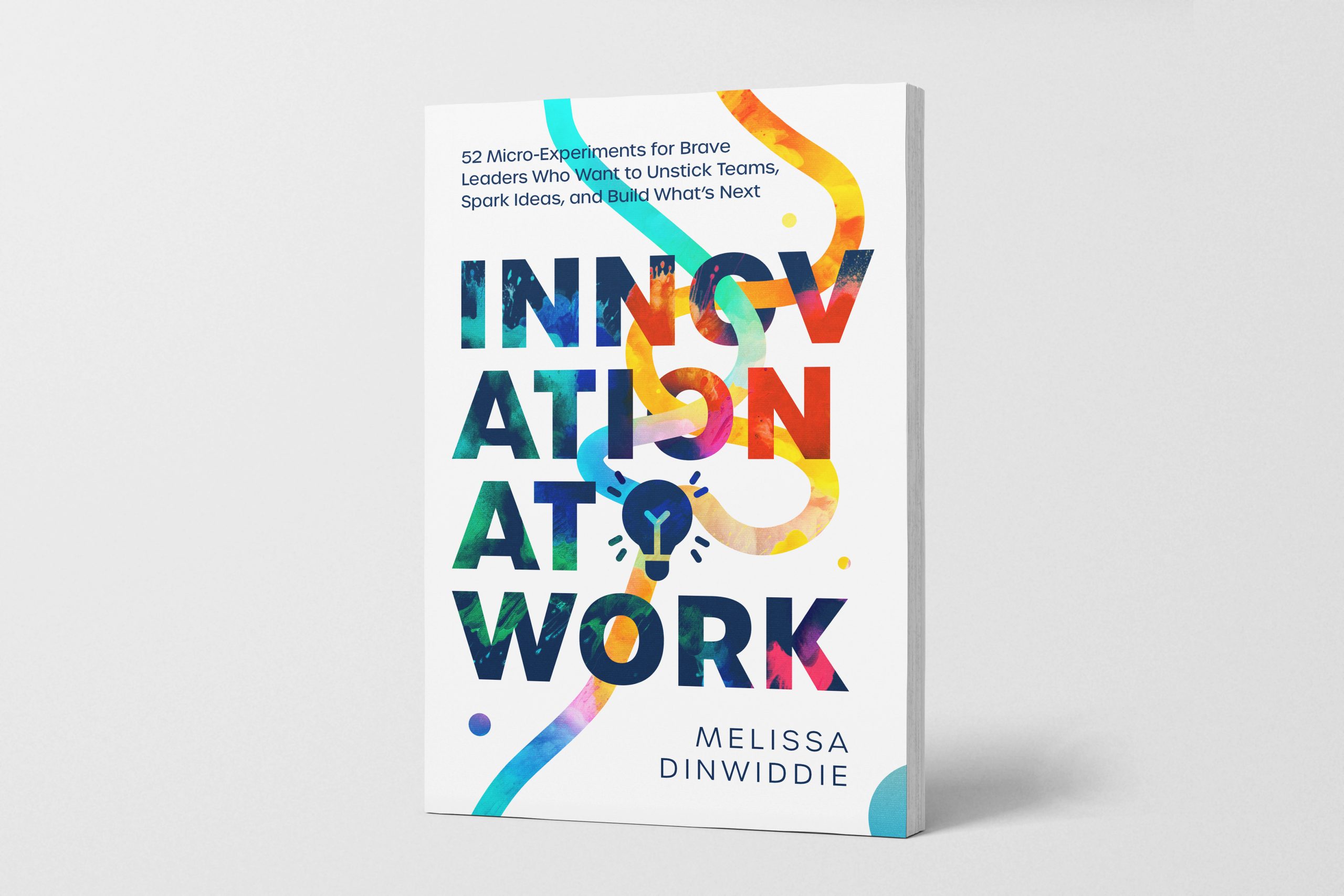
Want to bring more moments like this to your own team? Download a free preview of Innovation at Work: 52 Micro-Experiments for Brave Leaders Who Want to Unstick Teams, Spark Ideas, and Build What’s Next — it’s packed with short, low-stakes experiments designed to give leaders exactly the kind of opening described above. No doodling talent required.
P.S. I’ve been having a lot of conversations lately about what brave leadership actually looks like in practice — the messy, human, unglamorous version. Those are the conversations I want to keep having. More on that soon.