
Hey there, innovation champions!
Last week I shared that Innovation at Work is live — and I asked you to pick one experiment, run it, and tell me what happened.
A few of you have already reached out. (Thank you. Seriously. I read every response.)
But I also heard a version of this:
“I want to try one, but what if it doesn’t land? What if my team thinks it’s weird? What if it just… flops?”
I get it. And I want to address it head-on, because this is exactly the moment where most innovation efforts die — not in the planning stage, but in the aftermath of the first experiment that doesn’t go the way we hoped.
The Activity That Wasn’t Working
A few weeks ago, I told you about a day-long retreat I led for a nonprofit team. I’d designed an activity specifically for them. Tailored. Thoughtful. Carefully planned.
It wasn’t working.
About three-quarters of the way through, one of the team members raised her hand and said, plainly, that she wasn’t getting anything out of it.
In that moment, I had a choice: power through the planned agenda, or follow what was actually happening in the room.
I followed the room.
What unfolded was a 45-minute conversation — completely unscripted, completely unplanned — that turned out to be the conversation this team had needed to have for months. I scrapped two activities I’d planned. The “failed” experiment had cracked something open, and the breakthrough didn’t come from the activity. It came from what the activity made possible.
Here’s the thing: if I had “powered through,” we would have finished on time, checked every box, and left having accomplished nothing meaningful.
The experiment didn’t fail. It revealed something better than what I’d planned.
Why “It Didn’t Work” Is Almost Always the Wrong Conclusion
When teams run an experiment and it doesn’t produce the expected outcome, the default response is usually one of two things:
“That didn’t work. Let’s not do that again.”
Or worse: “See? I told you this innovation stuff doesn’t apply to us.”
Both responses treat the experiment as if it were a test with a right answer. It’s not. It’s a probe. And probes are designed to generate data — including data that surprises you.
The question isn’t “did it work?” The question is: “What did we just learn that we didn’t know before?”
That’s a fundamentally different question, and it leads to fundamentally different outcomes.
Three Things to Do When Your Experiment Doesn’t Land
If you try one of the 52 experiments in Innovation at Work (or any experiment, really) and it doesn’t go the way you expected, here’s what I’d do:
- Run a 10-minute Learning Autopsy.
This is Experiment #5 in the book, and it’s one of the most powerful. Immediately after the experiment, ask one question: “What would we change if we could replay this situation?” Not “what went wrong.” Not “whose fault was it.” Just: what would we do differently?
The shift from blame to curiosity is where psychological safety gets built. And psychological safety is the #1 predictor of team innovation, according to Google’s Project Aristotle research.
- Name what actually happened — not what you expected to happen.
The nonprofit team’s “failed” activity didn’t fail. It created enough discomfort that someone finally said what everyone had been thinking for months. That’s not a flop. That’s a breakthrough wearing a disguise.
Most “failed” experiments are actually producing useful data. We just miss it because we’re measuring against the wrong success criteria.
- Celebrate the attempt, not the outcome.
This is Experiment #50 in the book — and it might be the most counterintuitive one. In your next team meeting, publicly celebrate someone who tried something new, regardless of what happened. Focus praise on the attempt and the learning, not the result.
What gets celebrated gets repeated. When teams systematically reward experimentation regardless of outcome, they increase innovation attempts and create the safety that enables breakthrough thinking.
The Real Innovation Killer
Here’s what I’ve learned from working with teams at Google, Meta, Salesforce, PMI, and beyond: the real innovation killer is never a failed experiment.
It’s the decision not to run the next one.
The teams that innovate consistently aren’t the ones with a perfect track record. They’re the ones who’ve built the muscle of trying, learning, and trying again — fast enough that any single “failure” is just a data point in a much larger pattern of progress.
So if you ran an experiment this week and it didn’t go the way you planned: congratulations. You now know something you didn’t know before. That’s not failure. That’s the Learn Fast step of the Create the Impossible™ framework doing exactly what it’s supposed to do.
The only question is: what will you try next?
Click here and tell me. What experiment did you try? What surprised you? I want to hear all of it — especially the parts that didn’t go according to plan.
Try It Yourself
Innovation at Work has 52 micro-experiments designed for exactly this: helping analytical teams build the muscle of experimentation without requiring months of training or a culture overhaul.
Want a head start before the paperback launches March 10? Download a preview:
👉 Download a preview of Innovation at Work
And if you want to explore how to build systematic innovation capability in your team — not just a one-off workshop, but the kind of ongoing experimentation that actually changes how people work — let’s talk.
👉 Book an Innovation Strategy Session
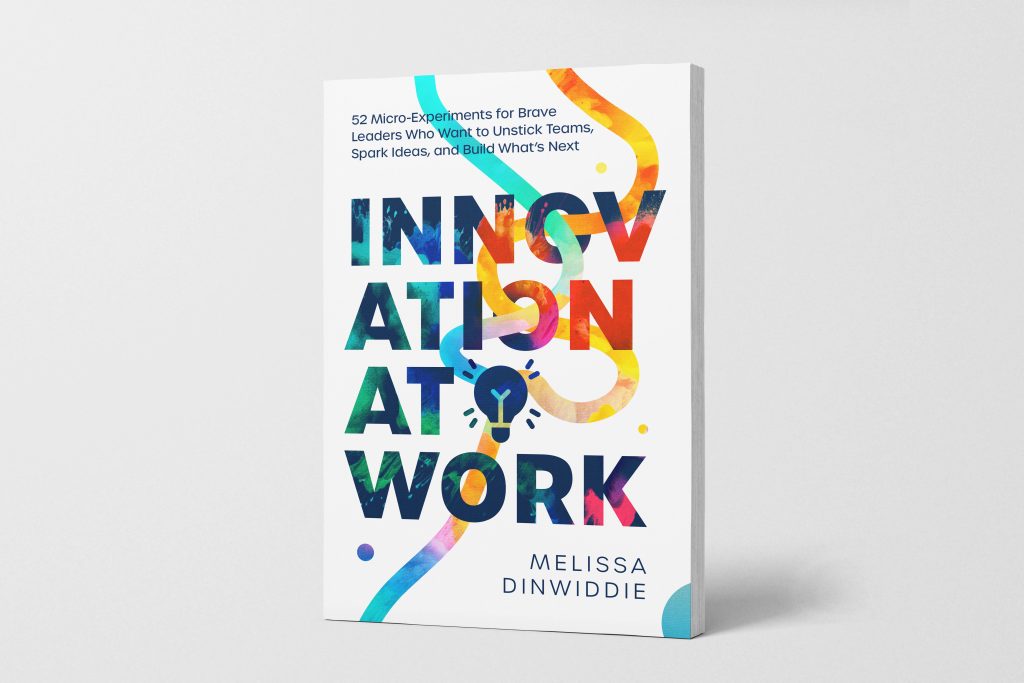
Next week: a peek inside Innovation at Work, and how to use the book.