Click to watch (11:26) or scroll down to read more
Hey there, innovation champions!
Here’s a common reaction I get when I tell leaders the first step of my innovation framework is called “Play Hard”:
An almost imperceptible pause. A polite smile. And behind the eyes: Oh no. She’s going to make us do trust falls.
I get it. The word “play” has been weaponized by well-meaning consultants for decades. It has come to mean: vaguely fun, probably frivolous, nothing that will matter on Monday morning.
So let me say this clearly, right at the top: Play Hard is not recess.
It’s something more specific — and more powerful — than that.
Play Has a PR Problem
Most leaders I work with have been conditioned to treat play as the opposite of work. Productive = serious. Creative = optional. Fun = something that happens after the real agenda is done.
This is understandable. If you’re a VP responsible for shipping products, hitting numbers, and keeping a team of skeptical engineers focused — you cannot afford to waste 45 minutes on activities that don’t move the needle.
I agree with you completely.
Which is why Play Hard, as I use it, isn’t about loosening up for its own sake. It’s about something neuroscientists call “explore mode” — the mental state where the brain naturally generates more novel connections, takes intelligent risks, and processes information in ways that “protect mode” (the state most teams are stuck in) simply cannot access.
When teams are under pressure — and which teams aren’t? — they default to protect mode. They optimize. They polish. They play it safe. All entirely rational responses to stress.
And all completely hostile to the kind of thinking that produces anything genuinely new.
Play Hard is the on-ramp out of protect mode. But the key word is Hard — because this isn’t recreational play. It’s play with a strategic purpose.
The Difference Between Recess and a Micro-Experiment
Here’s what I mean by that distinction.
When I work with a team, I’m not asking them to drop their analytical rigor. I’m not asking engineers to become improv comedians or project managers to stop caring about timelines. What I’m doing is designing specific activities — micro-experiments — that use the structure of play to produce business-relevant insights and shifts in behavior.
The activities look playful. They create laughter. People lean in and loosen up.
But every single one is engineered to float up something that matters: a hidden assumption, a pattern of avoidance, a reflex toward perfectionism that’s been slowing the team down for months.
This is not the same as sending people to an escape room and hoping for the best.
The distinction matters because it’s the difference between an activity your team tolerates and one they actually learn from.
What Happens When You Get It Right
One of the things that keeps me genuinely fascinated by this work — after years of doing it with data scientists, engineers, researchers, and project managers — is how consistently the most analytical cohorts respond the most deeply.
Not the most reluctantly. The most deeply.
There’s something that happens when a room full of people who’ve spent their careers being rewarded for getting the right answer are suddenly given explicit permission to get the wrong one. The relief is almost physical. You can watch it move through a group.
That shift — from self-censorship to genuine exploration — is exactly what Play Hard is designed to create. And it’s the foundation everything else in the Create the Impossible™ framework is built on. You can’t Make Crap (step two) or Learn Fast (step three) if your team is still trying to impress each other.
Try This With Your Team This Week
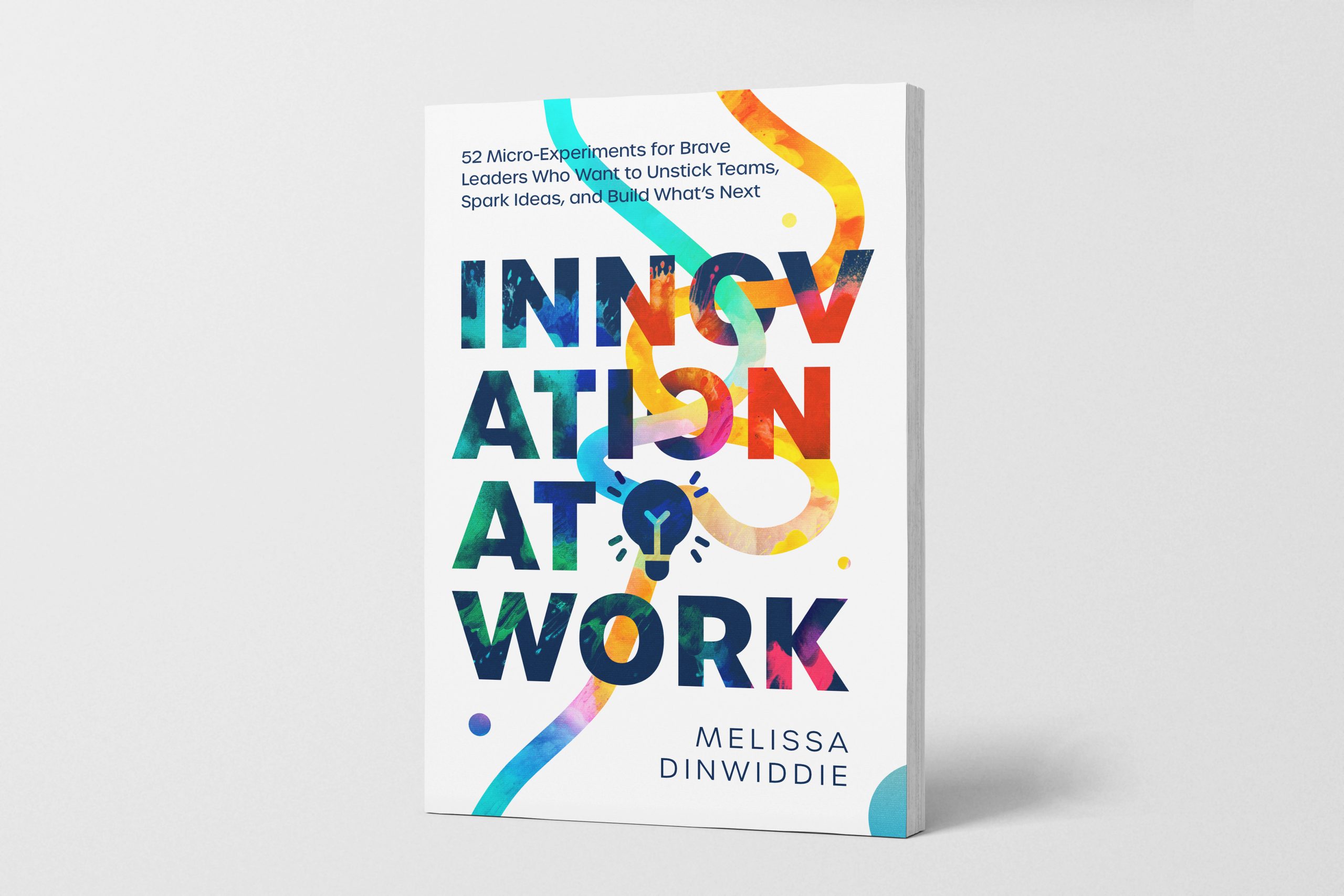
Experiment #6 from Innovation at Work is called “Yes, And… That’s Terrible!”
I’ll warn you: it sounds ridiculous. That’s not a bug. That’s the mechanism.
Here’s how it works:
Start with a real challenge your team is currently facing. Then someone opens with a deliberately absurd “solution” — the more ridiculous the better.
Each person in turn responds with “Yes, and…” — building on the absurdity, not correcting it. The goal for the first 8 minutes is to keep the terrible idea growing, not to rescue it.
After the 8 minutes: debrief. What unexpected directions emerged? What did you notice about how your team handles ideas that feel “wrong”?
Why this works: Fear of bad ideas is one of the most consistent innovation killers I see. Not fear of failure — fear of looking silly in front of colleagues. This experiment makes “terrible” the goal, which removes the social risk of being wrong. And once that risk is gone, people start saying the things they’ve been quietly thinking — including the ones that turn out to be genuinely interesting.
12 minutes. Any size team. No materials required. Works remotely.
The full experiment — including the facilitation script, scale guidelines, and remote adaptation — is in Innovation at Work (Experiment #6, page 75). But you have enough here to run it.
The Bigger Point
The leaders who get the most out of Play Hard aren’t the ones who love games.
They’re the ones who recognize that their teams are smart, capable, and deeply stuck — and that the thing blocking them isn’t ability or resources or even time.
It’s permission.
Permission to explore before they optimize. To say the thing that might sound dumb. To generate ten bad ideas on the way to one that’s genuinely breakthrough.
Play Hard is how you give your team that permission without it feeling like therapy or a trust exercise or a day wasted. It’s structured, purposeful, and designed specifically for people who roll their eyes at “creativity workshops.”
Actually — especially for those people.
If you lead a team that’s been handed an innovation mandate but isn’t sure where to start, I’d love to talk. Book a 30-minute Innovation Strategy Session here — no pitch, just a real conversation about what’s blocking your team and what might actually move the needle.
Or click here and tell me: What’s the biggest obstacle to play on your team? Is it time, culture, leadership skepticism — or something else? I read every response.