Innovation Doesn’t Need Another Offsite. It Needs to Work—Right Here, Right Now.
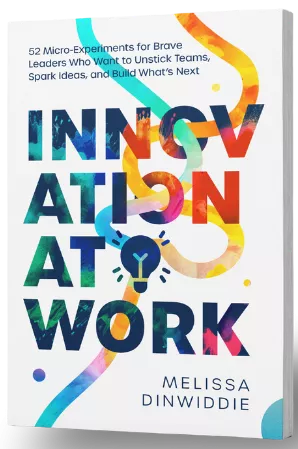
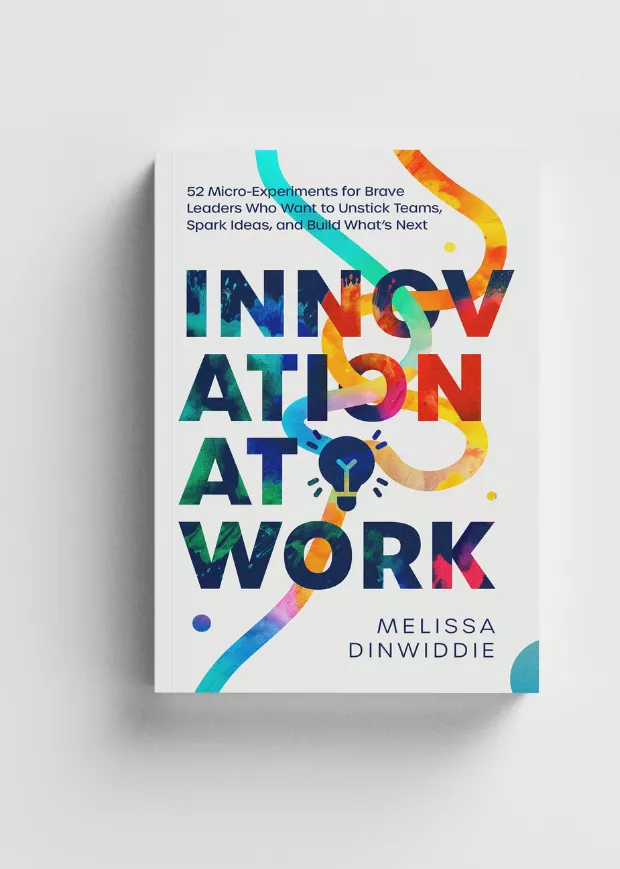
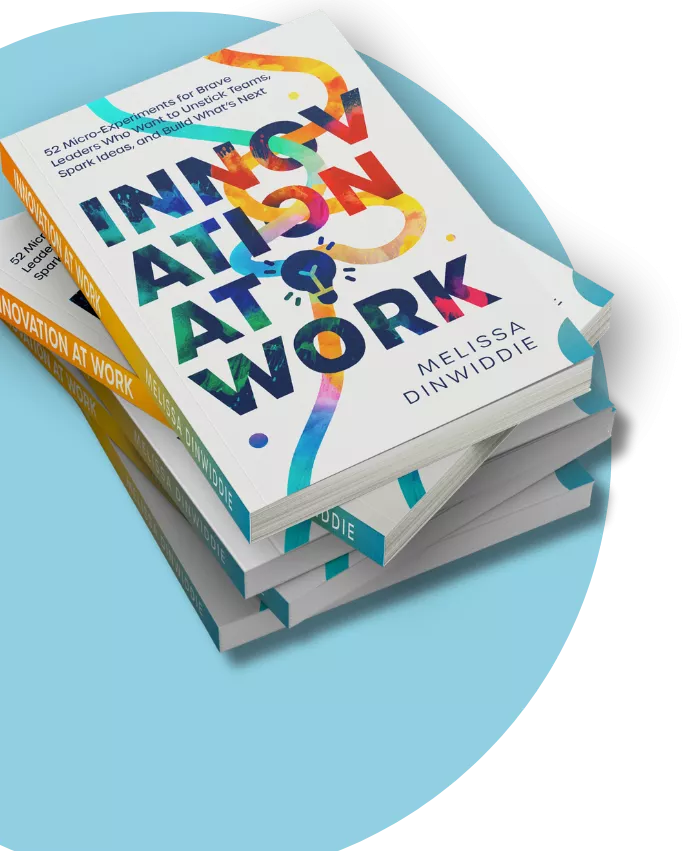
Innovation at Work is a practical toolkit for leaders who need teams to experiment, learn, and move forward—without adding more meetings, more pressure, or more burnout

The Problem This Book Solves
Most organizations say they want innovation. But what they actually reward is polish, certainty, and risk avoidance.
The result?
- Teams stuck perfecting slides instead of testing ideas
- Early ideas that didn’t quite work—and what they revealed
- Where a trusted playbook fell short
- How learning reshaped the way they lead
Innovation at Work was written to break that pattern.
What Makes This Book Different
This is not a mindset book.
It’s not a retreat-in-a-box.
And it’s not innovation theory dressed up as play
This book is designed to be woven directly into the workweek.
Each experiment:
- Takes 5–20 minutes
- Fits inside existing meetings
- Requires no special materials
- Works with analytical, skeptical teams
- Produces visible movement—fast
Leaders use it to create momentum inside real constraints, not outside of them.
What’s Inside
A Toolkit for Real-World Leadership
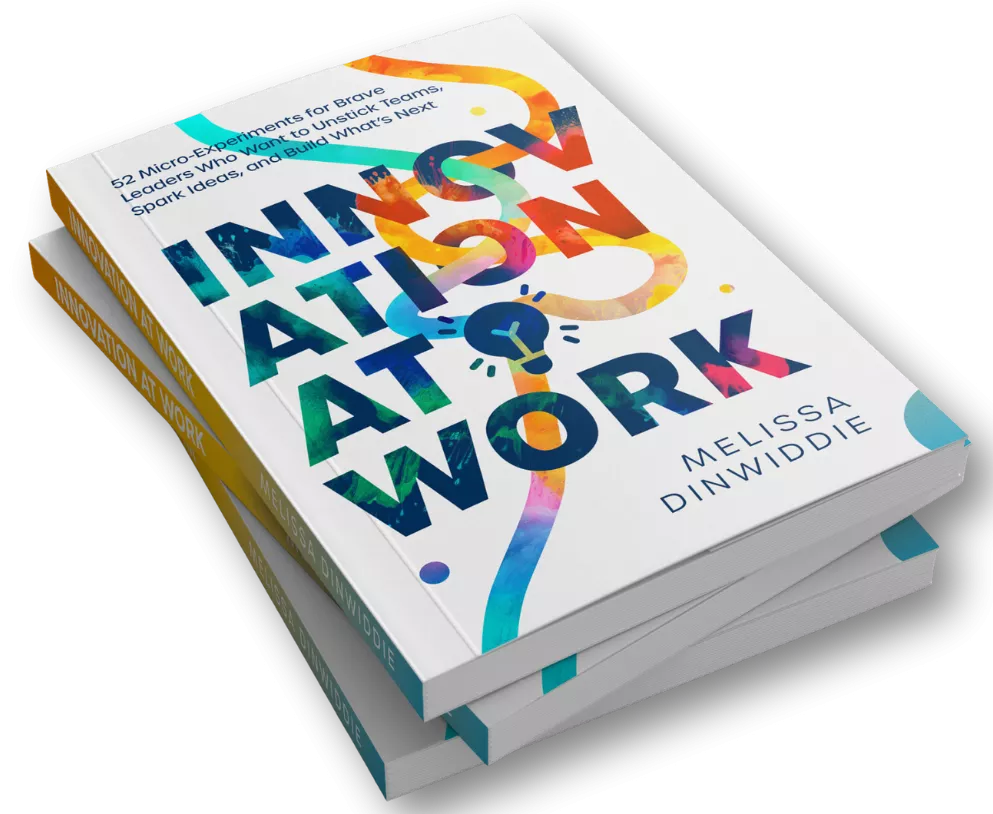
Inside Innovation at Work, you’ll find:
- 52 micro-experiments that feel like creative play—but function as business strategy
- Clear guidance on when and why to use each experiment
- Adaptations for remote, hybrid, and in-person teams
- Strategic bundles for moments when teams are genuinely stuck
- A simple framework—Play Hard. Make Crap. Learn Fast.—that builds innovation as a habit, not a personality trait
This is a book leaders use, not one they skim and forget.
Experience It Before You Decide
This book is especially useful for:
- Directors and VPs responsible for innovation, delivery, or change
- Leaders managing smart, skeptical, overextended teams
- Organizations that need learning speed—not more process
- Teams navigating uncertainty, AI disruption, or rapid change
If you’ve ever said, “We don’t have time for experimentation,” this book is for you.

Who It’s For
Want to see how this actually works?
👉 Get a practical preview of Innovation at Work
You’ll get:
- A curated excerpt from the book
- A taste of the micro-experiment approach
- A clearer sense of whether this is right for your team
No hype. Just something useful.
What Readers Are Saying:
Bulk Orders & Team Use
Innovation at Work is designed to be used together.
Organizations order this book to:
- Create a shared language around experimentation
- Equip managers with practical, low-friction tools
- Reinforce learning from keynotes or workshops
Bulk pricing is available for orders of 25+ copies, including options for:
- Team rollouts
- Leadership programs
- Conference or offsite giveaways
Bringing This Work to Teams
Many organizations start with the book—and then ask:
“What would this look like with our people?”
That’s where my keynotes, workshops, and long-term programs come in. The book becomes a shared language. The work brings it to life.

About Melissa Dinwiddie
Melissa Dinwiddie is an innovation strategist, keynote speaker, and former professional artist who helps leaders build cultures of experimentation, learning, and momentum.
Her work sits at the intersection of connection, communication, and creativity, drawing on principles from improvisation, visual art, and real-world leadership practice. She has worked with teams at organizations including Google, Meta, Salesforce, and Stanford, helping analytical leaders unlock creative capacity without abandoning rigor.
Melissa is the creator of the Create the Impossible™ framework and the author of Innovation at Work and The Creative Sandbox Way™.

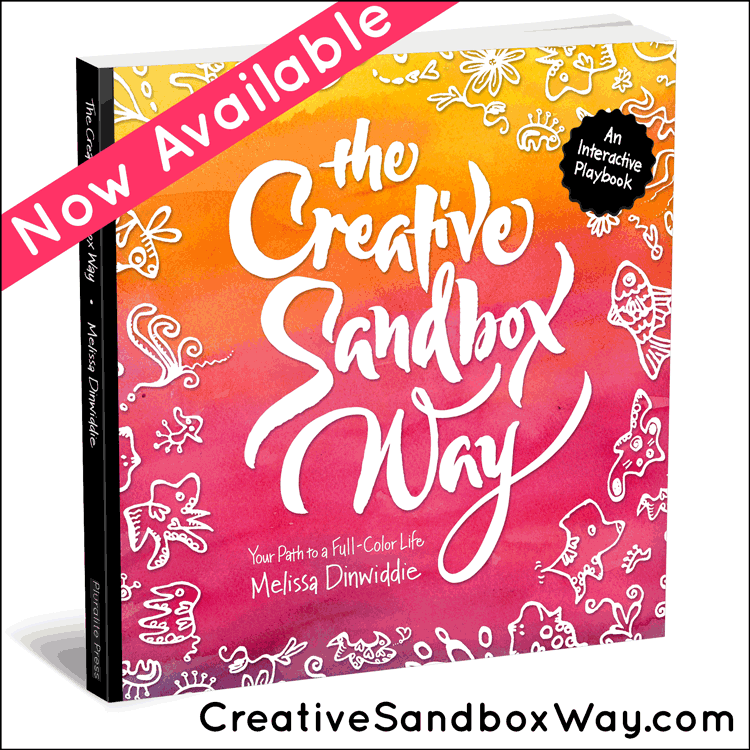
Innovation at Work exists to help leaders stop waiting for the “right moment” and start creating momentum—one small, human, practical experiment at a time.