Make Crap: Why Productive Failure Beats Perfectionist Success


Quick note: Just back from keynoting in Alaska at NHRMA 2025. 

No video this week, as I’m head-down working on my second book, Innovation at Work. I’ve cleared my work calendar to devote every spare minute to book production, which meant making some hard choices! 

Watch for videos to return in a few weeks. In the meantime, enjoy this week’s article! 


Hey there, innovation champions! 

Let me tell you about my own perfectionism disaster.

After my dance career ended, after many twists and turns, I built a career as a “serious artist.” At one point I bought this beautiful blank sketchbook from Italy—gorgeous leather binding, perfect paper—and I was so afraid of ruining it that I didn’t draw in it for years. Years! This professional artist and creativity coach, paralyzed by a blank book.

Finally, in 2023, I got fed up with myself and followed my very own rule from my own book, The Creative Sandbox Way™: “There is no wrong.” I started filling that precious book with terrible doodles, rough sketches, half-formed ideas. And something magical happened—instead of sitting unused on a shelf, that book became a permission slip for more creation.

This is “Make Crap” in action: transforming perfectionism from innovation killer into learning accelerator.

The Perfectionism Penalty That’s Killing Your Speed

Here’s the uncomfortable truth about perfectionism: it’s not about high standards. It’s about fear management dressed up as quality control.

When your brain perceives the threat of “looking stupid” or “being wrong,” it activates threat-detection systems that literally shut down creative thinking networks. All your cognitive resources shift toward error prevention and risk avoidance—the exact opposite of what breakthrough innovation requires.

This explains why teams can debate theoretical solutions for hours while missing simple fixes that become obvious the moment someone actually tries them. Perfectionism doesn’t create better solutions—it prevents solutions from emerging at all.

The Science of Strategic Imperfection

Stanford research reveals something counterintuitive: teams using rapid, low-fidelity approaches consistently reach better solutions than those focused on polished presentations. Why? Because when you make imperfection the explicit goal, your brain relaxes enough to access the creative networks that perfectionist pressure shuts down.

When teams operate in what neuroscientists call “explore mode”—the mental state we enter during play—they generate significantly more novel solutions and make unexpected connections between previously unrelated concepts.

The breakthrough happens when you stop trying to avoid failure and start designing intelligent failures that teach you something valuable.

When Crap Becomes Competitive Advantage

This principle shows up in every major innovation breakthrough once you start looking for it:

Before Slack became a $27.7 billion success, it was Tiny Speck—a completely failed gaming company. When their game flopped, instead of perfectly planning their next move, the team started tinkering with their internal chat tool. That willingness to experiment with something imperfect led directly to revolutionizing workplace communication.

Google Maps exists because someone got curious during a routine meeting and started playing with a satellite mapping tool instead of focusing on the original agenda. That moment of productive “failure” to stay on task accidentally created one of the world’s most-used platforms.

Netflix’s streaming model emerged from a “failed” attempt to make DVD-by-mail more convenient. Instead of perfecting the original model, they embraced the imperfect idea of streaming low-quality video over unreliable internet connections.

The pattern? Breakthrough innovations emerge from permission to explore imperfect ideas rather than pressure to execute perfect plans.

The Permission Slip Principle in Action

In my work with teams, I’ve discovered that most innovation barriers aren’t technical—they’re psychological. People need explicit permission to share half-formed thoughts, question obvious assumptions, and suggest approaches that might not work.

That’s why one of my favorite team exercises is the “Permission Slip Protocol.” Everyone writes themselves permission for one specific behavior they want to try but feel uncertain about: “Permission to share ideas before they’re fully developed,” “Permission to question project assumptions,” “Permission to suggest completely different approaches.”

Then the team gives each other explicit verbal permission. It sounds simple, but removing psychological barriers often unlocks capabilities that were there all along.

The Intelligent Failure Framework

Not all failures are created equal. There’s a crucial difference between careless mistakes and intelligent failures that generate valuable learning.

Careless mistakes: Repeating known bad practices, ignoring obvious risks, or failing due to lack of preparation.

Intelligent failures: Testing new approaches with uncertain outcomes, exploring unproven but promising directions, or discovering the limits of current approaches through systematic experimentation.

Teams that learn to distinguish between these two types of failure can embrace productive imperfection while maintaining accountability for execution quality.

Your Make Crap Reality Check

Ask yourself:

  • How often do potentially breakthrough ideas die because someone decides they’re “not ready yet”?
  • What percentage of your team’s time is spent perfecting plans versus testing imperfect solutions?
  • When did your team last try something knowing it might not work, just to learn what would happen?

If your team defaults to planning and polishing rather than testing and learning, perfectionism is probably costing you breakthrough opportunities.

The Create the Impossible™ Framework Building

Make Crap is the second principle of my Create the Impossible™ framework because it builds directly on the psychological safety of Play Hard. Once teams feel safe to explore, they need permission to fail productively.

But here’s the key: making crap isn’t about celebrating mediocrity. It’s about creating the conditions where excellence can actually emerge through iteration rather than imagination.

What’s Coming Next Week

Next week, I’ll show you how teams transform failures into intelligence through the third principle: Learn Fast. Because permission to fail is just the beginning—the real competitive advantage comes from systematically extracting learning from every experiment, setback, and unexpected outcome.

The goal isn’t to fail for its own sake. It’s to fail forward faster than your competition can succeed backward.


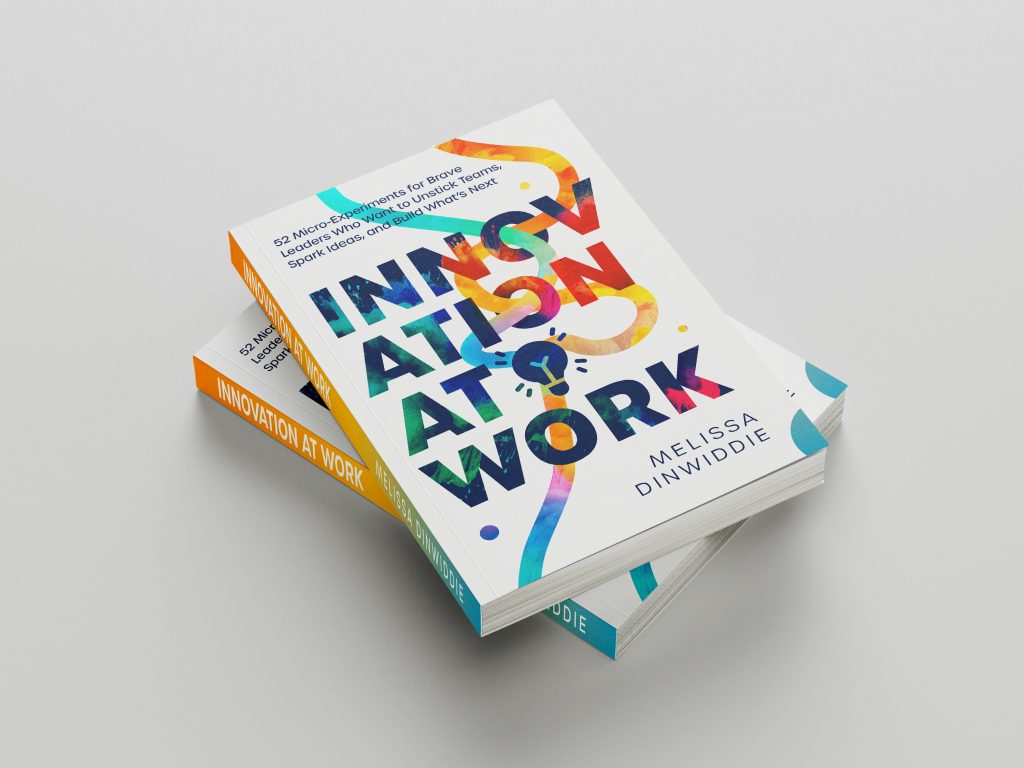
Ready to help your team transform perfectionism into productive failure? My forthcoming book Innovation at Work: 52 Micro-Experiments for Brave Leaders Who Want to Unstick Teams, Spark Ideas, and Build What’s Next includes the exact methods for embracing intelligent failure that drives breakthrough results. Join the early access list for insights and preview content.

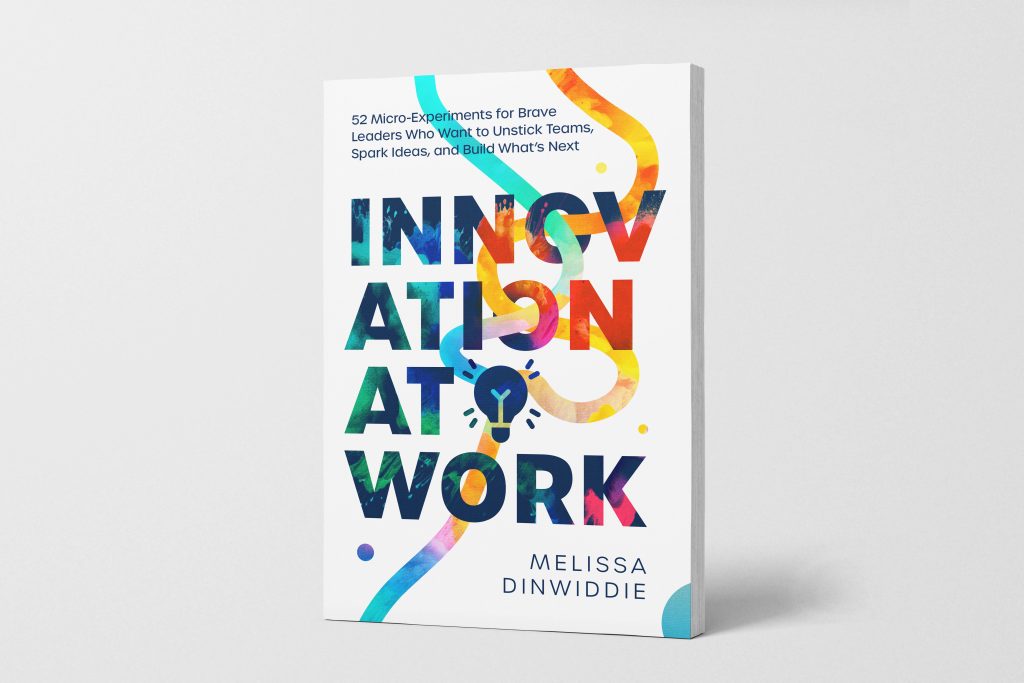
Did you see the two cover designs my designer whipped up?

Thanks to everyone who voted in the poll over on LinkedIn

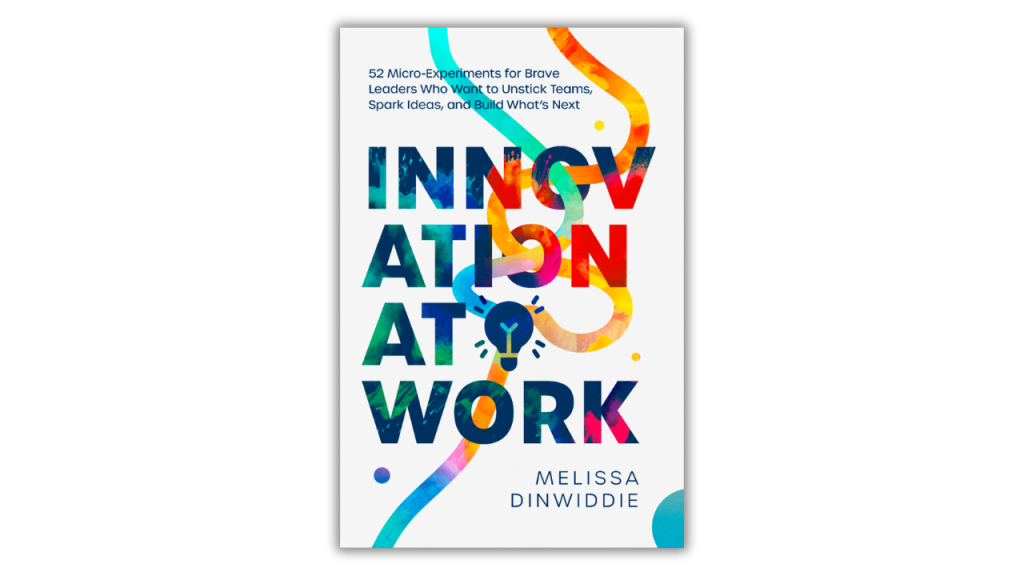
I love the fresh, unexpected layout of #1, and the color vibrancy of #2. And a colleague created a prompt for ChatGPT from those preferences, and came out with this new draft:

I just sent this to my designer with my notes, so stay tuned for an updated version soon! This is the design process at work, which is a mirror image of (ahem) innovation at work! 🤩

Grab your preview content right here.


Play Hard: Why Your Team’s Survival Depends on Strategic Fun


💡 Quick favor! My new book Innovation at Work is coming soon, and I need your help choosing the cover. 🎉

Two designs are in the running, and I’d love your vote. 

👉 Vote in this quick LinkedIn poll

And if you’d like to share why you prefer one over the other, reply here or drop your thoughts in the comments on LinkedIn. Your feedback will help shape the look of the book before it makes its way into the world.

Quick note: No video this week, as I’m in Alaska! I’m delivering the closing keynote at the Northwest Human Resources Management Association conference in Anchorage. 

Then when I get home, I’ll be head-down, working on my second book, Innovation at Work. I’ve cleared my calendar to devote every spare minute to book production, which meant making some hard choices! 

Watch for videos to return in a few weeks. In the meantime, enjoy this week’s article!


Hey there, innovation champions! 

Here’s a scene that happened at Google in 2003: Executives are sitting around a conference table discussing whether to acquire a photo tool called Picasa. But the CEO isn’t paying attention to the agenda. Instead, he’s completely absorbed by a satellite mapping tool, so excited that he interrupts the meeting to show everyone else.

The entire meeting gets derailed as all the executives abandon their agenda to start playing with and exploring this mapping software.

That moment of unscripted curiosity in an executive boardroom is now legend at Google—it accidentally created Google Maps, one of the world’s most-used platforms worth billions in ad revenue.

This is “Play Hard” in action: embracing experimentation and curiosity as strategic business tools, not distractions.

The Psychological Safety Revolution

Here’s what most leaders don’t understand: innovation isn’t a creativity problem. It’s a safety problem.

When teams feel psychologically safe—when they know they won’t be punished for intelligent risks or half-formed ideas—they naturally access the cognitive networks responsible for breakthrough thinking. But when people worry about looking stupid or making mistakes, their brains literally shut down creative processing and shift into threat-detection mode.

This explains why the most technically brilliant teams often produce the most incremental solutions. It’s not because they lack creativity—it’s because they lack permission to access it.

What I Learned About Play From a Skeptical Meta Manager

Let me tell you about a research manager at Meta who completely changed my understanding of what “play” means in a business context.

When I first suggested running some interactive exercises with her team, she was direct: “We don’t have time for games.” Her researchers had developed algorithmic insights that could transform product development, but those insights were trapped because product teams couldn’t understand the research.

But here’s what happened next. We ran a number of activities focused on perspective-taking and communication translation—exercises that felt playful but had serious strategic purpose. 

Within ninety minutes, the researchers discovered how to communicate technical insights in terms that product teams could actually use. After two sessions, the team had a shared language, and behaviors were beginning to change.

The breakthrough wasn’t the “game”—it was that playful exploration created the psychological conditions where breakthrough thinking could emerge. Those two sessions turned into six months of expanded work across multiple teams.

The Neuroscience of Strategic Exploration

When teams operate in what researchers call “explore mode”—the mental state we naturally enter during structured play—something fascinating happens in the brain. The networks responsible for creative connection-making become more active while the systems that create rigid thinking patterns relax their grip.

This is why many breakthrough solutions emerge during informal conversations, walking meetings, or seemingly “unproductive” exploration sessions. The brain needs permission to wander before it can discover unexpected connections.

But here’s the key: this isn’t about frivolous fun. It’s about creating the conditions where your team’s collective intelligence can actually function.

When Play Becomes Competitive Advantage

The most innovative companies understand this intuitively. They build play into their strategic processes:

Atlassian’s ShipIt Days: Teams get 24 hours to work on anything they want. These “playful” sessions have generated hundreds of product features and process improvements that never would have emerged through traditional planning cycles.

3M’s 15% culture: Engineers are encouraged to spend time on independent, experimental projects. This systematic approach to curiosity has led to breakthrough products from Post-it® Notes to medical adhesives.

Amazon’s “two-pizza team” principle: Small teams with permission to experiment rapidly can outmaneuver larger, more structured competitors precisely because they maintain the psychological agility that bureaucracy kills.

The Permission Problem

Most teams are sitting on massive creative capacity they can’t access because no one has explicitly said “yes, you’re allowed to explore this.”

That’s why one of my favorite team interventions is what I call the “Permission Slip Protocol.” Team members write themselves permission for specific behaviors they want to try but feel uncertain about:

  • “Permission to question project assumptions”
  • “Permission to suggest completely different approaches”
  • “Permission to share ideas before they’re fully formed”

Then the team gives each other explicit verbal permission. It sounds almost silly, but removing psychological barriers often unlocks capabilities that were there all along.

Your Team’s Play Hard Reality Check

Ask yourself:

  • When did your team last try something completely new without knowing if it would work?
  • How often do your best insights come from planned brainstorming versus unexpected conversations?
  • What percentage of team time is spent exploring possibilities versus executing predetermined plans?

If your team defaults to execution and planning rather than exploration and experimentation, you’re probably missing breakthrough opportunities that only emerge through strategic play.

The Create the Impossible™ Foundation

Play Hard is the first principle of my Create the Impossible™ framework because everything else depends on it. You can’t embrace productive failure (Make Crap) if teams don’t feel safe to experiment. You can’t accelerate learning cycles (Learn Fast) if people are afraid to share what they discover.

But when teams genuinely embrace curiosity and experimentation as strategic tools, they create the foundation where systematic innovation becomes possible.

What’s Coming Next Week

Next week, I’ll show you how teams move from exploration to execution through the second principle: Make Crap. Because psychological safety is just the beginning—the real breakthrough happens when teams learn to fail productively and turn imperfect attempts into competitive intelligence.

The goal isn’t to play for its own sake. It’s to create the conditions where your team’s best thinking can actually emerge and evolve.

Ready to help your team unlock their innovation capacity through strategic play? My forthcoming book Innovation at Work: 52 Micro-Experiments for Brave Leaders provides the exact methods for building psychological safety that drives performance. Join the early access list for insights and preview content.


The Multi-Billion Dollar Innovation Theater Problem

Quick note: No video this week, as I’m head-down working on my second book, Innovation at Work. I’ve cleared my calendar to devote every spare minute to book production, which meant making some hard choices!

Plus a death in the family has thrown an added curveball into the mix. I’ll be out of state for the funeral for a few days.

Watch for videos to return in a few weeks. In the meantime, enjoy this week’s article!


Hey there, innovation champions!

Imagine that your team just completed another innovation session. Everyone’s energized, the walls are covered with ideas, and there’s genuine excitement about breakthrough possibilities.

Three months later? The same bottlenecks persist. The same communication gaps slow progress. The brilliant insights from that session never made it into daily operations.

Here’s the uncomfortable truth: Most innovation work fails not because the ideas are bad, but because it focuses on generating solutions instead of removing the barriers that prevent teams from innovating naturally.

This is the multi-billion dollar innovation theater problem—initiatives that create the feeling of progress while the real innovation killers remain completely untouched.

The Innovation Paradox That’s Killing Your Competitive Edge

The more pressure organizations put on “innovation,” the less actual innovation happens.

Why? When stakes feel highest, teams default to their safest behaviors. They stick to proven processes, avoid “risky” ideas, and create busy work that feels innovative but sidesteps the psychological risk-taking that real breakthroughs require.

According to Gallup’s research, disengaged employees cost the global economy $438 billion in lost productivity annually. But the innovation penalty runs deeper—breakthrough insights that never get implemented, communication gaps that kill cross-functional solutions, and talented employees who disengage because their creative contributions can’t break through systematic barriers.

The Real Innovation Killers (And They’re Not What You Think)

Through my work with teams across tech companies, I’ve identified the four predictable patterns that kill breakthrough thinking before it can emerge:

The Perfectionism Trap: Teams delay sharing ideas until they’re “perfect,” missing market windows while competitors ship “good enough” solutions and iterate based on real feedback.

The Communication Gap: Functional expertise creates tunnel vision. Engineers can’t communicate with designers. Product teams can’t understand research insights. Brilliant ideas die in translation between departments.

Analysis Paralysis: Teams generate lots of ideas but lack systematic methods for rapid testing, leading to endless debate about theoretical solutions instead of real-world validation.

Creative Invisibility: Organizations hire creative, innovative people—then bury their breakthrough thinking under processes designed for predictable work.

What Actually Works: The Meta Breakthrough

Let me share a real example from my communication work that reveals how innovation really happens. A research manager at Meta told me, “We don’t have time for games.” Her team was brilliant—they’d developed UX insights that could transform product development. But their breakthrough insights where gathering dust instead of having the impact they deserved.

The problem wasn’t lack of innovation. It was communication barriers that made innovation invisible.

I started by teaching them “yes, and…” principles—how to validate others’ ideas rather than instantly dismissing them. We practiced finding the positive within negative feedback and explored exercises in seeing multiple sides of complex issues. The perspective-taking and translation skills were just one piece of a comprehensive “communicating for influence” program.

The shift was immediate. After our first session together, the team and manager could already see the value. They began changing their behaviors, developing a shared language for collaboration, and finding new ways to communicate technical insights in terms of product impact.

That manager started recommending me to her colleagues before we’d even finished the pilot program. The transformation scaled across multiple teams over six months—not because we generated new ideas, but because we systematically removed the specific barriers preventing breakthrough thinking from spreading throughout the organization.

The Science Behind Systematic Creativity

Micro-interventions work where elaborate programs struggle for a neurological reason: perfectionism activates the brain’s threat-detection system, shutting down the networks responsible for creative thinking.

When teams operate in what neuroscientists call “explore mode”—the mental state we naturally enter during structured play—they generate significantly more novel solutions and make unexpected connections between previously unrelated concepts.

The breakthrough happens when you systematically remove friction rather than just adding more brainstorming sessions.

Your Innovation Reality Check

Ask yourself these questions about your team’s creative capacity:

  • How often do your best ideas actually make it into implementation?
  • Are brilliant insights trapped in individual expertise instead of becoming organizational knowledge?
  • When facing new challenges, do people suggest experiments or default to familiar approaches?
  • How effectively do breakthrough insights travel between departments and functions?

If you’re honest, most teams have far more creative capacity than they can access through current systems. The problem isn’t idea generation—it’s systematic barrier removal.

What’s Coming Next

Real innovation culture happens when you combine the right systematic practices with comprehensive culture change. Neither quick fixes nor standalone workshops create lasting transformation—but the right strategic approach can unlock breakthrough thinking across entire organizations.

Over the next four weeks, I’ll share the framework that helps teams move from innovation theater to systematic breakthrough creation:

  • Week 2: The neuroscience of psychological safety and why breakthrough thinking requires permission to explore
  • Week 3: Why your brain needs permission to make crap (and how productive failure becomes competitive advantage)
  • Week 4: How teams learn fast by turning every failure into competitive intelligence
  • Week 5: Putting it all together—the Create the Impossible™ roadmap for systematic innovation

Because here’s the thing: Your team already has way more creative capacity than you might realize. The question isn’t whether innovation is possible—it’s whether you have the strategic method to unlock it consistently.

Ready to transform your team’s innovation capability from theater to systematic competitive advantage? My forthcoming book Innovation at Work: 52 Micro-Experiments for Brave Leaders Who Want to Unstick Teams, Spark Ideas, and Build What’s Next provides practical tools for unlocking creative capacity. Join the early access list for behind-the-scenes insights and preview content.

Lost In Translation: Why Brilliant Innovations Fail to Launch

Click to watch (11:27) or scroll down to read more

Hey there, innovation champions!


Imagine you’re in a room full of brilliant minds—data scientists, researchers, managers—all buzzing with groundbreaking ideas. The energy is electric. Innovation seems inevitable.


But then… nothing happens.


Sound familiar? Today we’re diving into one of the biggest innovation killers I see in tech teams: when brilliant ideas get lost in translation.


The Falcon That Never Landed

Let me start with one of my favorite activities to run with teams. It’s a simple game that reveals everything about how communication breaks down—and how it can make or break innovation.


“Falcon, go,” says person A, moving their arm to send an imaginary falcon across the circle to person B, who catches it with “Falcon, come,” before locking eyes with person C and sending it along with “Falcon, go.” The falcon flaps merrily around the circle.


Once that’s flowing, I add a Frisbee: “Frisbee!” I call out, miming a throw. The recipient catches it with a chill “Dude!” then passes it on. Soon we might have three or four objects zipping around simultaneously.


But inevitably, someone realizes the falcon has vanished. Or the Frisbee disappeared into thin air.


“What happened?” I always ask.


And that’s when the lightbulb moments begin.


The Real Innovation Killer

Here’s what that simple game reveals: when communication fails, even the most brilliant ideas—like our falcon—just disappear. And in tech environments, this happens constantly.


I’ve worked with data scientists at Uber, managers at Google, and high-level researchers at Meta. And I see the same communication breakdowns everywhere:


The Data Will Speak For Itself Trap: Teams believe their brilliant analysis should be self-evident. But data doesn’t convince people—stories and emotional connection do.


The Expertise Blindness Curse: When you’re deep in your domain, you forget that others don’t share your context. Your “obvious” insight becomes incomprehensible to cross-functional teammates.


The Academic Argument Instinct: Many brilliant people were trained to dig in their heels and defend their position. But in business, psychological safety and collaboration trump being right.


Let me share a real example from my work.


When Translation Saves Innovation

Laura, a researcher at Meta, was hitting a wall trying to explain a crucial insight to Kabir, a cross-functional teammate. Frustration was building. Innovation was grinding to a halt.


But then she remembered the “Time Traveler” activity from our workshop—where you explain a modern device to someone from 500 years ago. She realized Kabir wasn’t being difficult; he simply had different context.


So Laura thought about Kabir’s background in supply chain management and created an analogy comparing data flow to inventory management.


Suddenly, everything clicked. Communication flowed. They connected. Innovation accelerated.


The Create the Impossible™ Communication Framework

This connects directly to my Create the Impossible™ framework, because effective communication requires all three principles:


Play Hard: Laura got playful with her communication, trying new approaches instead of hammering the same failed explanation.


Make Crap: She gave herself permission to try imperfect analogies and rough explanations until something resonated.


Learn Fast: She quickly recognized when her approach wasn’t working and adapted, learning from each attempt.


When communication works, ideas don’t just survive—they multiply, evolve, and become breakthrough innovations.


The Three Translation Tools Every Innovator Needs

So how do you prevent your brilliant ideas from getting lost in translation? Here are three practical tools:


Find the Bridge: Like Laura did, identify what your audience already knows and build a bridge from their world to yours. Their context becomes your starting point.


Test for Understanding: Don’t just ask “Does that make sense?” Ask them to explain it back to you in their own words. If they can’t, your falcon hasn’t landed yet.


Validate the Person, Not Just the Idea: Even when you can’t implement someone’s suggestion, acknowledge its value. This keeps people engaged and contributing instead of shutting down.


Your Innovation Translation Challenge

Here’s your challenge this week: Pick one brilliant idea you’ve been struggling to communicate. Apply the translation framework:


  • Play Hard: Get curious about your audience’s perspective
  • Make Crap: Try three different ways to explain it, even if they feel imperfect
  • Learn Fast: Test for understanding and adapt your approach


Because here’s the truth: Innovation doesn’t happen in isolation. It lives at the intersection of connection, communication, and creativity.


When we master the art of translation—helping brilliant ideas travel successfully from one mind to another—we don’t just prevent innovation from getting lost.


We accelerate it.


I’d love to hear from you: What’s the most creative analogy you’ve ever used to explain a technical concept? Click here to let me know!


Senior Leaders: Ready to prevent your team’s brilliant innovations from getting lost in translation? Book a complimentary Innovation Strategy Session and let’s explore how the Create the Impossible™ framework can transform your organization’s communication culture into an innovation accelerator.


Don’t show this message again.

Would You Like Some Cookies?

We use cookies to customize your experience, to improve the content we deliver to you, and sometimes to show you relevant advertising on social networking sites like Facebook or Instagram. If you continue to use this site we will assume that you give your consent to our cookie use. (Click the X in the upper right corner to close this notice.)

Read our Privacy Policy