Hey there, innovation champions!
Your smartest people are sitting on half-brilliant ideas. They’re waiting to make them bulletproof before sharing. Meanwhile, your competitors are testing rough prototypes and learning what actually works.
I see this constantly when I work with high-achieving teams—researchers at Meta, leadership teams at healthcare companies, high-potentials at national creative agencies, audiences at my Creating the Impossible keynote. Brilliant people who’ve trained themselves into perfectionist paralysis. They’re polishing slide decks while opportunities slip away.
Here’s the tool that changes everything: we make crap. Literally.
When “Perfect” Becomes the Enemy of Progress
I invite participants to intentionally make crappy doodles.
The resistance is immediate. Visible. These are accomplished professionals. Directors. VPs. People who’ve built careers on excellence.
“You want us to make something… bad? On purpose?”
Exactly.
The 15-Minute Experiment That Changed How They Work
Here’s what how you can replicate that same concept in your next team meeting:
The Setup (2 minutes)
Set a 10-minute timer and give one instruction: “Create the worst possible first draft you can imagine of something you’re currently working on. I mean truly terrible—incomplete thoughts, rough sketches, placeholder text that says [INSERT BRILLIANT IDEA HERE]. We’re celebrating crappiness.”
The Work (10 minutes)
Stay silent. Let them struggle productively. When someone asks “Can I…?” respond: “If it makes it worse, absolutely.”
The room transforms. Shoulders relax. People start laughing. The energy shifts from anxiety to play.
The Showcase (13 minutes)
Then comes the magic: everyone shares their beautifully terrible work.
“This is perfectly awful. I love how incomplete it is.”
“That placeholder text is chef’s kiss—beautifully lazy.”
No improvements offered. Only celebration of the terribleness.
Why Intentionally Lowering the Bar Works
Here’s what happens when you make “terrible” the goal: people actually start.
Because perfectionism doesn’t just slow you down—it stops you entirely. Your brain switches from “explore mode” to “survive mode.” Your threat-detection system activates. Resources shift away from creative exploration toward error-prevention.
Intentionally lowering the bar does two critical things:
First, it gets people to start. That blank page stops being threatening when the goal is to make something deliberately bad.
Second, it allows ideas and insights to flow freely in a way that demanding excellence right off the bat does not.
You’re not thinking better when you’re perfecting. You’re thinking smaller.
Why This Works for Analytical Teams (Especially)
I get pushback on this. “Our engineers won’t engage with creative activities.” “We’re too busy shipping products to play games.”
But I’ve seen this work with Meta researchers who literally analyze data for a living. With healthcare leadership teams managing life-or-death decisions. With agency high-potentials who bill by the hour.
This isn’t a game. It’s a 15-minute precision intervention that removes the specific barrier killing your innovation speed: the belief that ideas need to be perfect before they can be shared.
The same conditions that enable artistic creativity drive business innovation. When you give people permission to be terrible, you’re not lowering standards. You’re unlocking the exploration phase that perfectionism skips entirely.
Your Turn: Run This Tomorrow
Time Required: 15 minutes total
Works For: Any regular team meeting, sprint planning, project kickoff, or standup
What You Need: A timer. That’s it.
The Process:
- Set the challenge (2 minutes): “We’re creating deliberately terrible first drafts. Make it as bad as possible in 10 minutes.”
- Create in silence (10 minutes): Let people work. Resist helping. If someone asks for permission, say: “If it makes it worse, absolutely.”
- Celebrate the crappiness (13 minutes): Everyone shares. Praise speed and courage, never quality. “This is beautifully terrible” is your refrain.
What to Watch For:
Within two weeks, watch for team members sharing work-in-progress without prompting. Watch for ideas surfacing earlier in development cycles. People shifting from “it’s not ready yet” to “here’s what I’m thinking.”
That’s the point. Lower the stakes, increase the output. Give your team something to build on instead of a blank page.
This is how you beat perfectionism.
This Is Experiment #1 of 52
The Crappy First Draft Showcase comes from my book Innovation at Work: 52 Micro-Experiments for Brave Leaders Who Want to Unstick Teams, Spark Ideas, and Build What’s Next, launching in the new year (Kindle version: January 16; paperback: February 10).
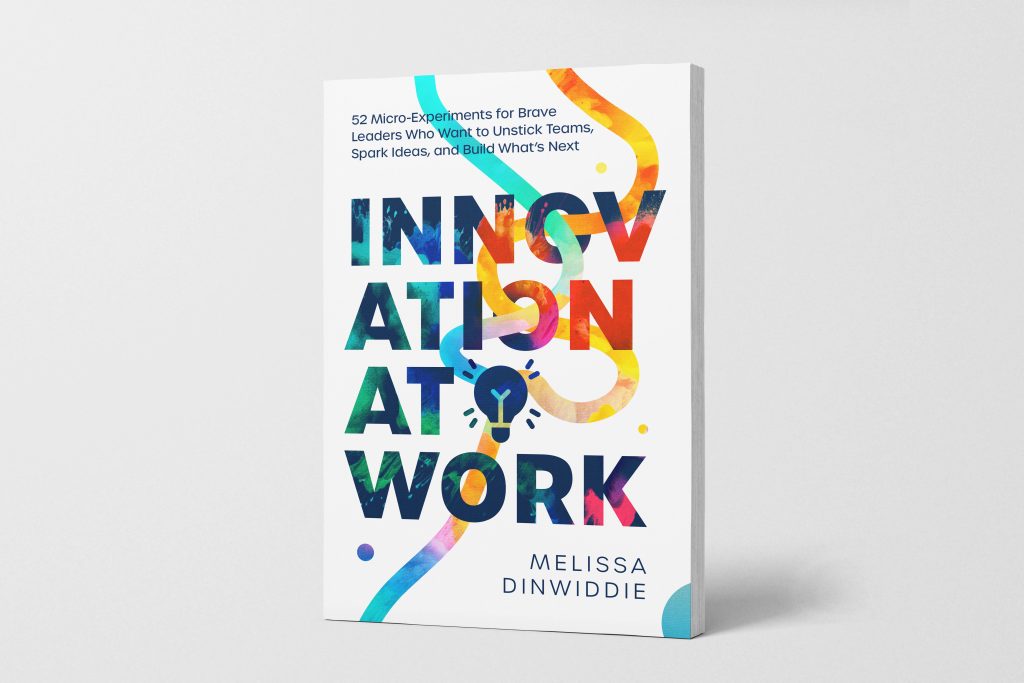
It’s the first experiment because it addresses the biggest barrier I see across industries and roles: the belief that sharing incomplete work is unprofessional.
But here’s what I’ve learned facilitating programs with teams at Google, Meta, and Salesforce: the teams that ship fastest aren’t the ones who think longest. They’re the ones who learned to get comfortable with rough drafts.
This is just one of 52 experiments designed to fit into your regular work week—5 to 20 minutes each. No pulling people away from their desks. No elaborate facilitation training required.
Just systematic tools for building innovation capability in the time you’re already spending in meetings.
Try It and Tell Me What Happens
Run the Crappy First Draft Showcase in your next team meeting. Then let me know what happened.
I’m genuinely curious: What surprised you? What did your team create? What shifted?
And if you want to explore how these micro-experiments could transform your team in a 90-minute keynote or workshop, let’s talk.
P.S. Want all 52 experiments when the book launches? Get early access and exclusive bonuses here.
Next week: Why most Q1 innovation initiatives fail by February—and the surprisingly simple approach that actually sticks. (Hint: It has everything to do with how you plan January.)