
Click to watch (11:12) or scroll down to read more
Hey there, innovation champions!
A few weeks ago, I showed up for a salon appointment.
My cosmetician was nowhere to be found.
I texted her. She was mortified. “I can be there in 20 minutes,” she wrote back.
Thankfully, I was flexible that day, so it all worked out. But I was curious how it happened. She’s reliable. She’d never missed me before.
Turns out, she was switching calendar systems. My appointment never made it onto the new one.
As far as her day was concerned, I didn’t exist.
If It’s Not on the Calendar, It Doesn’t Exist
We’ve probably all been there. And it isn’t just appointments.
Deadlines are dead to me if they don’t have a date on my calendar. I mean that literally. No date, no deadline. It slides.
It’s worse with the things I say matter most to me. Art. Music. Yoga. Meditation. Writing.
I’d tell you these are core to who I am. I believe that. And if there isn’t a block of time on my calendar for them? Weeks, even months, can go by without any practice at all.
Not because I stopped caring. Because caring isn’t a time slot.
A Mandate Without Hours Is a Wish
Last week, I argued that innovation isn’t a value. It’s a practice.
Here’s the uncomfortable follow-up: a practice needs a place to happen. And at work, that place is the calendar.
This is where a lot of innovation mandates quietly die. Leadership says, “We need more experimentation.” Everyone agrees. It goes in the all-hands deck.
Then nobody’s calendar changes.
The sprint reviews stay the same length. The status meetings stay status meetings. The only time left for “innovation” is whatever’s left over. And on a busy team, nothing is ever left over.
That’s not a motivation problem. It’s a scheduling problem. A mandate without hours is a wish.
Why Good Intentions Lose to Calendars
Calendars win because they make decisions for us.
When something has a time, a place, and other people expecting you, you don’t have to decide to do it. You just show up. That’s the whole trick.
When something has no time attached, you have to choose it, over and over, against everything else that’s urgent. Urgent wins almost every time. Not because people are lazy. Because urgent things come with someone waiting.
So if your team’s innovation work lives in “when we get a chance,” it’s competing against everything that has a deadline. It will lose that fight. Every week.
Steal This: The Calendar Test
Before you ask your team for more innovation, run your mandate through three questions.
📅 1. Where does it live? Name the day, the time, and the length. “Ongoing” isn’t a time.
👥 2. Whose calendar is it on? If it’s only on yours, your team doesn’t have a practice. You have a hope.
🔄 3. What moved to make room? If nothing moved, the first busy week will move it for you.
Three yeses, and you have a practice. Anything less, and you have a wish with good branding.
You Don’t Need Another Meeting
Here’s the good news. Passing the Calendar Test doesn’t mean adding a meeting. Please don’t add a meeting.
It means claiming a few minutes inside a meeting you already have.
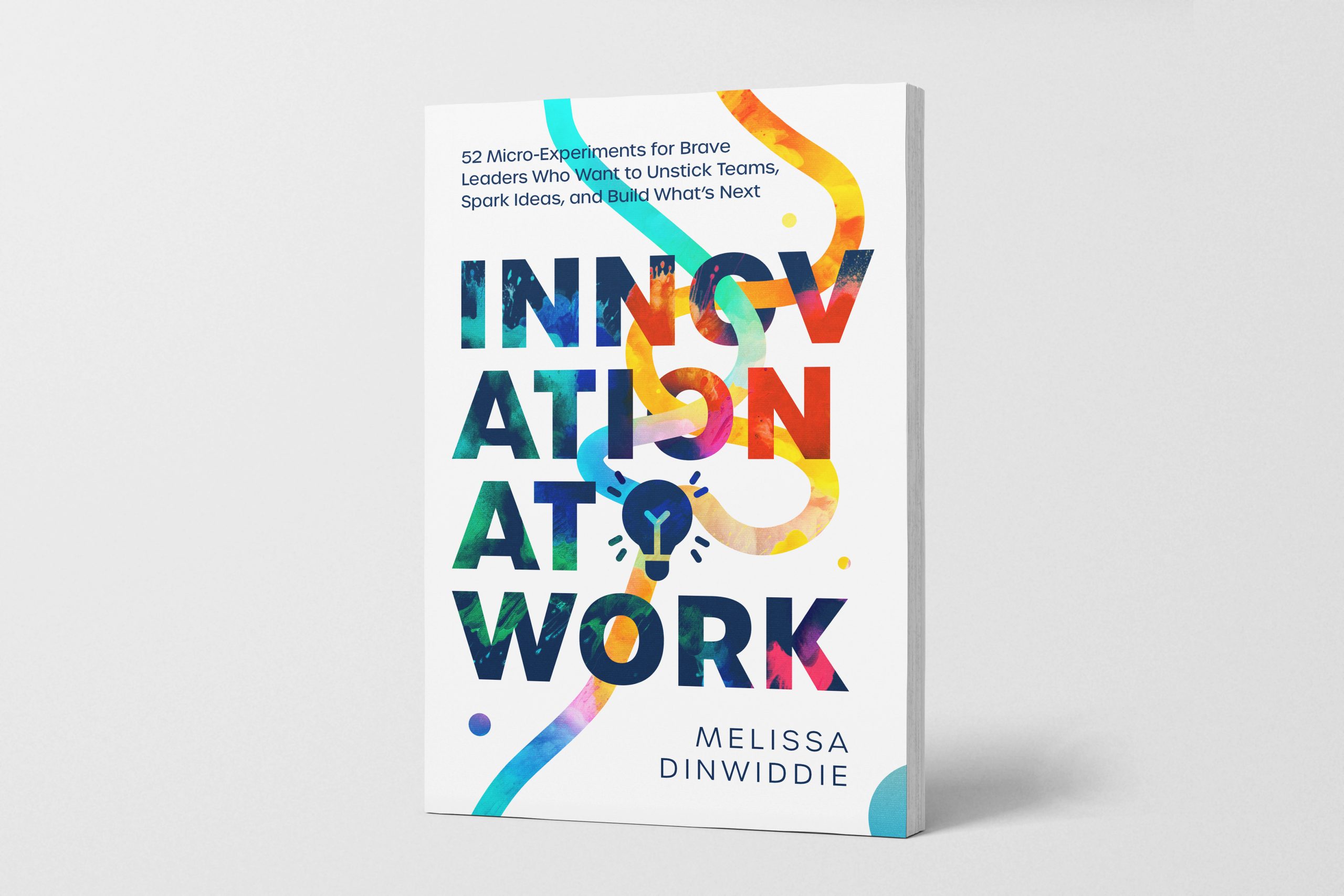
That’s the whole design behind the 52 micro-experiments in Innovation at Work. Most of them run in 5 to 20 minutes. They fit inside a stand-up, a sprint review, or a team sync that’s already on everyone’s calendar.
One strategist who works with fast-growing tech companies put it this way: she’s always hunting for innovation tools that “actually fit into client workflows.” That’s the bar. If it doesn’t fit the week, it doesn’t happen.
Try this one at your next recurring meeting. It’s Experiment #10, The 5-Minute Fix. It takes 10 minutes and works remotely.
Pick something that’s stuck. Ask, “What’s one thing we could do in the next 5 minutes to move this forward, even 1%?” Then set a literal 5-minute timer and do it. Send the email. Make the call. Delete the outdated file.
Movement, not planning the movement.
Now put it on the agenda for the same meeting next week. Same slot. Same 10 minutes. That’s the part that turns an experiment into a practice.
Look at Next Week
Here’s a quick gut-check you can do right now.
Open your team’s calendar for next week. Look for the time where innovation actually happens. Not the meeting where you talk about it. The time where people try something new.
If you can’t find it, that’s your answer. And it’s fixable.
If you want a clearer picture of where your team’s practice is breaking down (calendar space, or something else), take the free Innovation Bottleneck Finder. Five minutes, and you’ll know where to start.
👉 Take the free Innovation Bottleneck Finder
🎧 Melissa in the Wild!

What if the secret to creativity is giving yourself permission to make crap? 😂
I joined Kassy LaBorie on The Spark Konnect Podcast to talk about perfectionism, improvisation, innovation, and why making something imperfect might be the best way to get started.
🎙️ Episode 051: Make It Crappy!
Watch our conversation on YouTube
Build Your Innovation Muscle!
Want more ready-made experiments to help your team build their innovation muscle? Grab the book!
👉Click here for more info
👉Click here for a free preview PDF
👉Click here to buy now on Amazon
👉Click here for a special Leadership Edition — available only on my website — which includes an exclusive 5-part “Innovation Leader’s Edge” video series. Everything you need to run your first micro-experiment, get leadership buy-in, and build lasting innovation culture.