Click to watch (14:43) or scroll down to read more
Hey there, innovation champions!
Today kicks off a new series. Over the coming weeks, I’m digging into one idea: innovation isn’t a value. It’s a practice.
And I’m starting with a confession.
My Hand Forgot
Years ago, I figured out that I’m what I call a “passion pluralite.” You might know the term multi-assionate, or multipotentialite, or Renaissance soul. I will never be satisfied pursuing just one interest.
When I studied dance at Juilliard, I was just about the only dance student who also cared about my academic subjects. And art. And music. Later, while I built my career as a calligrapher and artist, I took a deep dive into jazz singing and turned it into a side hustle.
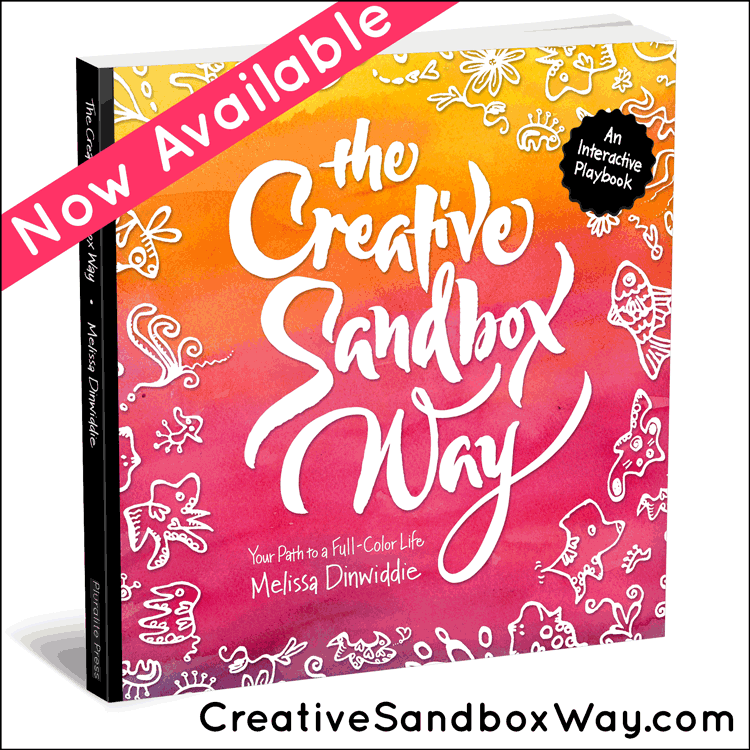
For years, calligraphy was my differentiator in my art business. It was the skill I was proudest of.
And I honestly can’t remember the last time I practiced it.
These days, when someone asks me for elegant lettering, I have to sit down and work out with a pen for a long time just to get back a fraction of the mastery I used to have. “Rusty” doesn’t begin to describe it.
Ask me if I value beautiful letters made by hand, and I’ll say yes in a heartbeat.
But my calendar would disagree. What we truly value shows up in what we prioritize. And I stopped prioritizing this a long time ago.
I may think I value it. My practice tells the truth.
The Bass in the Corner
Here’s the part that stings a little more.
Four years ago, I started playing double bass on a whim and fell in love with the instrument. My intention is to practice every day, even if it’s only 15 minutes.
The intention is lovely. The practice has lapsed.
I have no band to show up for. I have no gigs to prepare for. So every day, something more urgent wins. Not more important. Just more urgent.
I never decided to stop. I just never set things up so I’d keep going.
A Value Isn’t What You Say. It’s What You Do on Tuesday.
Now think about your team.
Innovation is probably on your values page. Your leaders probably mean it sincerely. But what your team truly values shows up in what it prioritizes on an ordinary Tuesday, when the sprint is due and the inbox is overflowing.
Without a structure that makes it happen (a slot on the calendar, someone expecting you to show up), intention loses to urgency. Your team didn’t decide to stop innovating. Innovation just never got a Tuesday.
That’s what I mean when I say innovation isn’t a value. It’s a practice. If you don’t practice it, it isn’t really a value. It’s a hope.
Where Real Values Come From
Here’s the thing. Our true values always show up in our behavior. That’s exactly why I build values from behavior, not the other way around.
When I lead values-defining workshops, I borrow an approach from CSCCE and flip the usual order. We don’t start by brainstorming lofty words. We start with behaviors.
What do people here actually do that makes collaboration healthy? Which of those behaviors do we believe in? Only then do we ask: what values do these behaviors represent?
Too often, organizations do it backwards. They pull abstract values from the sky, put them on a wall, and hope behavior follows.
A stated value with no behavior behind it isn’t a value. It’s a wish.
Check the Receipts
So how do you know whether innovation is a value or a practice on your team?
Check the receipts.
STATED VALUE or TRUE VALUE?
- A stated value says: “We believe in experimentation.” → A true value shows: “We ran an experiment last month.”
- A stated value lives on the website. → A true value lives on the calendar.
- A stated value is proven by agreement. → A true value is proven by evidence.
- A stated value fades quietly. → A true value shows up on Tuesday.
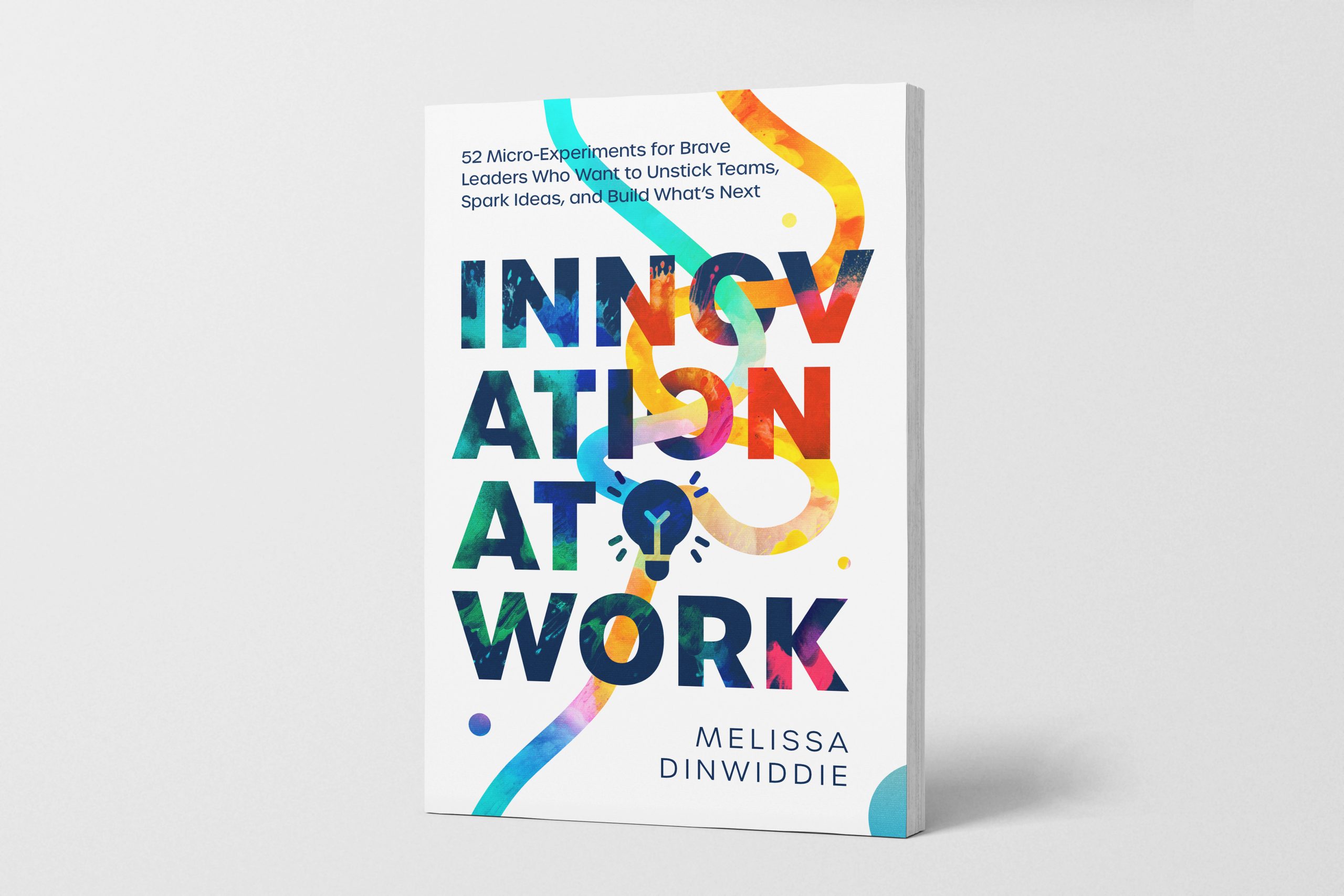
Then run this. It’s Experiment #39 from Innovation at Work.
INNOVATION AUDIT
⏱ 30 minutes · 👥 3–8 people · Remote-friendly
The move: Pull up your team’s actual projects and decisions from the past three months. Not plans. Not intentions. What really happened.
Ask three questions:
- When did we last try something completely new?
- What percentage of our solutions came from outside our industry?
- How often do we test ideas before fully committing?
Score it: Rate the team on frequency (how often), diversity (how different), and speed (how fast).
Why it works: It swaps “we value innovation” for evidence. Evidence is the only thing that tells you whether you’re practicing.
If my calligraphy took this audit, the frequency score would be zero.
That’s not a moral failing. It’s data. And data is where change starts.
Where Are You on the Spectrum?
Most teams aren’t at zero or at a hundred. They’re somewhere in the middle, valuing innovation sincerely and practicing it inconsistently.
If you want to know where yours stands, take the free Innovation Culture Assessment. It takes about 10 minutes and scores your team across my Create the Impossible™ framework: Play Hard, Make Crap, and Learn Fast. The book points to it as the natural follow-up to this audit.
👉 Take the Innovation Culture Assessment
Next week, I’ll dig into the biggest reason intention loses to urgency. Hint: it lives on your team’s calendar.
Build Your Innovation Muscle!
Want more ready-made experiments to help your team build their innovation muscle? Grab the book!
👉Click here for more info
👉Click here for a free preview PDF
👉Click here to buy now on Amazon
👉Click here for a special Leadership Edition — available only on my website — which includes an exclusive 5-part “Innovation Leader’s Edge” video series. Everything you need to run your first micro-experiment, get leadership buy-in, and build lasting innovation culture.