
Click to watch (13:31) or scroll down to read more
Hey there, innovation champions!
Back when I was a professional artist, after years of making art for clients, I knew I needed to get back to making art just for the joy of it. And I knew the path to get there was play. But here’s the thing—I’d completely forgotten how to play.
Sound familiar? If you’re like most of the brilliant tech minds I work with, you probably haven’t thought about play as a business strategy. But stick with me, because what I discovered changed everything.
The Rules That Set Me Free
This is a story I’ve told a thousand times, but it never gets old because the transformation was so profound. There I was, a recovering perfectionist who had spent years following everyone else’s rules about how art should be made. I hypothesized that if I—ever the rule-follower—created some “rules” for myself, I could trick my brain back into the mindspace of a little kid.
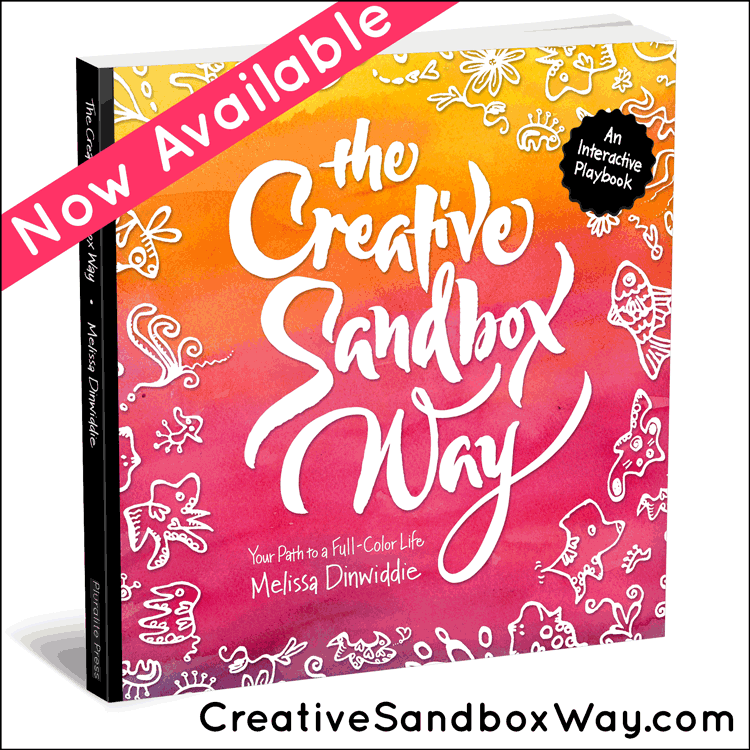
Lo and behold, it worked! Those rules became the 10 guideposts that now form the backbone of my book, The Creative Sandbox Way™. But more importantly, they eventually evolved and distilled down into what I now call the Create the Impossible™ framework.
What I didn’t realize at the time was that these same principles had strategic business applications. Revolutionary ones.
The Pivot That Changed Everything
Just a year after I published The Creative Sandbox Way™, I pivoted from working with individual artists and creatives to working with teams and organizations. Though it took a while to gain traction, and here’s one reason why: I was selling my process—play and creativity—rather than selling the outcomes and value I created for clients.
Then came the breakthrough moment during the pandemic.
When Facebook Called
A contact from a research team at Meta reached out. The team had gaps around communication—their brilliant insights weren’t having the impact and influence they deserved. Plus, they needed a serious morale boost during the depths of social distancing.
Could I help? Why, yes. Yes, I could!
I designed what would become one of my flagship programs, Communicating for Influence™. The manager was initially resistant to how play-based the activities were—they were drawn from the world of improv. When I clarified the specific outcomes each activity was designed to deliver, she grudgingly gave approval, though not without skepticism.
The result? She was thrilled with the skills and common language her team developed. She recommended me to her colleagues, and over six months I worked with five other research teams, and several more in the years since. Participants saw behavior change AND said they were “the most fun meetings I’ve attended all year!”
This is the power of play in driving real business results.
The Science Behind the Magic
But play and fun aren’t just drivers of engagement—they’re drivers of breakthrough thinking. Let me share why this works at a neurological level.
When we play, we bypass our inner critic. That harsh voice that usually says “That’s a terrible idea” or “What if this doesn’t work?” gets quieter. Play activates flow states and enables divergent thinking—the kind of thinking that leads to breakthrough innovations.
I remember a day-long retreat I led for a nonprofit. At the three-quarter mark, we had a deep and challenging conversation that the team had been struggling to navigate for months. But here’s the key: it was sparked after a period of playful activities out on the lawn.
Need to get unstuck? We often try to power our way through problems, but that’s rarely effective. There’s nothing like play to free up our thinking and unlock new pathways to solutions.
The Create the Impossible™ Framework in Action
This is where my three-step framework comes alive:
Step 1: Play Hard
Not “go to Vegas and party” play, but embrace your inner four-year-old. Be open to experimentation. Follow your curiosity.
In that Meta program, we used improv games like “Time Traveler”—imagine explaining a smartphone to someone from 500 years ago. Suddenly, complex technical concepts became accessible.
Step 2: Make Crap
Give yourself permission to create terrible first drafts. The nonprofit team’s breakthrough came when they stopped trying to craft the perfect solution and started throwing out wild, “crappy” ideas. One of those “terrible” ideas sparked their most innovative program.
Step 3: Learn Fast
Turn every experience into rapid learning. Each “failure” becomes data. Each experiment teaches you something valuable.
The Meta teams didn’t just communicate better—they learned to iterate their approach in real-time.
Why Fun Isn’t Frivolous
Here’s what the research tells us: Fun builds the exact capacities we need to compete in today’s market.
Adaptability. Collaboration. Quick thinking. Innovation.
When teams embrace play:
- They generate more creative solutions
- They communicate more effectively
- They build psychological safety faster
- They adapt to change more readily
- They collaborate across silos more naturally
Fun isn’t frivolous—it’s strategic.
Your Innovation Challenge
This week, I want you to try something. Pick one challenge your team is facing—something you’ve been trying to “power through” with traditional brainstorming.
Instead, approach it with play.
Maybe start your next meeting with a quick improv game. Or reframe your challenge as a puzzle to be solved rather than a problem to be endured.
Give your team permission to suggest “crappy” ideas without judgment.
Watch what happens when you create space for play. I guarantee you’ll be surprised by the quality of thinking that emerges.
The Bottom Line
Innovation doesn’t happen in sterile environments where everything is serious and buttoned-up. It happens at the intersection of connection, communication, and creativity.
And the fastest way to get there? Through play.
As I always say: Play is not the opposite of work. Play is how we make work more effective.
So, are you ready to Create the Impossible™ through the power of play?
Let me know how your play experiment goes. I’d love to hear about the breakthroughs you discover when you give your team permission to have fun while they innovate.
Stay curious, stay playful, and keep creating the impossible!
I’d love to hear from you: What’s one work challenge you’ve been trying to “power through” that might benefit from a more playful approach? Click here to let me know!
Senior Leaders: Ready to turn your team’s serious work into breakthrough innovation through strategic play? Book a complimentary Innovation Strategy Session and let’s explore how the Create the Impossible™ framework can transform your approach to innovation.

Leave a Reply