
Hey there, innovation champions!
Most leaders can tell you when innovation has stalled. What they struggle to see is when it’s about to stall—when the very systems that created breakthrough thinking have quietly calcified into comfortable routines that feel productive but have stopped producing anything new.
I discovered this pattern not in a boardroom, but in my art studio.
When the Spark Stops Sparking
For years as a professional artist, creative block paralyzed me. I could meet client deadlines, but creating for my own joy? Impossible.
So I developed what became my Creative Sandbox Way™—permission to lower expectations, ditch perfectionism, work in ridiculously achievable time containers. Fifteen minutes a day. That’s it.
It worked beautifully. I started a daily newsletter called The Daily ArtSpark, sharing snapshots of whatever I created that morning. I woke up energized, excited to put paint on paper. My audience loved it. I was in a groove.
Until I wasn’t.
The Groove That Became a Rut
The shift was subtle. Where I’d once bounded to my art table, I started dragging my feet. The work still looked good—people were still responding positively—but internally, something had flatlined.
Here’s what made it insidious: I kept doing the same thing anyway.
Why wouldn’t I? The validation was consistent. The process was efficient. Changing would require discomfort. I was in a groove, after all.
Except I wasn’t. I was in a rut.
The Uncomfortable Truth About Innovation
That’s when I saw the pattern clearly—one that repeats whether we’re talking about art, product development, or how your engineering team approaches problem-solving:
Innovation requires discomfort. But once we innovate our way into comfort, we have to deliberately choose discomfort again to keep innovating.
The cycle looks like this:
Block/This is impossible → Awareness → Lean into discomfort → This isn’t working! → Maybe there’s something here → Groove! → Hmm, is this actually a rut? → Block/This is impossible
I’d gotten to my “artspark” style through experimentation—messy, uncertain, uncomfortable experimentation. Once I’d innovated my way to a flowing process, staying fresh meant intentionally pulling myself back into uncertainty.
That’s excruciating when you’re finally comfortable.
Why This Matters for Your Teams
Here’s what I’m curious about: How many innovation initiatives in your organization have quietly slipped from “groove” to “rut”?
Not the ones that obviously failed. The ones that are still running. Still getting decent participation. Still producing… something.
But not producing anything surprising anymore.
Maybe it’s the quarterly brainstorm session that generates the same categories of ideas every time. Or the innovation challenge that’s in its third year with flatlined participation. Or the framework that worked brilliantly two years ago but now feels like going through motions.
The teams doing these things aren’t failing. They’re succeeding at executing a comfortable process. Which is exactly the problem.
The Pattern I See (And Why It’s Hard to Spot)
When I work with analytical teams at companies like Google or Meta, I often see this: they’ve innovated their way to a systematic approach that works. Engineers love systems. Project managers love repeatable processes. That’s not a bug—it’s why they’re excellent at what they do.
But the system that got you to innovation isn’t the same system that keeps you innovating.
The original breakthrough required tolerance for messiness, failed experiments, and the discomfort of not knowing. Once you’ve systematized those insights into a repeatable process, you’ve optimized away the very conditions that made innovation possible.
You’re in a groove. But grooves, by definition, keep you in one track.
The Question Worth Asking
I don’t have a tidy five-step solution for this. I’m not sure there is one—which is itself the point.
But I am curious about something: What in your organization looks like “working” but has stopped producing anything genuinely new?
Not the initiatives that failed spectacularly. The ones that succeeded so well they became comfortable. The grooves that might be ruts.
Because the leaders who can spot that pattern—who can see when their teams’ comfort is actually their constraint—those are the ones who create conditions for the next wave of breakthrough thinking.
Even when (especially when) it means getting uncomfortable again.
A Tool for Recognizing the Pattern
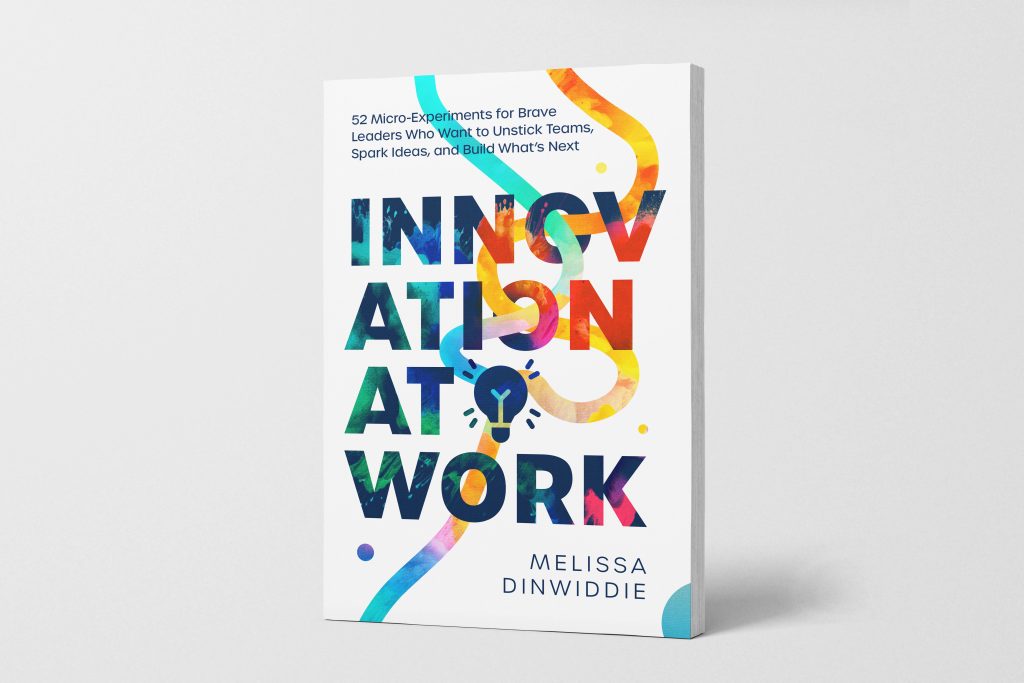
This groove-to-rut cycle is exactly why I wrote Innovation at Work: 52 Micro-Experiments for Brave Leaders Who Want to Unstick Teams, Spark Ideas, and Build What’s Next.
Not another book of innovation platitudes. Fifty-two small, uncomfortable experiments designed specifically for analytical teams who need systematic tools to break out of comfortable patterns—without derailing their day jobs or chasing shiny objects.
The book launches March 10, but you can download a free preview here and see if this approach resonates with how your teams actually work.
And if you want to be part of the launch team (early access, behind-the-scenes insights, and a chance to shape how this reaches other leaders), join here.
Want to explore this for your team? I work with analytical teams who need to unstick their creative problem-solving without abandoning the systematic thinking that makes them excellent. If you’re wondering whether your innovation grooves have become ruts, let’s talk: Book an Innovation Strategy Session
Next week: Why I stopped writing innovation advice for “creative types”—and what analytical teams actually need instead.