
Click to watch (09:39) or scroll down to read more
Hey there, innovation champions!
Last Saturday, my improv team took the stage for the seventh time in twelve weeks. Same ritual every time: we walk out with nothing. No script. No idea what the story is, who we’re playing, or what song we’re about to make up on the spot.
I should hate this.
I’m not a natural improviser. I’m a planner. I like scripts, and contingency plans for the scripts. If you’ve ever sat across from me in a strategy meeting, you know I like to see three moves ahead before I commit to move one.
Which is exactly why improv has taught me more about leadership than almost anything else in my toolkit.
The Skill Nobody Hires For
Here’s the pattern I see constantly with the leaders I work with: they were promoted because they’re rigorous. Because they reduce uncertainty. Because they’re the person in the room who can be trusted to have a plan.
That’s a real skill, and it matters.
But it’s not the same skill as leading through uncertainty — the moments when there is no plan yet, when the ground is still moving, when your team is looking at you for direction you don’t actually have.
Eliminating ambiguity and leading through ambiguity are different muscles. Most leadership development — the standard stuff most companies budget for — trains the first one. But right now, the second one matters just as much, maybe more.
And here’s the problem: you can’t build that muscle by sitting in a workshop and being told to ’embrace uncertainty.’ You have to actually practice responding to something you didn’t see coming, in real time, again and again, until it stops being a theory and starts being a reflex. That’s exactly what improv does.
The “Yes, And” Reflex
In improv, there’s a moment every performer eventually faces: you had a direction in mind for the scene, and your partner just took it somewhere completely different.
You have two options. Fight it — try to drag the scene back to your plan — and it collapses. Or “yes, and” it: accept what just happened as true, and build on top of it.
The scenes that work are never the ones where someone successfully executed their original plan. They’re the ones where someone let go of the plan fast enough to build something better with what was actually in front of them.
That’s not a performance trick. It’s a decision-making pattern. And it’s trainable.
Try This Today: Improv the Process
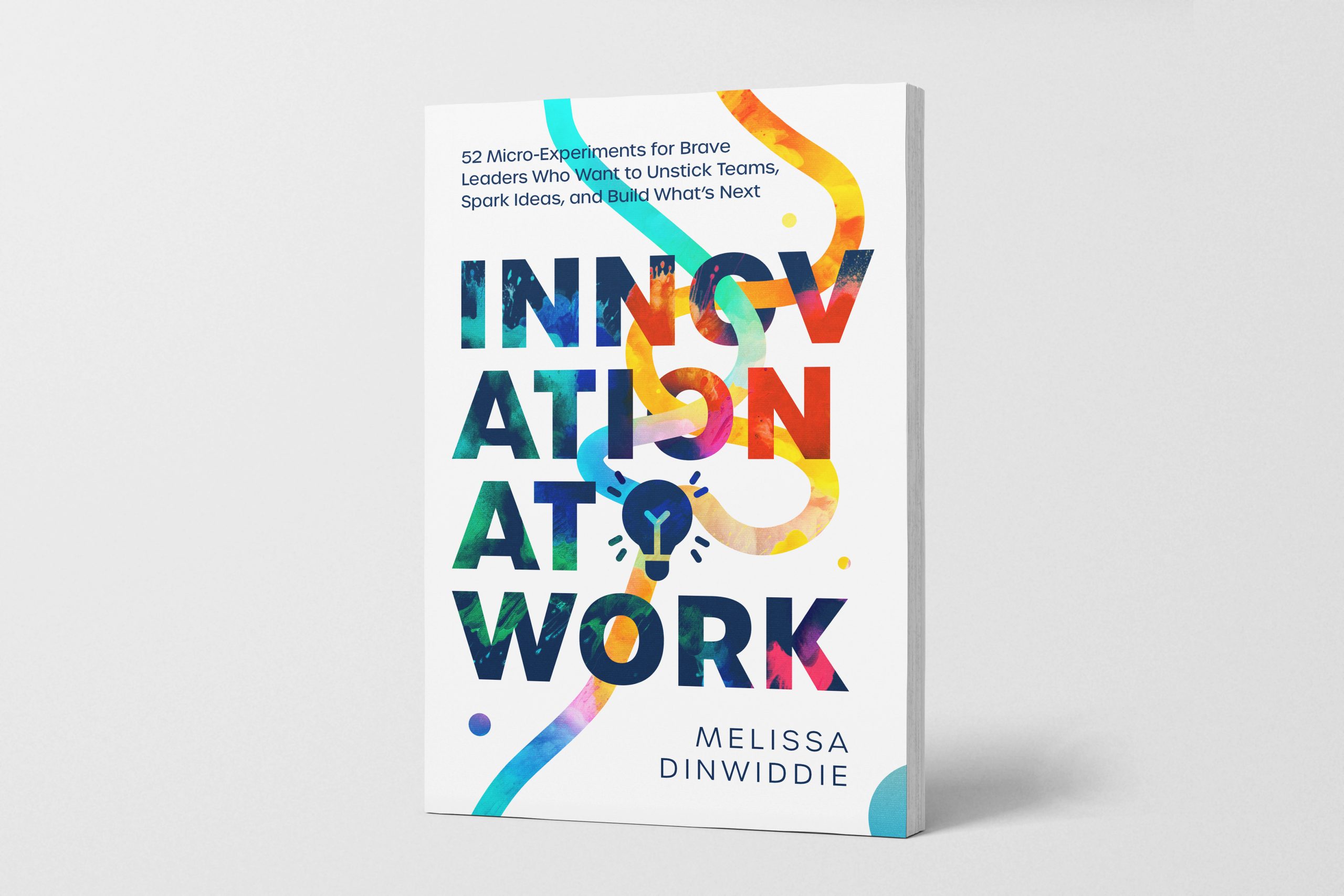
This is Experiment #43 from Innovation at Work, and it’s one of the fastest ways I know to build that muscle on a real team, with a real problem, in under fifteen minutes.
The Experiment:
Pick one recurring process your team complains about — a status meeting, a handoff, a review cycle, anything that’s gone stale. Set a 10-minute timer. Using “yes, and” thinking, improvise a Version 2.0 of that process out loud, as a group. No one is allowed to say “that won’t work” — only “yes, and here’s how we’d handle that.”
Why it works:
The constraint is the point. Ten minutes is too short for careful planning, which is exactly what forces the group into the same reflex improvisers use onstage — building on what’s offered instead of defending what’s familiar.
Watch for this:
Your most analytical team members will often be better at this than your self-described “creative” ones. This isn’t about creativity as a personality trait — it’s about giving rigorous thinkers a structure where rapid iteration feels safe instead of reckless.
Run the old process and the new one side by side for a week, then compare.
What This Actually Builds
None of this is about becoming less rigorous, less analytical, or more “go with the flow.” It’s the opposite. It’s building the specific capacity to stay engaged and clear-headed when the plan stops being reliable — which, for every team I’ve ever worked with, is not an edge case. It’s Tuesday.
This is the muscle Create the Impossible™ is built to train: Play Hard (treat the ambiguity as something to work with, not around), Make Crap (let the first version of the new process be rough), Learn Fast (compare, adjust, move on).
I’ve also started having quiet, unscripted conversations with senior leaders who’ve actually led through real ambiguity — not just growth, but genuine uncertainty — for something new I’m building. More on that soon.
In the meantime: what’s one process on your team that’s gone stale and could use a “yes, and”? Click here and tell me — I read every response.