Click to watch (14:33) or scroll down to read more
Hey there, innovation champions!
Last week, in “Paying Down Innovation Debt,” I made you a promise. I said that if your next performance review still punishes the risks you just celebrated, your team will believe the review. Every time.
So this week, let’s talk about the review.
But first: yes, another ketubah story. Stay with me.
The Man Who Wanted It Handmade
One of the last commissions I accepted as a professional artist was a hand-painted ketubah, the Jewish marriage contract. The groom wanted one of my most popular print designs.
I actually tried to talk him into buying the print. He wouldn’t budge. He wanted an original: the same design, made by the hand of the artist. Not mechanically produced. That was the whole point.
So I gave him handmade. I drew the lines slightly imperfect on purpose, without a straight edge, so they’d look like a person made them. I cut the roses out by hand with an X-Acto blade and backed them with red pastel paper. I painted the leaves with watercolor made from actual ground gold.
At least 15 hours bent over my drafting table. Then I shipped it to Los Angeles.
A few weeks after the wedding, he emailed me. He was unhappy. The rose stems looked uneven. He could see faint pencil marks under the watercolor. The cuts weren’t perfectly straight.
I was stunned. He’d asked for the work of a human hand. Then he judged it against the work of a machine: the very print I’d tried to sell him in the first place. (Which also had intentionally “uneven” lines, btw!)
Not long after, I stopped taking commissions altogether. I was already burning out, and that email felt like the Universe telling me it was time.
He Wasn’t Lying
Here’s what took me years to see. That groom wasn’t lying about what he wanted. He truly valued handmade.
But when it came time to judge the work, his eye went straight to the default standard: straight, clean, flawless. The value lived in his words. The criteria lived somewhere else.
And nobody wrote the criteria down. Which is ironic, because a ketubah is a contract. It spells out what each party commits to. We agreed on everything except how the work would be judged.
That lesson followed me through every version of my business since. Agree on the criteria up front. So much in life comes down to expectations.
Your Review Form Is the Real Contract
Now look at your own organization.
Leadership says it values experimentation. Smart risks. Sharing half-formed ideas. Learning fast.
Then review season arrives, and the form asks: Did you hit your targets? Did you ship on time? Any misses?
Nobody’s lying here either. Your leaders really do want innovation. But the review is the moment of judgment, and at the moment of judgment, people default to polish.
Your team knows this. They’ve read the real contract. It isn’t the values page. It’s the review form.
Whatever your review measures is your innovation strategy. Everything else is decoration.
The Handmade Test
Here’s a quick check to run before your next review cycle. I call it the Handmade Test. It compares what you say with what you measure.
THE HANDMADE TEST
What we say → What the review actually asks
“Experiment” → “Did you hit every target?”
“Fail fast” → “Any missed deadlines?”
“Share rough ideas early” → “Were your deliverables polished?”
“Collaborate” → “What did you personally produce?”
“Think long-term” → “What did you deliver this quarter?”
The test: For every value you claim, find the line on the review that measures it. If there isn’t one, your team already knows which one wins.
You don’t have to throw out outcome metrics. Targets matter. But if nothing on the form rewards the attempt, the learning, or the new capability, your people will do the rational thing. They’ll play it safe and hit the number.
Try This at Month’s End: Innovation Time Travel
Rewriting a review form takes time. Changing what you pay attention to doesn’t.
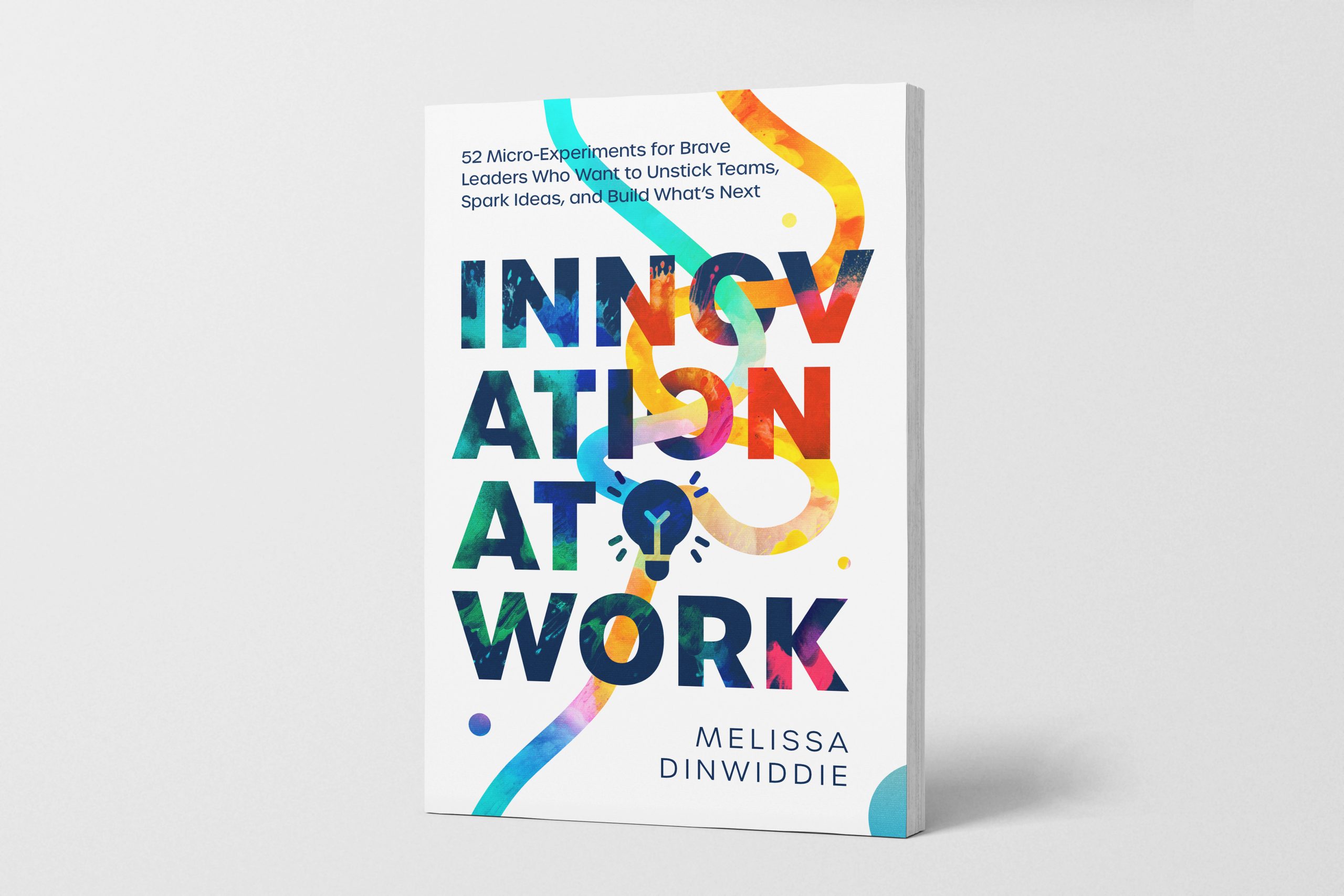
This is Experiment #52 from Innovation at Work, and the book specifically suggests running it during performance cycles.
INNOVATION TIME TRAVEL
⏱ 15 minutes · 👥 3–8 people · Remote-friendly
The move: At the end of each month, ask your team: “What innovation experiment should we try next month that would stretch us in a new direction?”
Make it specific: Name clear success metrics before you start.
Close the loop: Next month, write down what the experiment taught you about your team’s capabilities.
Why it works: It builds a written record of learning and growth, which is exactly what most review forms never capture.
Run it for a few months, and you’ll walk into review season with something new: evidence of growth that has nothing to do with whether every experiment “worked.”
Write the Criteria Down
I couldn’t fix that groom’s expectations after the fact. By the time his email arrived, the judging was done.
Your team is in the same spot. If they only find out what really counts when the review lands, it’s too late to take the risks you said you wanted.
So write the criteria down. Up front. Where everyone can see them.
And if you’re looking at your review process thinking, “Okay, but how do we actually change this across a whole team?” — that’s the conversation I love having.
Book a free 30-minute Innovation Strategy Session, and we’ll look at where your stated values and your real criteria don’t match.
Build Your Innovation Muscle!
Want more ready-made experiments to help your team build their innovation muscle? Grab the book!
👉Click here for more info
👉Click here for a free preview PDF
👉Click here to buy now on Amazon
👉Click here for a special Leadership Edition — available only on my website — which includes an exclusive 5-part “Innovation Leader’s Edge” video series. Everything you need to run your first micro-experiment, get leadership buy-in, and build lasting innovation culture.