Click to watch (13:57) or scroll down to read more
Hey there, innovation champions!
The Room That Won’t Talk
You ask the question. “So, what did everyone think?”
And then: nothing.
I’ve seen entire rooms freeze in a debrief more times than I can count. Smart people, good ideas in their heads, and not one hand in the air.
The debrief is where an activity turns into an insight someone can use on Monday. When the room goes silent, the value of everything that came before it goes silent too.
Picture two versions of the same moment. In the first, you’re with friends you’ve known for years, and someone invites you to step into the middle of a circle and share a small truth about yourself. Easy.
In the second, you’re at work, up for a promotion, with your boss and your boss’s boss watching, and the invitation is to step into the middle and name what isn’t working. It’s the same circle with completely different stakes.
Back in July, I wrote about why warm relationships don’t erase power dynamics. This piece is about what you can actually do about it.
Twenty People and One Chicken Noise
Recently, the host of a Diwali party asked me to lead the group through a few connection activities. About 20 people participated.
We started with a power pose, complete with a power sound. The sound was “bok.” Nobody realized they’d been turned into a room full of chickens until they were already laughing. (Hat tip to Alex Lamb.)
Then people paired up for no-touch high fives, collected as many creative ones as they could in 30 seconds, and landed with a new partner to invent a secret handshake. (Hat tip to Jan Keck for that sequence.)
When I invited pairs to show the room their handshake if they wanted to, every single pair did. There were leg taps, spins, and full-body handshakes, and the applause kept coming.
Fifteen minutes in, the room had been laughing nonstop. So when I stepped into the middle of a circle and said one true thing about myself, “I love ice cream,” people didn’t hesitate. Everyone who shared it joined me. Then they started stepping in on their own. “I’m a pet parent.” “I love cycling.”
Nobody told them it was safe. Each step proved it.
Permission Is Engineered, Not Announced
In March, I made the case that innovation stalls on permission, not creativity. The question that leaves you with is how you actually grant it.
You don’t grant it by saying so. “There are no bad ideas here” is a claim. People believe evidence.
That’s what I call Permission Engineering: deliberately designing the order and conditions in which your team takes risks, so every small risk produces proof that the next one is safe.
It’s a core leadership job. It just isn’t in anyone’s job description.
The party worked because the asks got riskier in sequence. Laughing in a crowd risks nothing. Inventing a handshake with one person risks a little. Showing it to the room risks more, but you aren’t alone. Stepping into the circle by yourself comes last, after the room has already shown it will catch you.
Too many workplaces run that sequence backwards.
A Typical Start
You may have seen this yourself. The kickoff opens with “bring your boldest ideas.” The retro opens with “what went wrong?” The all-hands asks for candid feedback on the strategy, live, in front of the executive team.
Every one of those is the circle, with nothing underneath it.
When nobody speaks, the silence gets read as a lack of ideas or a lack of engagement. Far more often, it’s a rational calculation: I haven’t seen any evidence that it’s safe to say this here.
The Permission Ladder
This is the ladder I’d have your team climb. Take one rung at a time, inside meetings you already have. Each rung comes with an experiment from Innovation at Work you can run this week.
🪜 THE PERMISSION LADDER
Climb in order. The leader goes first on every rung.
Rung 1: Laugh together. Everyone at once, nobody singled out.
Try: Experiment #6, Yes, And… That’s Terrible!
Rung 2: Make something with one person. A small audience and real collaboration.
Try: Experiment #22, Unlikely Allies
Rung 3: Show rough work, by choice. Opt in, with a partner beside you.
Try: Experiment #1, The Crappy First Draft Showcase
Rung 4: Say the true thing. Alone in the middle, after the leader has gone first.
Try: Experiment #20, Declare a Failure
If rung 3 is the one you personally find hardest, my recent piece “Let It Be Crappy First” is about exactly that.
Your Move Comes First
The rule holding the ladder together is simple: you go first.
When a leader laughs at themselves, shares a crappy draft, or names a failure out loud, that’s the evidence the room has been waiting for. No memo or values poster can do that work for you.
One reader put it this way in an Amazon review: the book connects “the permission to share half-formed ideas” to hard business strategy. That connection is the whole job. Permission isn’t a soft skill. It’s what determines whether your team’s best ideas ever reach the room.
If your team has gone quiet and you aren’t sure which rung got skipped, let’s figure it out together. Book a complimentary 30-minute Innovation Strategy Session with me. We’ll look at where your team is on the ladder and what to try first.
Build Your Innovation Muscle!
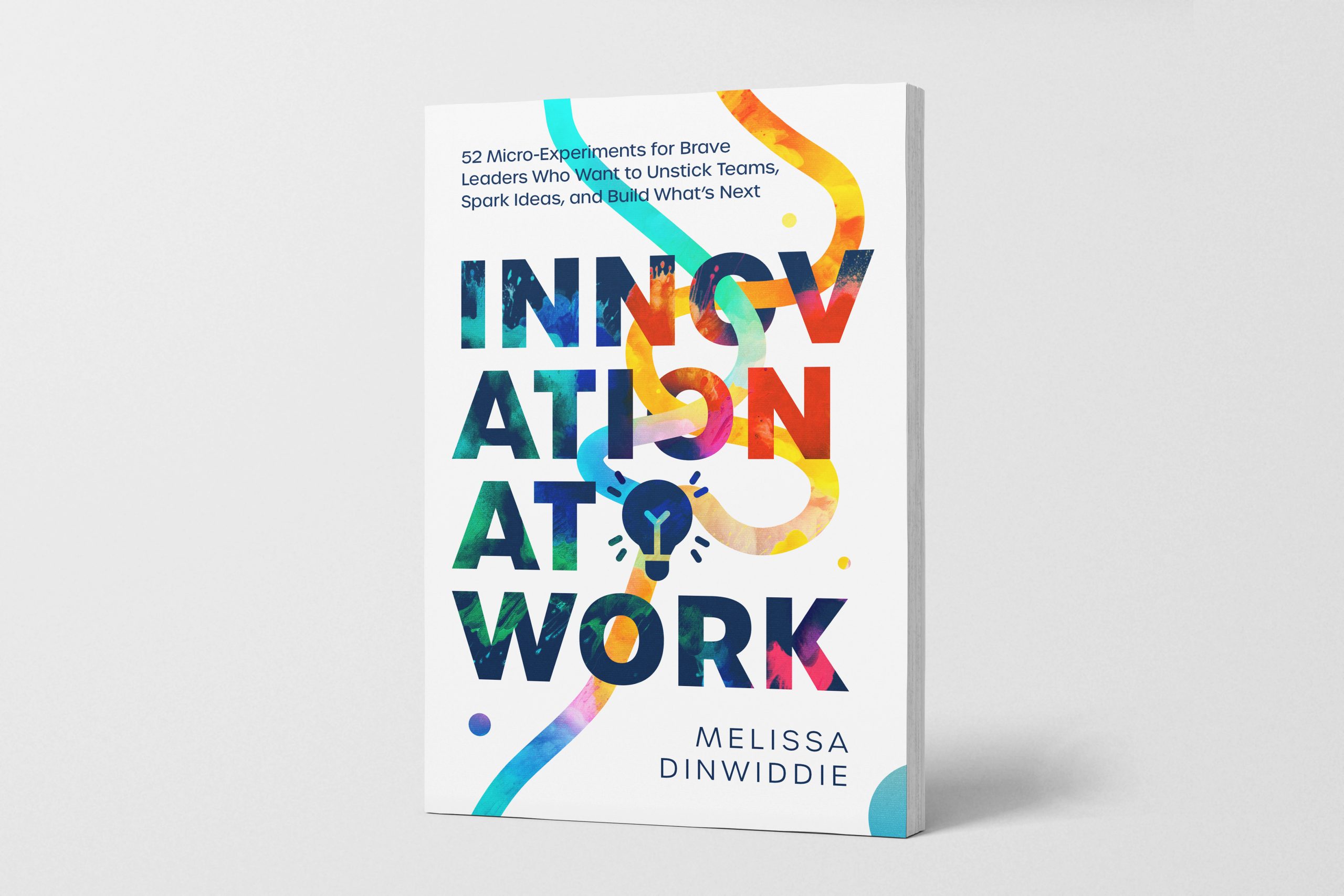
Want more ready-made experiments to help your team build their innovation muscle? Grab the book!
 👉Click here for more info
👉Click here for a free preview PDF
👉Click here to buy now on Amazon
👉Click here for a special Leadership Edition — available only on my website — which includes an exclusive 5-part “Innovation Leader’s Edge” video series. Everything you need to run your first micro-experiment, get leadership buy-in, and build lasting innovation culture.