Quick note: No video this week, as I’m head-down working on my second book, Innovation at Work. I’ve cleared my calendar to devote every spare minute to book production, which meant making some hard choices!
Watch for videos to return in a few weeks. In the meantime, enjoy this week’s article!
Hey there, innovation champions!
I need to tell you about something that happened two weeks ago that completely validates what I’ve suspected for years.
I was standing in front of 125 project managers at the PMI San Francisco Bay Area Chapter’s Professional Development Day. These are people who live and breathe Gantt charts, risk registers, and dependency matrices. The exact opposite of what most people imagine when they think “creative.”
And I was about to ask them to do something that would make most executives uncomfortable: play improv games with strangers.
Here’s what happened next—and why it matters for every tech leader who thinks their analytical team “just isn’t creative enough.”
The Stereotype That’s Costing You Millions
Let me guess: When you think about innovation in your organization, you picture the product team brainstorming on whiteboards. The design team sketching wild concepts. Maybe the engineering team experimenting with new architectures.
But the project managers? The analysts? The people managing timelines and dependencies?
They’re “not the creative types.”
This assumption is costing you breakthroughs.
Here’s what I’ve learned working with teams at Google, Meta, Salesforce, and now PMI: Analytical minds don’t just can innovate—they often innovate better than so-called “creative types.”
Why? Because they already have the discipline, structure, and pattern-recognition skills that turn wild ideas into implemented reality.
What Happened When 125 “Non-Creative” People Played
Back to that room full of project managers.
I started with three simple phrases, asking them to repeat after me:
Be Playful.
Be Imperfect.
Be Curious.
Then we dove into three micro-experiments designed specifically for analytical thinkers.
Round One: The One-Word Story
In groups of three, participants told stories one word at a time. No planning, no editing—just keep it moving.
Then came the twist: one person became the “AI voice,” throwing in random, unexpected words to derail the story.
Chaos ensued. Stories collapsed and recovered, collapsed and recovered.
But here’s what these analytical professionals noticed immediately: When they treated surprises as obstacles, stories died. When they treated them as prompts, stories expanded.
That’s the exact skill needed to thrive with AI, shifting requirements, and uncertain markets.
Round Two: Imaginary AI Tools
I divided the room into thirds. Each section pretended they had an ordinary object—a paperclip, a shoe, or an umbrella—that had been magically transformed into a super-powered AI assistant for project managers.
Their task: Imagine 3-5 creative ways this “AI-object” could make their work easier.
Ideas ranged from playful to profound:
- Paperclips that held stakeholders together
- Shoes that helped people walk in each other’s shoes
- Umbrellas that shielded teams from scope creep
What looked like silliness was actually structured lateral thinking—a fast way to practice adaptive creativity without the pressure of “being creative.”
Round Three: Rock-Paper-Scissors Tournament
We closed with a giant tournament with a twist: each time someone lost, they instantly became their opponent’s biggest cheerleader.
Soon, 125 analytical professionals were jumping, laughing, and cheering like they were at a championship game.
The debrief question: “Which felt easier—being the competitor or the cheerleader?”
Vast majority: “Cheerleader.”
That moment revealed something critical: in complex, fast-changing environments, collaboration beats competition every time—even for people trained to focus on individual performance metrics.
The Feedback That Proves Everything
Remember, these were project managers. People who manage risk for a living. People who are trained to spot problems, not possibilities.
Here’s what they said afterward:
“Melissa bridges the analytical and the imaginative worlds, helping leaders not only tolerate but thrive in uncertainty and disruption. Her presentation was engaging, playful, and thought-provoking… and she shared real tools and models (not just buzzwords) that participants could apply immediately.” — Emmanuel Hyppolite, CAPM, MBA
“She made creativity feel accessible, even for those who don’t think of themselves as creative.” — Multiple attendees
“It was much easier to connect with people for the rest of the day.” — Session participant
And my personal favorite:
“I could see the breakthroughs happening—it was ELECTRIC!” — Marie Spark, attendee
Why Analytical Minds Excel at Innovation
Here’s the truth most people miss: Innovation isn’t about being “creative.” It’s about systematic experimentation.
And guess who’s already really good at systematic approaches? Your analytical team members.
They already know how to:
- Break big problems into manageable chunks
- Test hypotheses methodically
- Learn from data and iterate quickly
- Spot patterns others miss
- Manage constraints creatively
The only thing holding them back? The belief that they’re “not creative.”
My Create the Impossible™ framework—Play Hard, Make Crap, Learn Fast—gives analytical minds permission to apply their natural strengths to creative challenges.
Play Hard = Structured experimentation (they already do this with A/B testing)
Make Crap = Rapid prototyping (they already understand MVP thinking)
Learn Fast = Iterative improvement (they already practice continuous improvement)
See? They’re already doing innovation. They just don’t call it that.
The Real Barrier Isn’t Ability—It’s Permission
Those 125 project managers didn’t need creativity training. They needed permission to experiment without perfection.
That’s exactly what those three micro-experiments gave them—a safe space to try, fail, laugh, and discover that they were more creative than they thought.
And that’s what Innovation at Work is designed to do: give your analytical team members systematic experiments that prove to themselves they CAN innovate.
No personality transplant required.
What This Means for Your Team
If you’ve been waiting for your analytical team members to “become more creative,” you’re solving the wrong problem.
They don’t need to change who they are. They need:
- Permission to experiment without being perfect
- Structured frameworks that leverage their analytical strengths
- Repeated practice that builds innovation muscle memory
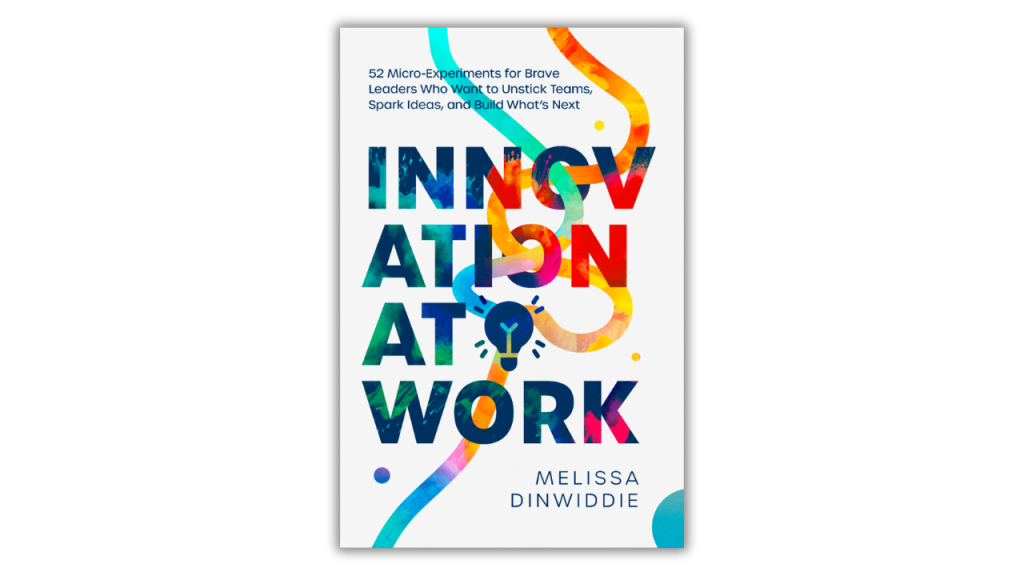
That’s why Innovation at Work contains 52 micro-experiments specifically designed for analytical minds—short, structured, repeatable exercises that build innovation capability systematically.
Because the breakthrough isn’t turning your project managers into “creative types.”
It’s unleashing the innovation potential they already have.
Ready to prove it to your team? Join the book waitlist to get early access to the 52 experiments designed specifically for analytical innovators.
Next week, I’m tackling the question I get most often: “How is this different from design thinking?” Spoiler: It’s not either/or—micro-experiments are what make multi-day workshops actually stick.