
Hey there, innovation champions!
“We need to innovate, but we can’t pull people away from their desks.”
If you’re a VP of L&D, a chapter president planning your annual conference, or a research director managing tight project timelines, you’ve said some version of this. Your team needs breakthrough thinking capabilities, but you can’t pause operations for elaborate training programs.
Here’s what I’ve learned working with teams at Google, Meta, Salesforce, and most recently with 125 project managers at PMI San Francisco Bay Area: You don’t need day-long workshops to build innovation capabilities. You need the right micro-experiments embedded into the work you’re already doing.
Let me show you exactly how this works.
Why Traditional Innovation Training Fails Your Schedule
Most innovation programs assume you have luxuries you don’t actually have: dedicated innovation time, multi-day offsites, freedom to “pause and innovate.”
But your reality looks different. You’re managing:
- Conference agendas packed with concurrent sessions and networking breaks
- Team calendars already bursting with sprint planning and stakeholder meetings
- Budgets that can’t absorb lost productivity from day-long workshops
- Leaders who need to see ROI before investing more time
The pressure creates a catch-22: You need innovation capabilities to stay competitive, but you can’t afford to stop competing long enough to build them.
What if you didn’t have to choose?
What Happened in 45 Minutes With 125 Project Managers
When PMI San Francisco Bay Area Chapter invited me to kick off their Professional Development Day, we had 45 minutes to demonstrate what’s possible when you use structured play to build innovation capabilities.
No slides. No lecture. Just my Create the Impossible™ framework in action.
I opened with three phrases, asking everyone to repeat after me:
Be Playful.
Be Imperfect.
Be Curious.
Then we dove into three structured experiments.
Round One: The One-Word Story
Groups of three told stories collaboratively, one word at a time. Then came the twist: one person became the “AI voice,” throwing in random curveballs.
Stories collapsed and recovered, collapsed and recovered.
Here’s what these analytical minds noticed in just 12 minutes: When they treated surprises as obstacles, stories died. When they treated them as prompts, stories expanded.
That’s the exact adaptive capacity needed for thriving with AI, shifting requirements, and uncertain markets—learned through doing, not through PowerPoint.
Round Two: Imaginary AI Tools
I divided the room into thirds. Each section imagined an ordinary object—a paperclip, a shoe, an umbrella—transformed into an AI assistant for project managers.
Ideas ranged from playful to profound: paperclips that held stakeholders together, umbrellas that shielded teams from scope creep.
What looked like silliness was structured lateral thinking—fast, embodied practice of creative problem-solving they could apply to real project challenges.
Round Three: The Championship Mindset
A Rock-Paper-Scissors tournament where losers became their opponent’s biggest fans. Within minutes, 125 people were laughing, cheering, collaborating.
When asked which felt easier—competing or cheerleading—the vast majority said cheerleading. In complex environments, collaboration beats competition every time.
One participant, Marie Spark, wrote afterward: “I could see the breakthroughs happening—it was ELECTRIC!”
Another noted that after our session, “it was much easier to connect with people for the rest of the day.”
The Framework Behind the Transformation
What you just witnessed is my Create the Impossible™ framework in action: Play Hard → Make Crap → Learn Fast.
Each of those three rounds demonstrated a core principle:
Play Hard = Structured experimentation that bypasses perfectionism
Make Crap = Permission to create without judgment, which accelerates idea generation
Learn Fast = Rapid iteration and pattern recognition that builds adaptive capacity
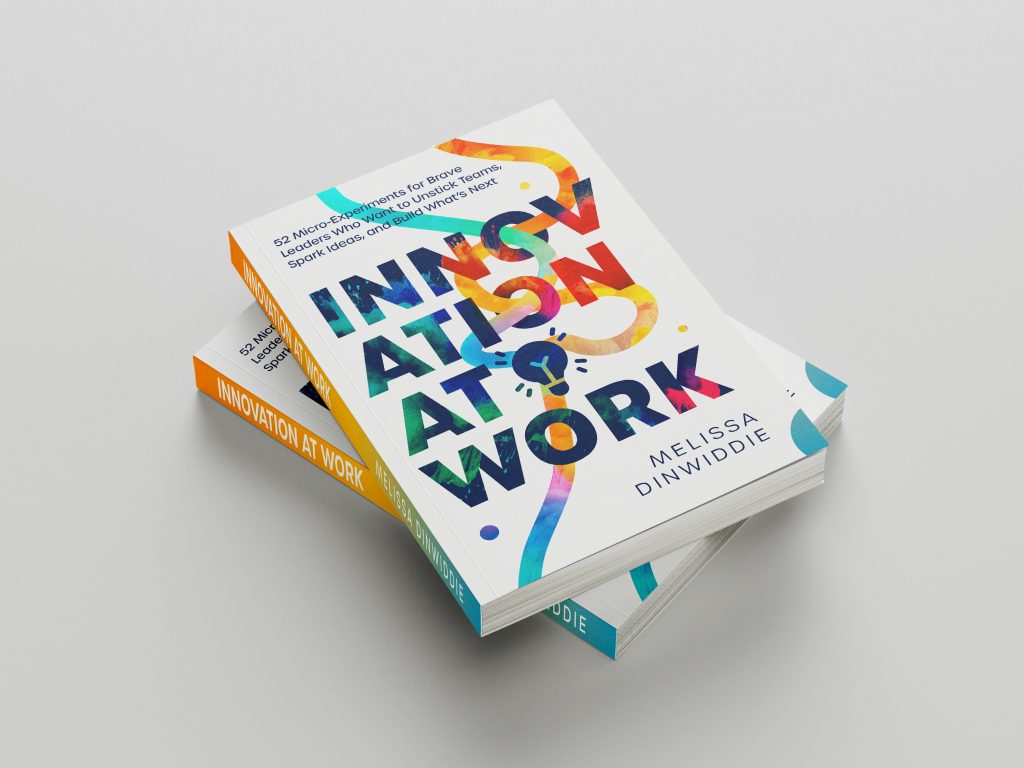
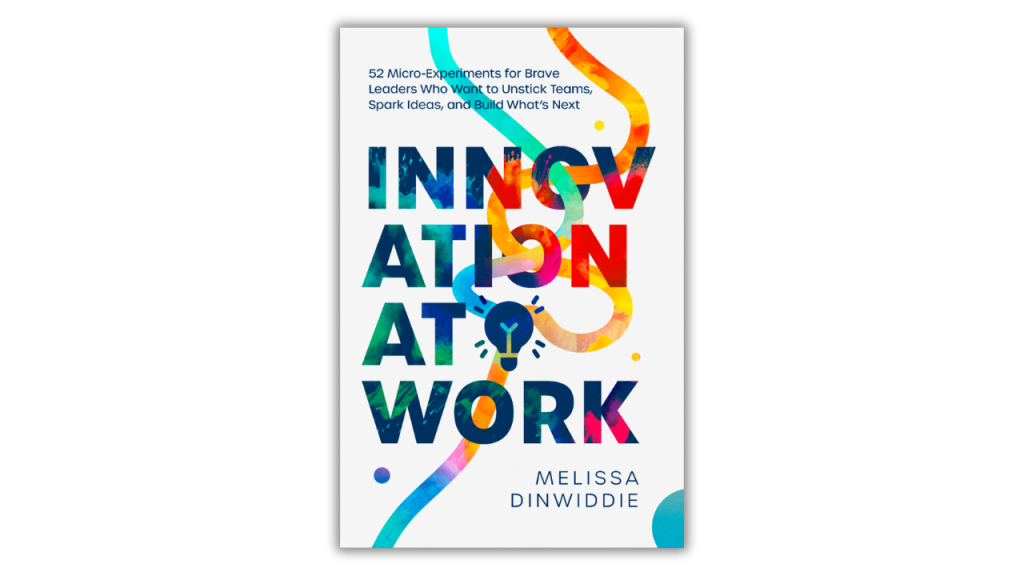
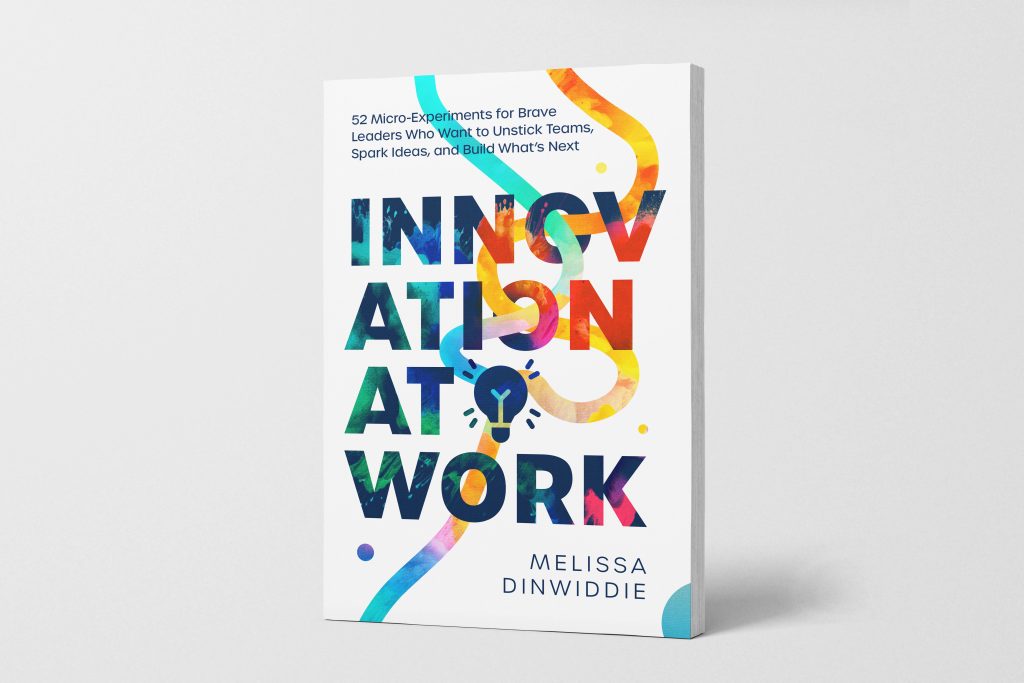
This is the same methodology that powers all 52 micro-experiments in my forthcoming book, Innovation at Work: 52 Micro-Experiments for Brave Leaders Who Want to Unstick Teams, Spark Ideas, and Build What’s Next.
The difference? Those were three custom exercises for a facilitated client session. The book gives you 52 repeatable experiments you can run with your own team—each designed to fit into existing meetings, each building specific innovation capabilities without requiring you to pull anyone offline.
The Truth About “52 Experiments”
I know what you might be thinking: “52 experiments sounds overwhelming. I don’t have time to implement all that.”
Here’s the truth: You don’t implement all 52 at once. You don’t even implement all 52 ever, unless you want to.
The book is designed three ways:
Option 1: The Crisis Protocol
Facing a specific innovation challenge right now? The book includes 90-minute bundles—curated sets of experiments designed to address particular crises (teams stuck in perfectionism, communication breakdowns, creative blocks). Run the protocol once, see immediate results.
Option 2: The Systematic Builder
Want to build lasting innovation culture? Pick one experiment per week. Run it in your existing team meeting. That’s 15 minutes out of your weekly standup, sprint planning, or all-hands. By the end of the year, you’ve transformed how your team thinks and works—without a single day-long workshop.
Option 3: The Strategic Selector
Need to solve a specific problem? Use the quick-reference guides to find the exact experiment that addresses your current challenge. Run just that one. See what shifts.
The point isn’t to do all 52. The point is to have a systematic toolkit that works within your actual constraints.
Why Micro-Experiments Work When Big Programs Don’t
Remember those three exercises with the project managers? Each one was designed to be small enough to feel safe but powerful enough to create real insight.
That’s the paradox of transformation: Massive change doesn’t require massive time investments. It requires the right small actions, repeated strategically.
Think about what’s possible when you use this methodology:
A 15-minute “Crappy First Draft Showcase” in your Monday meeting breaks perfectionism faster than a full-day workshop on psychological safety.
A 10-minute “Switch Seats, Switch Minds” exercise during sprint planning builds empathy more effectively than hours of lecture about user-centered thinking.
A 20-minute “Ugly Prototype Sprint” generates breakthrough ideas that weeks of polished presentations never surface.
Why? Because doing beats discussing. Always.
Emmanuel Hyppolite, who attended that PMI session, captured it perfectly: “She shared real tools and models (not just buzzwords) that participants could apply immediately.”
Immediately. That’s the difference between business books you read and business books you use.
What Your Team Actually Gets
Innovation at Work isn’t a book you read and shelve. It’s a playbook you keep open at your desk.
Each of the 52 experiments includes:
- The specific business problem it solves
- Exactly how to run it (including scripts for some of the experiments!)
- Why it works (the research and psychology behind it)
- What success looks like
- How to adapt it for your team’s specific needs
Plus strategic implementation guides that show you how to combine experiments for maximum impact—whether you have 15 minutes or 90.
The experiments are organized around the Create the Impossible™ framework:
Play Hard (Experiments 1-13): Break through perfectionism and creative blocks
Make Crap (Experiments 14-26): Accelerate prototyping and idea generation
Learn Fast (Experiments 27-39): Speed up learning cycles and iteration
Create the Impossible™ (Experiments 40-52): Build lasting innovation habits
You don’t need to understand the framework to use the experiments. You just need 5-20 minutes and a willingness to try something different.
The Same Methodology, Now in Your Hands
What I demonstrated with those 125 project managers—structured play that creates breakthrough thinking in minutes, not days—is what you get with every experiment in the book.
The same methodology. The same framework. The same philosophy that doing beats discussing.
Just systematized so you can run these experiments yourself, with your own team, on your own schedule.
The Book Launch Is Coming (And You Can Get It Early)
Innovation at Work officially launches February 10, 2026. But if you join the waitlist now, you’ll get exclusive early access—including notification of the $0.99 Kindle special.
Even better: Join the Launch Team and get:
✨ The complete book on January 5 (five weeks before the public)
📖 Exclusive bonus materials not available anywhere else
🎯 Behind-the-scenes updates on the launch
💡 First look at all 52 micro-experiments before the world sees them
Your part: Read it (or skim the experiments most relevant to your challenges), write an honest review, and post it on Amazon January 19-21. That’s it.
The timeline:
January 5: Your advance reader copy arrives
January 16: Submit your review via simple Google Form (I’ll format it for you)
January 19-21: Copy/paste to Amazon
February 10: Official launch day 🎉
This isn’t “more work”—it’s early access to the exact toolkit you need to build innovation capabilities without disrupting operations.
Ready to get your team innovating without pulling them away from their desks?
→ Join the Launch Team here for early access + exclusive bonuses
→ Or join the waitlist to be notified when the book launches (plus get the $0.99 Kindle special alert)
Next week: I’m sharing one complete micro-experiment from Innovation at Work—a 15-minute intervention you can run with your team before the holidays. Consider it a preview of what’s possible when you have all 52.