Click to watch (11:05) or scroll down to read more
Hey there, innovation champions!
A year ago, I got a call from the then-president of the PMI San Francisco Bay Area Chapter.
She wasn’t calling about a keynote. She was calling because she’d been searching for a LEGO® Serious Play® facilitator, and my name had come up.
Her chapter’s Professional Development Day usually followed a familiar shape: keynote, breakouts, networking, a panel, a closing keynote. This year, she wanted to open the day differently — something to unlock strategic thinking before the rest of the agenda even started. LEGO, or maybe a treasure hunt, seemed like the obvious way to get 125 project managers out of spreadsheet-brain.
I asked her more about the room. The timing. The actual constraint she was solving for.
And then I told her I didn’t think LEGO was the right tool for the job.
The Part Where I Said No
This is the part of the story that’s easy to skip past, but it’s the part that actually matters for anyone hiring outside expertise: she’d come to me with a specific request, and I pushed back on it.
Not because LEGO Serious Play doesn’t work. It works beautifully in the right setting. But a 45-minute opening slot, a room full of rows of chairs with no tables to build LEGO models on, called for something different — something built from the ground up for that constraint, not retrofitted from a format designed for something else.
I proposed a session drawn from the world of improv instead. No slides. No bricks. Just structured play designed to get people moving, laughing, and — most importantly — thinking differently about how they handle surprise and uncertainty.
She said yes. Not to the format she’d originally imagined. To the problem actually getting solved.
What That “Yes” Made Possible
That 45-minute session became one of the most talked-about parts of PMI-SFBAC’s entire Professional Development Day. Chris Petapermal, the chapter’s Chief Administrative Officer, later wrote that the session was “a masterclass in creative facilitation,” and that it proved creativity is “not fluff but a true leadership capability.”
Marie Spark, watching the room shift in real time, put it more bluntly: “I could see the breakthroughs happening — it was ELECTRIC!”
Here’s the part that actually matters for you, though — not the applause, but what happened next.
That same design — the one built specifically for a 45-minute PMI opening slot — has since run for a SHRM chapter (which led to one of the best letters of recommendation I’ve ever received), a women’s leadership group, and a SaaS company’s leadership team.
Four audiences. Four very different rooms. One core design, built right the first time because it was built for the actual constraint — not for the format someone originally had in mind.
But this is the stat I actually care about: when attendees at the SaaS company session were asked afterward whether they had at least one specific action they were taking back to work, 93% said yes.
Not “it was fun.” Not “great energy.” A specific action they were taking back to work this week, from a room full of people who are paid to be skeptical of anything that smells like a gimmick.
The Question Underneath All of This
If you’re the one doing the hiring — booking a keynote, planning a professional development day, building an offsite agenda — you almost always walk in with a picture in your head of what the session should look like.
That’s normal. It’s also, sometimes, the thing standing between you and the outcome you actually want.
Before you lock in the format, run it through this filter:
The 3-Question Permission Check
- What’s the outcome I actually want — not the activity I pictured, but the shift I’m trying to create in the room?
- What are the real constraints — the time, the room, the audience — that the format has to survive contact with?
- Did I hire an expert, and am I letting them act like one?
I didn’t get hired to build LEGO towers. I got hired to help 125 people who solve problems for a living loosen their grip on certainty for 45 minutes. The format was never the point. The outcome was.
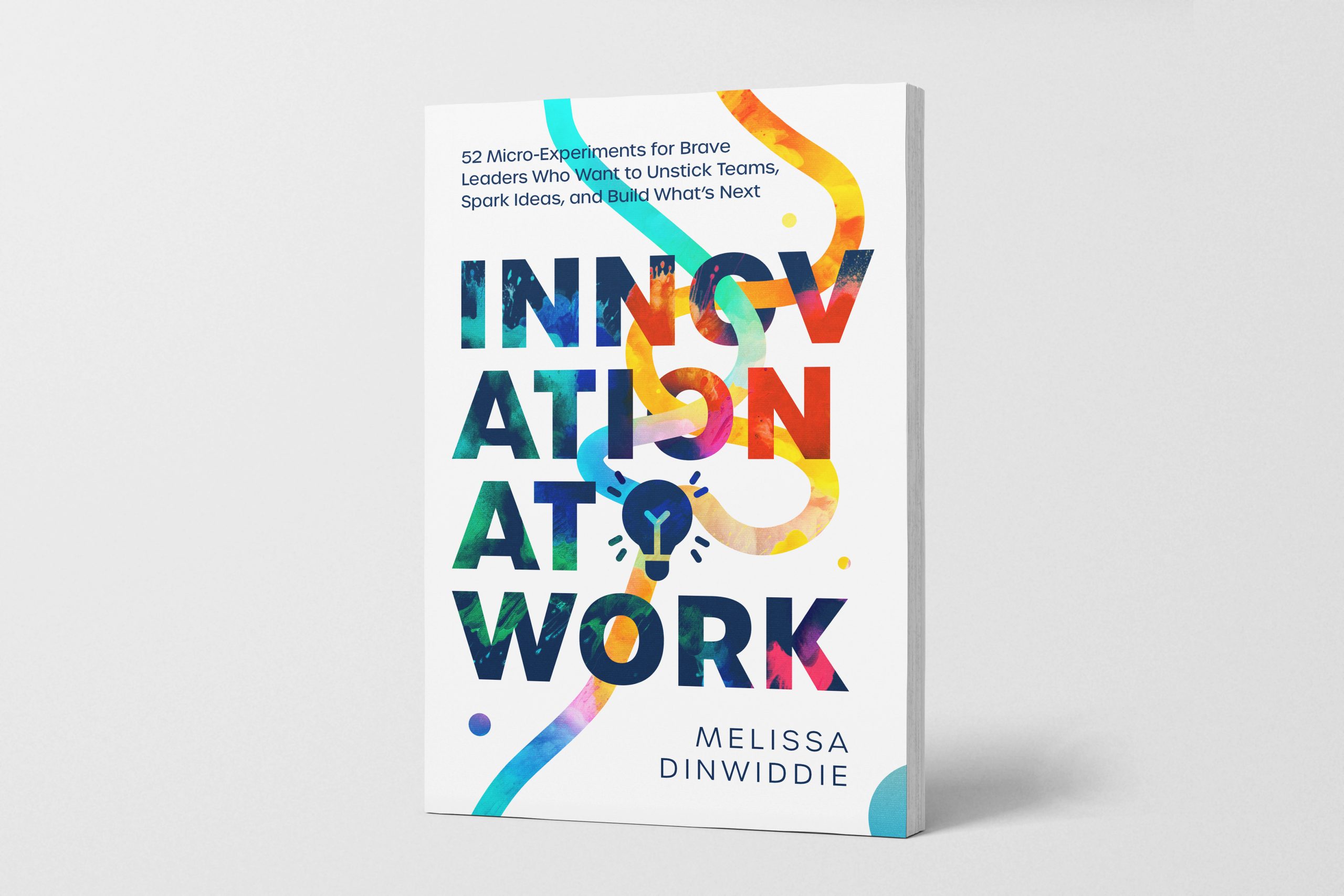
That’s the whole idea behind Innovation at Work, too — not a single big swing, but the daily practice of asking what the room actually needs, and having the permission to build for that instead of for the plan you walked in with.
If you’re sitting on an innovation mandate and a picture in your head of what the “session” should look like, let’s talk about the actual constraint you’re solving for — not the format you assumed you needed.
Build Your Innovation Muscle!
Want more ready-made experiments to help your team build their innovation muscle? Grab the book!
👉Click here for more info
👉Click here for a free preview PDF
👉Click here to buy now on Amazon
👉Click here for a special Leadership Edition — available only on my website — which includes an exclusive 5-part “Innovation Leader’s Edge” video series. Everything you need to run your first micro-experiment, get leadership buy-in, and build lasting innovation culture.