Hey there, innovation champions!
These are trying times.
I wrote the other day on LinkedIn about the cognitive dissonance of logging in to talk about business-as-usual while communities are being terrorized and traumatized by an armed force of untrained, violent men, and citizens are being executed in the streets while exercising their Constitutional rights.
Writing this newsletter feels like cognitive dissonance.
I sang at a vigil for Renee Good just a few weeks ago, which the civic engagement group I founded back in 2024 helped organize. And on Saturday, rather than celebrating my husband’s birthday, I was out at a protest because another civilian, Alex Pretti, died that morning, at the hands of DHS.
It feels so weird to go about daily life—making dinner, walking in my quiet neighborhood, telling you about my new book—when all of this is happening.
It feels impossible to make time for art.
Why I Went to See Improv Anyway
Yet yesterday I drove to San Francisco with a friend to see Off Book: The Improvised Musical.
This is a duo of improvisers who do the master level of what I do when I perform with my improv group. They’re like Miles Davis to a pretty-darn-good middle school jazz band. Or Michael Jordan to a varsity middle school basketball team.
You catch my drift. We have a good time, and the audience does too, but there’s no comparison.
It felt amazing to get my head out of everything—and laugh my guts out—for a few hours.
Then today I met up with a friend on Zoom to make art. It’s a commitment we’ve made to each other—scaffolding to keep each other doing what is so hard to do on our own.
What Happened When I Gave Myself Permission
The goal was NOT to create great art. The focus was on the process, on having fun, on being in the moment, on exploration and joy and play.
But guess what happened?
Because I gave my inner four-year-old free rein to do whatever she wanted, I went places I completely did not expect. I followed curiosity, using media I hadn’t planned on using.
And much to my surprise, I came out of that brief 25-minute session with two pieces I’m actually really delighted with.
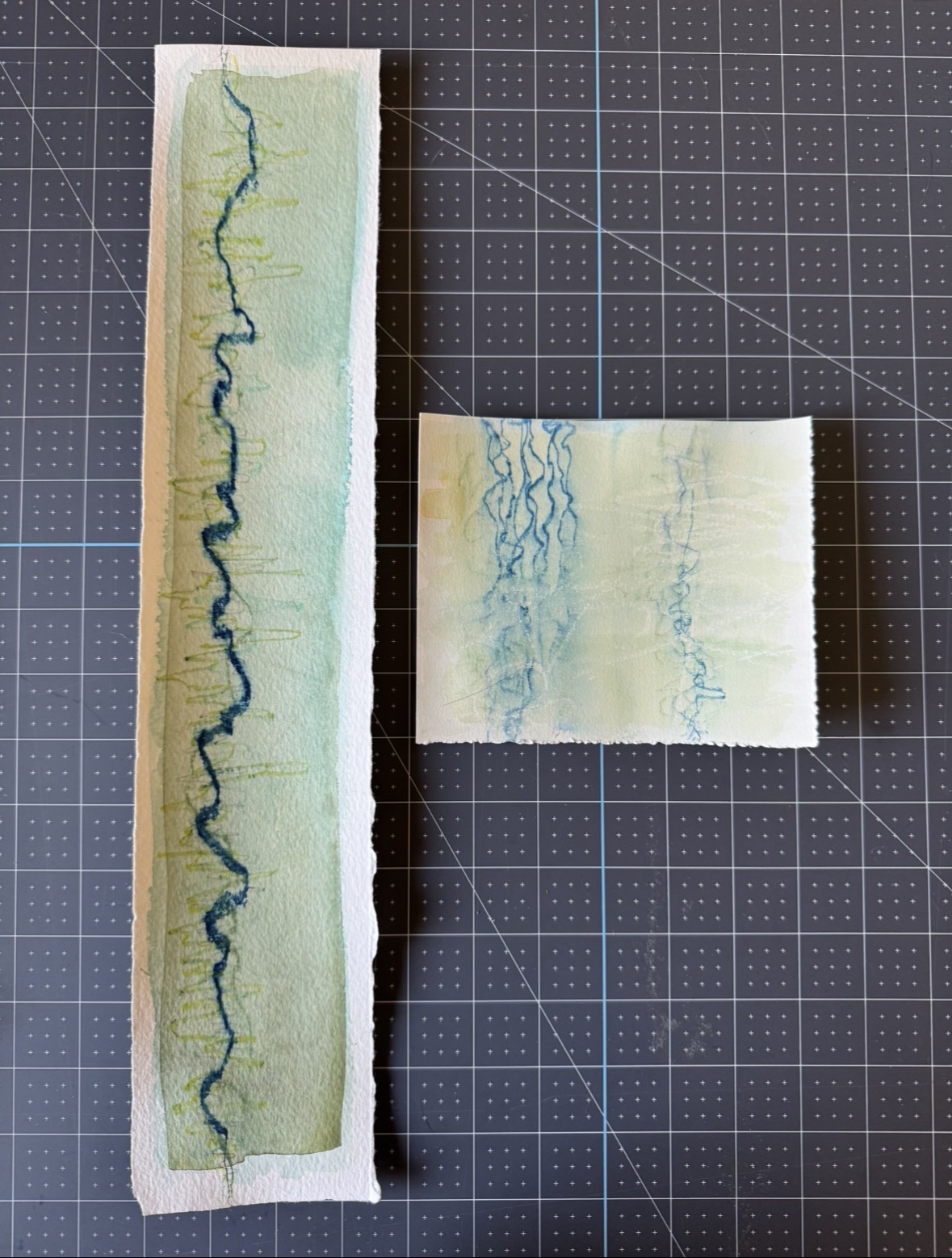
That, my friends, is how innovation works, too.
The Pattern Your Teams Are Living Right Now
Here’s what I know from working with teams at Google, Meta, Salesforce, and a variety of other organizations: when things feel unstable and uncertain, the first thing that disappears is creative risk-taking.
People hunker down. They stick to what’s safe. They protect their energy for what feels most urgent.
And innovation—the very capability that helps us navigate uncertain futures—gets pushed aside as a luxury we can’t afford.
But here’s the truth: we need innovation most when circumstances demand we create what doesn’t exist yet.
The systematic, bite-sized approach I teach isn’t about adding more to your plate. It’s about building the muscles that help teams generate new possibilities when old approaches stop working.
Why I Wrote This Book Now
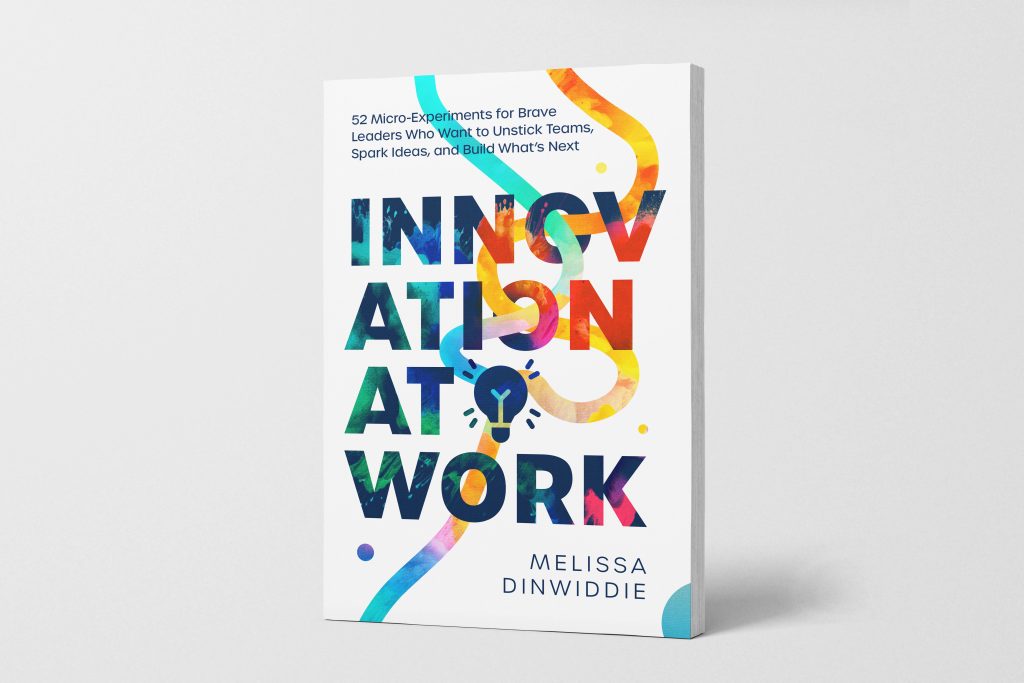
Innovation at Work: 52 Micro-Experiments for Brave Leaders Who Want to Unstick Teams, Spark Ideas, and Build What’s Next launches in just a few weeks, and I’ll be honest—I’ve been wondering if anyone will care about innovation experiments when the world feels like it’s on fire.
But then I remember: those 25-minute art sessions restore my capacity to show up. The improv show reminded me that joy and creativity aren’t frivolous—they’re fuel.
And the 52 experiments in this book? They’re designed to help build innovation muscles in teams in a way that is accessible, bite by bite. Just like the little creativity sessions restore energy.
We need all the help we can get right now.
The book isn’t about motivational platitudes or abstract creativity exercises. It’s about giving analytical, practical teams—project managers, engineers, researchers, the people who don’t think of themselves as “creative types”—systematic tools to access their problem-solving abilities when stakes are high and the path forward isn’t clear.
What This Actually Looks Like
When I worked with 125 project managers at the PMI San Francisco Bay Area Chapter last fall, they came in skeptical. Project managers are trained to minimize risk, follow proven processes, stick to the plan.
The session was called “Building the Future Together: Thriving with Human + AI Creativity.” We did improv exercises—storytelling with unexpected twists, reframing everyday objects, building on each other’s ideas in rapid-fire succession.
In 45 minutes, something shifted.
These weren’t “creative types.” They were analytical minds who’d spent their careers managing to specifications. But through structured play—the kind that creates psychological safety to experiment—they discovered they could generate new possibilities under pressure. They could build on surprises instead of shutting them down. They could collaborate in ways that amplified everyone’s contributions.
The systematic approach matters because it works for people who need structure. It doesn’t ask them to suddenly become “creative.” It gives them permission to experiment within a framework that feels safe enough to take risks.
That’s what teams need right now. Not inspiration. Tools.
If You’re Feeling This Too
If you’re a leader trying to help your team navigate uncertainty—whether that’s market shifts, organizational change, or the weight of current events—you know that old playbooks aren’t cutting it anymore.
You need people who can think creatively under pressure. Who can generate new solutions when familiar approaches stop working. Who can stay innovative even when everything feels unstable.
The ARC (Advanced Review Copy) links for Innovation at Work go out on February 2nd. I’m still accepting people to the Launch Team—all that’s involved is reading the book (even skimming it!) and writing a review. The soft launch is February 13th, and the official paperback launch is March 10th.
And if you’re already thinking about how these experiments could help your team—whether at your annual conference, in your engineering department, or across your organization—let’s talk.
Book an Innovation Strategy Session and we’ll figure out exactly which experiments will move the needle for your specific challenges.
Because here’s what I believe: the work of building innovation capability isn’t separate from the work of getting through hard times.
It’s exactly what makes getting through possible.
Next week: Why I’m publishing this book before I have all the answers. (Hint: It’s the same reason your team needs to start experimenting before conditions are perfect.)