Click to watch (12:58) or scroll down to read more
Hey there, innovation champions!
The Room That Changed Me
It was around 2012. World Domination Summit, Portland. A few thousand people packed into a theater.
Brené Brown walked onstage and, within the first few minutes, had us doing something deeply uncool.
First, she had us strike a “cool” pose — arms crossed, chin up, maximum detachment. Easy enough.
Then she had us dance. Still manageable.
Then she had us sing Journey’s “Don’t Stop Believin'” at the top of our lungs.
There was no aiming for cool anymore.
Her talk was about the difference between fitting in and belonging. About how “cool” is, by definition, the absence of vulnerability — and how belonging, by definition, requires it.
I’ve heard that idea described a hundred different ways since.
But I still feel it. Because she didn’t just tell me. She made me experience it — three times, in escalating order of social exposure — before she named it.
That’s not a speaking trick. That’s a learning design principle.
And it’s the same principle behind every innovation initiative I’ve seen actually work — and every one I’ve watched quietly die by February.
The Pattern That’s Costing You
Here’s what I see again and again.
A company books a speaker. Or runs an offsite. Or invests in a two-day innovation workshop. People leave fired up. The energy is real.
And then Monday arrives.
The team is back at their desks, inbox overflowing, sprint planning in an hour.
The insight that felt so alive on Friday is already starting to fog over.
By the end of the month, the vocabulary has faded. By February, the initiative has been quietly shelved. By Q2 reviews, the leader who championed it has less credibility than before — because they tried something, and it didn’t stick.
This is not a people problem. It’s not a motivation problem.
It’s a design problem.
The Two Halves That Can’t Work Alone
Here’s what I’ve learned from years of facilitation work: a single powerful experience, no matter how well-designed, is still just a single data point.
Learning that sticks requires both halves.
Half 1: The Immersive Experience This is what creates the initial shift — the new possibility, the shared language, the felt sense of “oh, this is actually doable.” Offsites, keynotes, workshops: when they’re designed well, they do something no book or email can replicate. They get learning into the body.
Half 2: The Ongoing Practice This is what turns that shift into a new way of working. Not another event. Not a follow-up training. Just small, consistent experiments woven into the rhythms teams already have — retrospectives, sprint reviews, standups, weekly 1:1s.
Without the immersive experience, practice feels mechanical. People do the thing without understanding why.
Without the practice, the immersive experience is just a memory.
Together, they compound.
(This is also why I say this as someone who does keynotes for a living: a keynote without a practice plan is a really expensive motivational moment.)
Why “Just Do More Training” Doesn’t Fix It
When an initiative fails to stick, the instinct is to add more: a follow-up workshop, a refresher, a second offsite.
More immersive content on top of more immersive content.
But this misses the design flaw entirely.
The problem wasn’t that the first experience wasn’t good enough. The problem is that experience without practice doesn’t transfer.
The research on learning retention has been clear on this for decades. Application matters. Repetition matters. Low-stakes practice matters — not because it’s nice to have, but because without it, the neural pathways that hold new behaviors don’t form.
What that means practically: a 15-minute experiment run consistently beats a two-day workshop run once.
Not because the experiment is better content. Because the experiment creates practice.
The Experiment: Try This at Your Next Retrospective
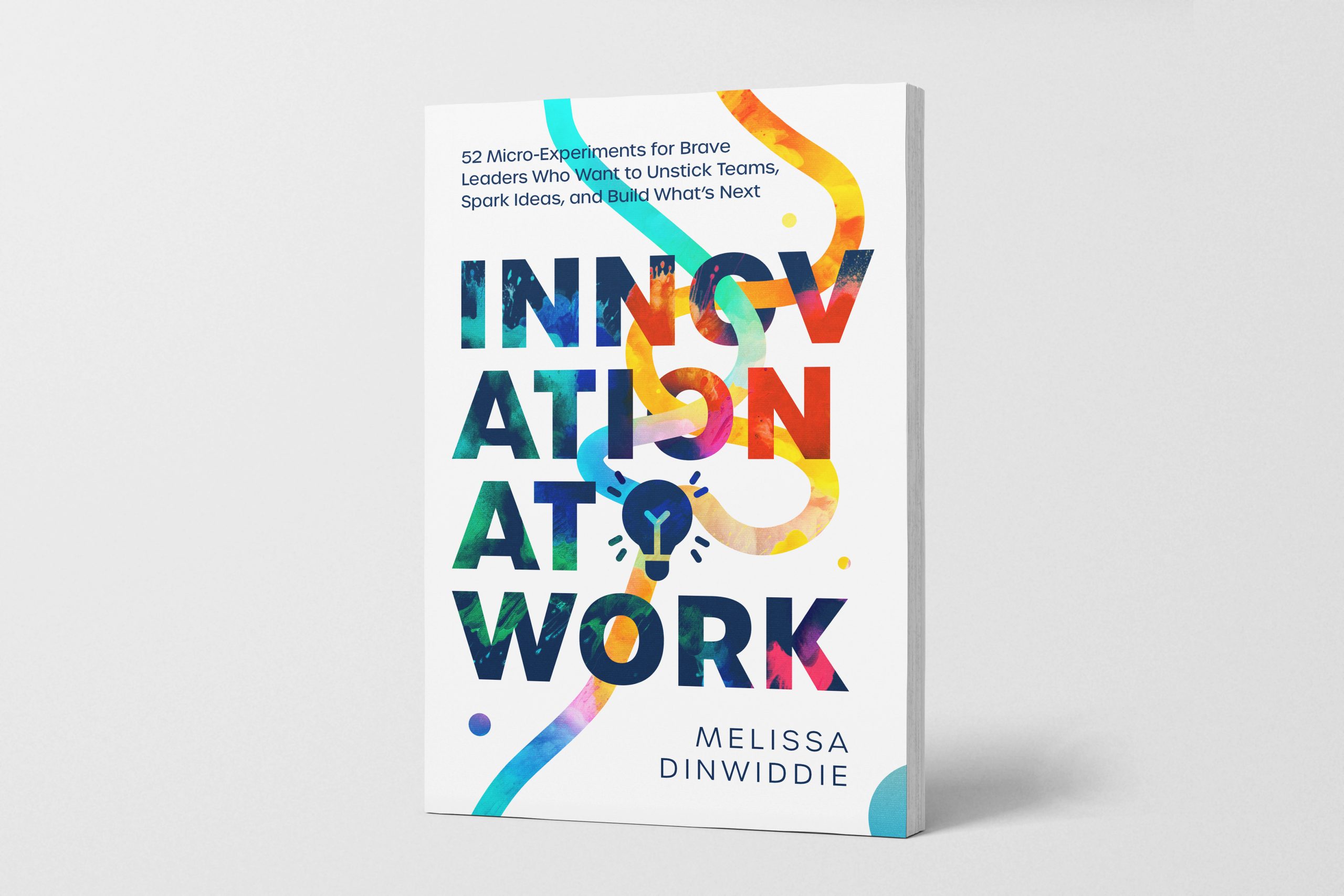
Here’s Experiment #5 from Innovation at Work.
The Learning Autopsy ⏱ Time: 15 minutes 👥 Team size: 2–8 people 🚨 Crisis-ready: Yes 🏠 Remote-friendly: Yes
After any setback — a missed deadline, a failed prototype, a miscommunication, a decision that didn’t land — spend 10 minutes asking one question:
“What would we change if we could replay this?”
Not: what went wrong. Not: whose fault was it. Just: what would we do differently, and what do we now know that we didn’’t know before?
Document the specific insights while they’re fresh.
That’s it.
Run it once and it’s a useful exercise. Run it every sprint retrospective for two months, and it becomes how your team thinks.
Psychological safety doesn’t get built through declarations. It gets built through repeated evidence: here, learning from mistakes is the point.
That’s the difference between an initiative and a practice.
What This Means for Your Next Initiative
Before you book the next speaker or plan the next offsite — and I say this as someone who does keynotes for a living — ask yourself:
What happens after?
What’s the practice that will keep this alive when I’m gone and the energy has settled?
If the answer is “we’ll figure that out later,” you already know what February looks like.
The good news: you don’t need to overhaul anything. You need one experiment, one meeting slot, one manager willing to go first.
Start there.