
Hey there, innovation champions!
Before I head to Alabama and Arizona to spend the holidays with family, I wanted to share something that could save your Q1 innovation initiative before it even launches.
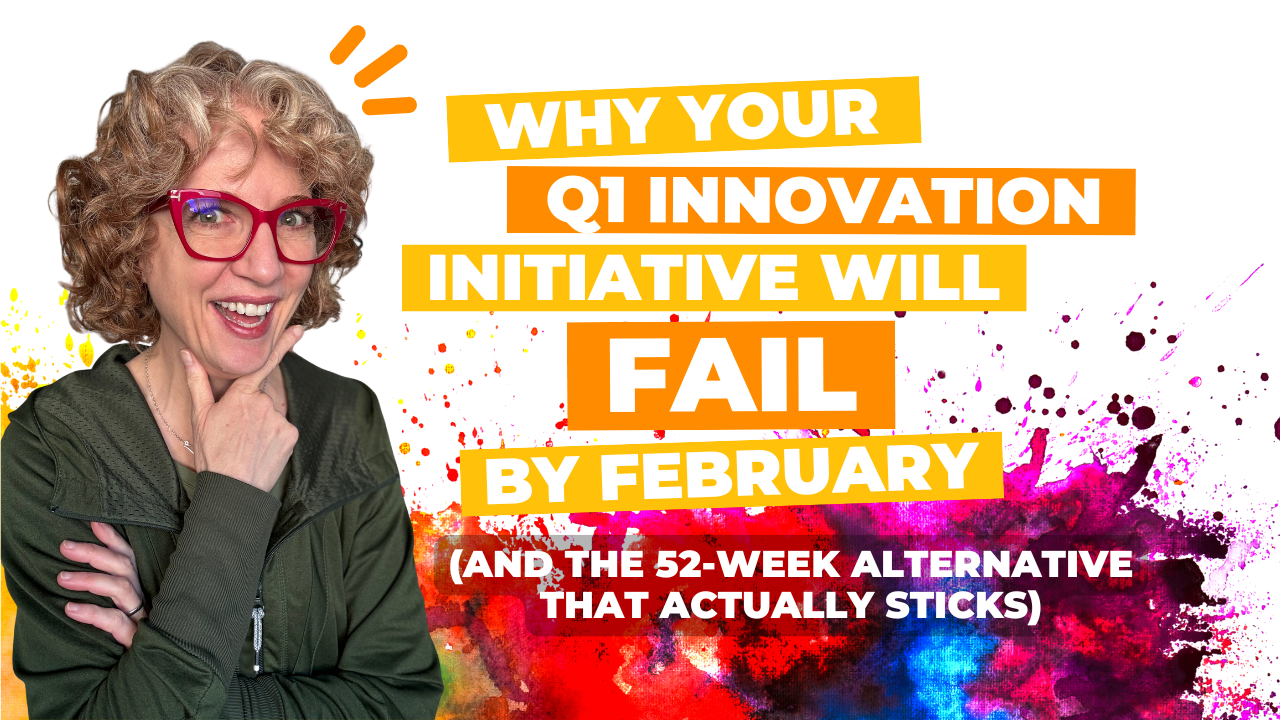
Because here’s the pattern I see every single year: In January, leaders roll out ambitious innovation programs. By February, they’ve quietly fizzled out. By March, everyone’s back to business as usual, and the expensive consultant’s slide deck is gathering digital dust.
Sound familiar?
The Big Initiative Trap
Years ago, when I was a professional artist, I made very little art that wasn’t for clients. Almost none, really.
Given that I’d gotten into the business because of my passion for creating, I was living a pretty miserable life. Not what I’d bargained for.
Every year I’d make these grand resolutions: I was going to set aside one weekend a month to make art! Or I’d dedicate every Friday afternoon. Or two hours once a week.
Whatever the plan was, it always failed. Which left me feeling more miserable than ever.
Here’s why those big plans didn’t work—and why your Q1 innovation kickoff is headed for the same fate: They require pulling people away from their actual work.
Your team is already maxed out hitting their numbers. Your engineers, project managers, and analysts don’t have time for a two-day workshop, no matter how strategic it sounds. And even if you manage to get them there, what happens the next week when they’re drowning in their normal workload again?
The training doesn’t stick because it lives in a different universe from their daily reality.
The Micro-Experiment Alternative
After years of failed grand plans, I finally tried a radical experiment: instead of going big, I went micro.
I committed to making art for just 15 minutes a day. That’s it.
This didn’t require me to overhaul my schedule or pull myself away from work in some crazy way. After all, anyone can find 15 minutes.
I honestly didn’t think it was going to make much difference, but the results were truly astounding. Not only did I create more art over the span of 11 months than I had in the previous decade, but my creativity was off the charts, because creativity breeds creativity.
It’s like lifting weights or practicing a musical instrument: a little bit, consistently, creates noticeable change. And that noticeable change makes it motivating to keep at it.
How This Applies to Your Team
When I work with teams at companies like Google, Meta, and Salesforce, or associations like Project Management Institute and American Marketing Association, the same principle holds: sustained innovation capability doesn’t come from big initiatives—it comes from systematic micro-experiments integrated into existing workflows.
Think about your analytical teams—your engineers, project managers, researchers. They’re already brilliant at their jobs. But when you pull them out for a multi-day innovation workshop, you’re essentially telling them to put their real work on hold.
Even worse, you’re reinforcing the idea that innovation is something special that happens over there, separate from their daily responsibilities.
What if instead, innovation became part of how they work, not an interruption from their work?
That’s exactly what the 52 micro-experiments in my book Innovation at Work are designed to do.
Why 52 Experiments Work Where Big Programs Fail
Each experiment takes 5-30 minutes. They fit into existing meetings, sprint planning, project reviews—the rhythms your team already has.
Instead of requiring a complete culture overhaul on Day One, they build innovation muscle gradually. Week by week. One small win at a time.
Your engineers learn to embrace productive failure not through a lecture on psychological safety, but by running a 15-minute “Learning Autopsy” experiment during their retrospective.
Your analysts discover creative problem-solving not through mandatory “innovation time,” but through a quick “Ask the Opposite Expert” conversation with someone from a completely different function.
Your project managers build adaptive thinking not by leaving their work, but by integrating an “Assumption Audit” check-in at the start of sprint planning.
The best part? Because these experiments deliver immediate, tangible value in their actual work, people want to keep going. The change becomes self-reinforcing rather than requiring constant executive push.
What This Means for Your Q1 Planning
Right now, as you’re finalizing Q1 plans before the holiday break, you have a choice:
You can launch another big initiative that requires pulling people away from their work, investing heavily in facilitation, and hoping it somehow sticks after everyone returns to their desks.
Or you can equip your leaders with a playbook of 52 micro-experiments they can integrate into the work that’s already happening—building innovation capability systematically, week by week, throughout 2026.
The book includes everything you need: complete experiment instructions, remote adaptations, scaling guidelines for different team sizes, integration strategies for existing processes, and even a tracker to monitor what’s working.
Innovation at Work launches January 16 with all 52 experiments organized into the Create the Impossible™ framework: Play Hard → Make Crap → Learn Fast → Create the Impossible™.
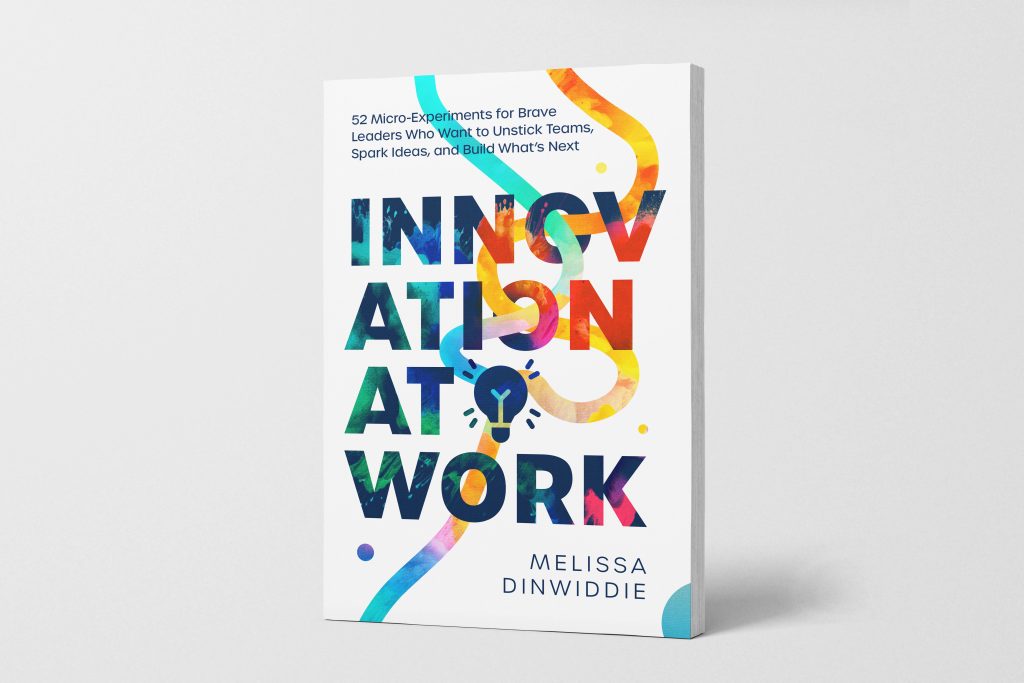
If you’re planning Q1 right now and want a resource that actually fits how analytical teams work, join the waitlist at innovationatworkbook.com/waitlist.
You’ll be the first to know when the book launches, and special launch pricing.
One More Thing
If you’re reading this and thinking, “This is exactly what our Q1 needs, but I need to talk through how to implement this strategically for our specific situation”—let’s talk.
I work with organizations to help their analytical teams unlock systematic innovation capabilities. Sometimes that’s through keynotes at annual conferences, sometimes through strategic consulting on innovation capability development.
Send me an email or message me on LinkedIn, and let’s have a conversation about what 2026 could look like for your team.
For now, I’m headed off to enjoy some holiday time with family. I hope you get some well-deserved rest too.
Enjoy the rest of 2025, and here’s to a Happy New Year—when your Q1 innovation approach could be completely different from every failed January initiative that came before.
Happy holidays!
Next week: My New Year’s resolution for innovation leaders—and why 2026 might be the year your team finally cracks the innovation code. Plus, a behind-the-scenes look at why I spent a good chunk of this year writing this book.