Make Crap: Why Productive Failure Beats Perfectionist Success


Quick note: Just back from keynoting in Alaska at NHRMA 2025. 

No video this week, as I’m head-down working on my second book, Innovation at Work. I’ve cleared my work calendar to devote every spare minute to book production, which meant making some hard choices! 

Watch for videos to return in a few weeks. In the meantime, enjoy this week’s article! 


Hey there, innovation champions! 

Let me tell you about my own perfectionism disaster.

After my dance career ended, after many twists and turns, I built a career as a “serious artist.” At one point I bought this beautiful blank sketchbook from Italy—gorgeous leather binding, perfect paper—and I was so afraid of ruining it that I didn’t draw in it for years. Years! This professional artist and creativity coach, paralyzed by a blank book.

Finally, in 2023, I got fed up with myself and followed my very own rule from my own book, The Creative Sandbox Way™: “There is no wrong.” I started filling that precious book with terrible doodles, rough sketches, half-formed ideas. And something magical happened—instead of sitting unused on a shelf, that book became a permission slip for more creation.

This is “Make Crap” in action: transforming perfectionism from innovation killer into learning accelerator.

The Perfectionism Penalty That’s Killing Your Speed

Here’s the uncomfortable truth about perfectionism: it’s not about high standards. It’s about fear management dressed up as quality control.

When your brain perceives the threat of “looking stupid” or “being wrong,” it activates threat-detection systems that literally shut down creative thinking networks. All your cognitive resources shift toward error prevention and risk avoidance—the exact opposite of what breakthrough innovation requires.

This explains why teams can debate theoretical solutions for hours while missing simple fixes that become obvious the moment someone actually tries them. Perfectionism doesn’t create better solutions—it prevents solutions from emerging at all.

The Science of Strategic Imperfection

Stanford research reveals something counterintuitive: teams using rapid, low-fidelity approaches consistently reach better solutions than those focused on polished presentations. Why? Because when you make imperfection the explicit goal, your brain relaxes enough to access the creative networks that perfectionist pressure shuts down.

When teams operate in what neuroscientists call “explore mode”—the mental state we enter during play—they generate significantly more novel solutions and make unexpected connections between previously unrelated concepts.

The breakthrough happens when you stop trying to avoid failure and start designing intelligent failures that teach you something valuable.

When Crap Becomes Competitive Advantage

This principle shows up in every major innovation breakthrough once you start looking for it:

Before Slack became a $27.7 billion success, it was Tiny Speck—a completely failed gaming company. When their game flopped, instead of perfectly planning their next move, the team started tinkering with their internal chat tool. That willingness to experiment with something imperfect led directly to revolutionizing workplace communication.

Google Maps exists because someone got curious during a routine meeting and started playing with a satellite mapping tool instead of focusing on the original agenda. That moment of productive “failure” to stay on task accidentally created one of the world’s most-used platforms.

Netflix’s streaming model emerged from a “failed” attempt to make DVD-by-mail more convenient. Instead of perfecting the original model, they embraced the imperfect idea of streaming low-quality video over unreliable internet connections.

The pattern? Breakthrough innovations emerge from permission to explore imperfect ideas rather than pressure to execute perfect plans.

The Permission Slip Principle in Action

In my work with teams, I’ve discovered that most innovation barriers aren’t technical—they’re psychological. People need explicit permission to share half-formed thoughts, question obvious assumptions, and suggest approaches that might not work.

That’s why one of my favorite team exercises is the “Permission Slip Protocol.” Everyone writes themselves permission for one specific behavior they want to try but feel uncertain about: “Permission to share ideas before they’re fully developed,” “Permission to question project assumptions,” “Permission to suggest completely different approaches.”

Then the team gives each other explicit verbal permission. It sounds simple, but removing psychological barriers often unlocks capabilities that were there all along.

The Intelligent Failure Framework

Not all failures are created equal. There’s a crucial difference between careless mistakes and intelligent failures that generate valuable learning.

Careless mistakes: Repeating known bad practices, ignoring obvious risks, or failing due to lack of preparation.

Intelligent failures: Testing new approaches with uncertain outcomes, exploring unproven but promising directions, or discovering the limits of current approaches through systematic experimentation.

Teams that learn to distinguish between these two types of failure can embrace productive imperfection while maintaining accountability for execution quality.

Your Make Crap Reality Check

Ask yourself:

  • How often do potentially breakthrough ideas die because someone decides they’re “not ready yet”?
  • What percentage of your team’s time is spent perfecting plans versus testing imperfect solutions?
  • When did your team last try something knowing it might not work, just to learn what would happen?

If your team defaults to planning and polishing rather than testing and learning, perfectionism is probably costing you breakthrough opportunities.

The Create the Impossible™ Framework Building

Make Crap is the second principle of my Create the Impossible™ framework because it builds directly on the psychological safety of Play Hard. Once teams feel safe to explore, they need permission to fail productively.

But here’s the key: making crap isn’t about celebrating mediocrity. It’s about creating the conditions where excellence can actually emerge through iteration rather than imagination.

What’s Coming Next Week

Next week, I’ll show you how teams transform failures into intelligence through the third principle: Learn Fast. Because permission to fail is just the beginning—the real competitive advantage comes from systematically extracting learning from every experiment, setback, and unexpected outcome.

The goal isn’t to fail for its own sake. It’s to fail forward faster than your competition can succeed backward.


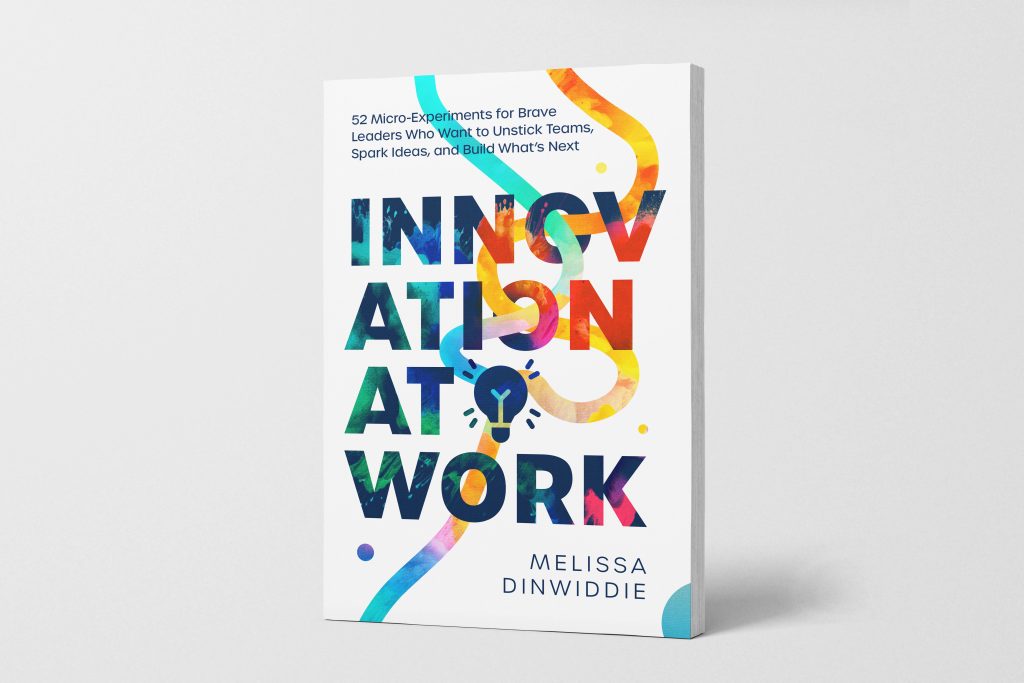
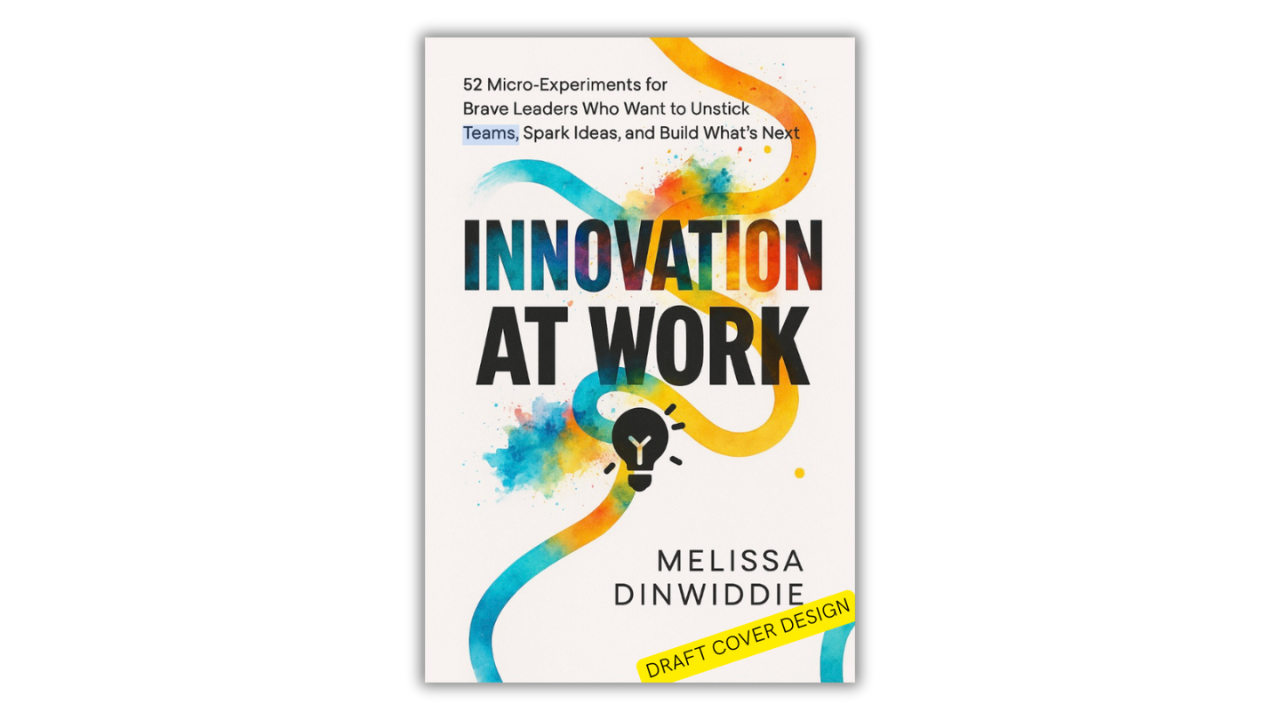
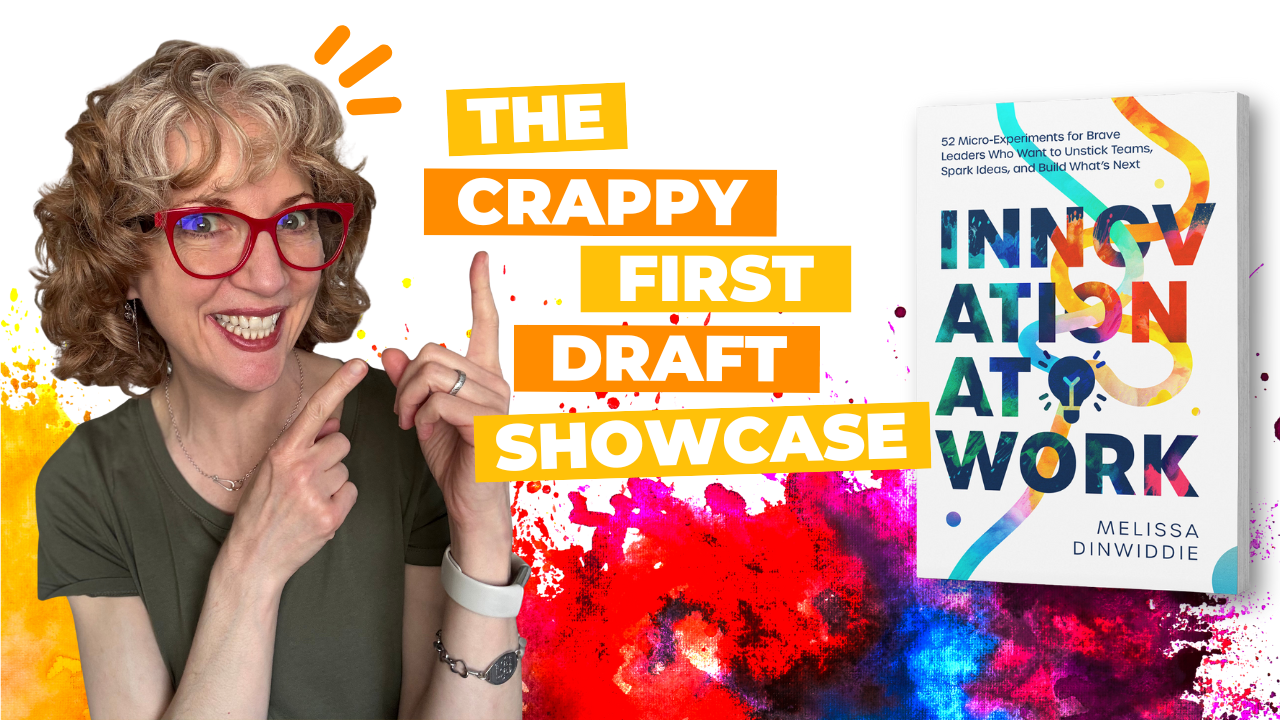
Ready to help your team transform perfectionism into productive failure? My forthcoming book Innovation at Work: 52 Micro-Experiments for Brave Leaders Who Want to Unstick Teams, Spark Ideas, and Build What’s Next includes the exact methods for embracing intelligent failure that drives breakthrough results. Join the early access list for insights and preview content.

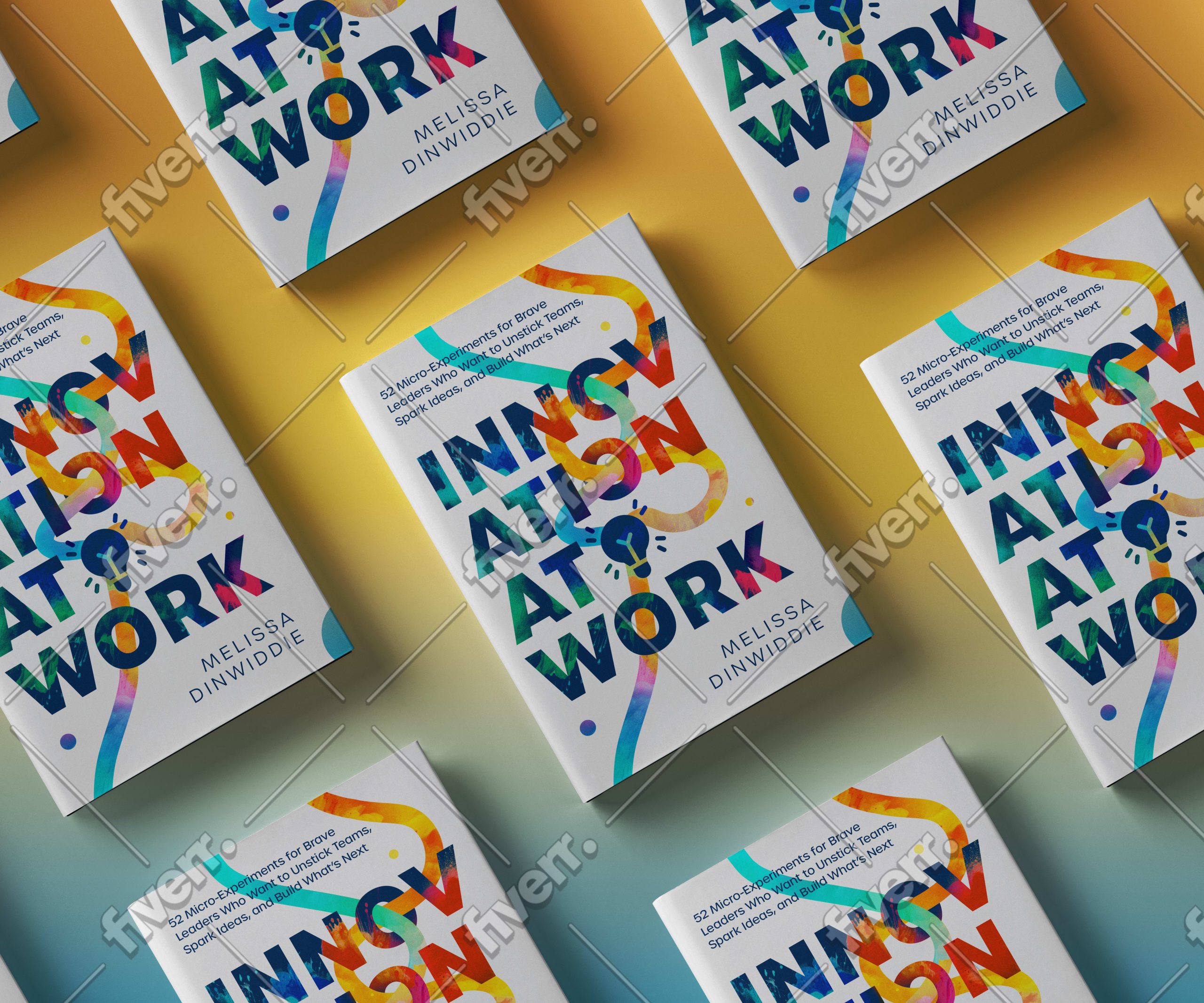
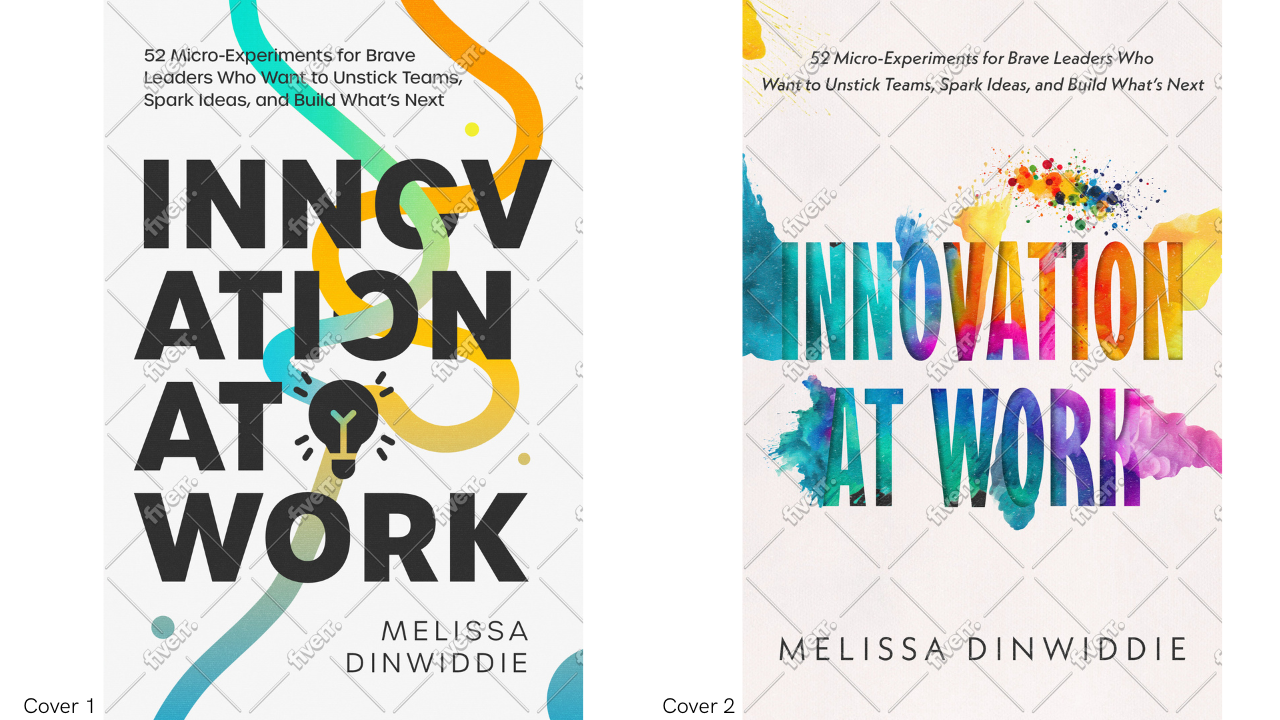
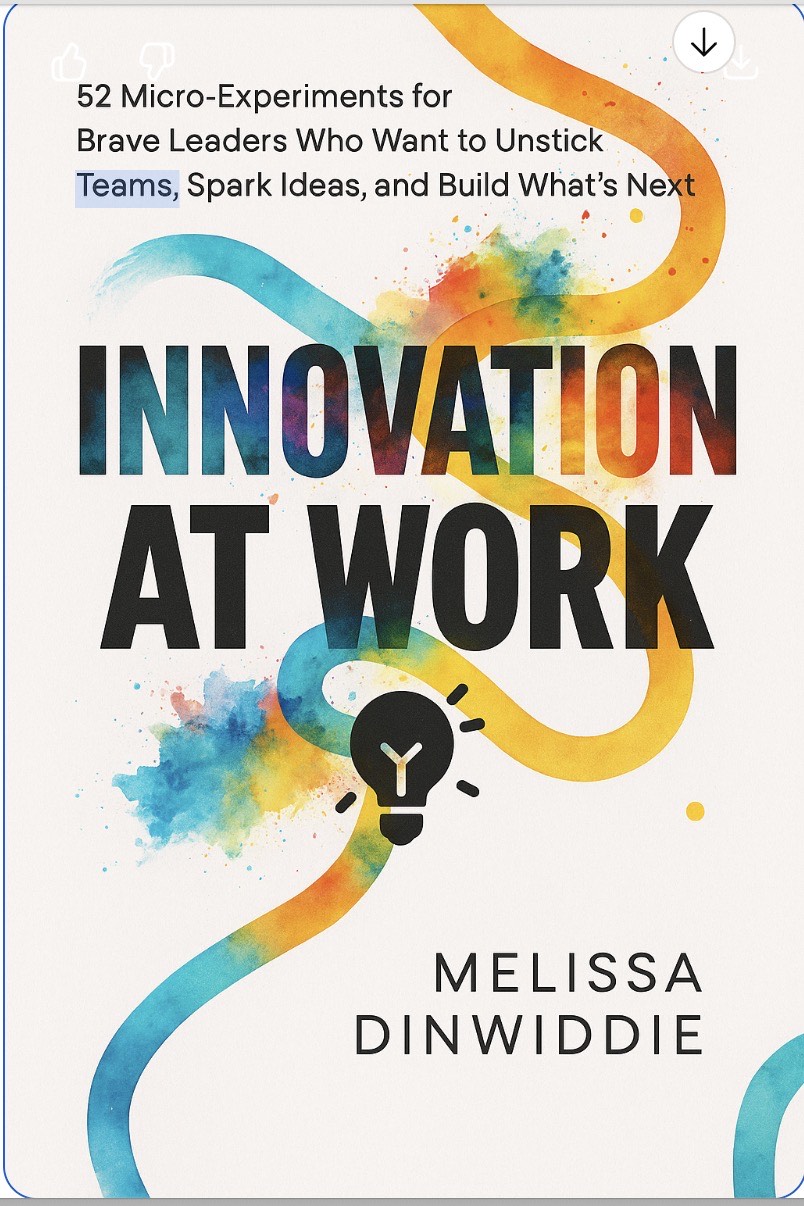
Did you see the two cover designs my designer whipped up?

Thanks to everyone who voted in the poll over on LinkedIn

I love the fresh, unexpected layout of #1, and the color vibrancy of #2. And a colleague created a prompt for ChatGPT from those preferences, and came out with this new draft:

I just sent this to my designer with my notes, so stay tuned for an updated version soon! This is the design process at work, which is a mirror image of (ahem) innovation at work! 🤩

Grab your preview content right here.


You Are Not a Prompt. You Are the Creator.

Click to watch (13:42) or scroll down to read more

Hey there, innovation champions!


Did you know I’m a singer-songwriter? However, for years, I didn’t write a single new song. Not one.


Now, I’ve never been the most prolific—or speedy— of songwriters, but still, this creative drought felt… well, let’s just say it wasn’t great for the ego. But every time I sat down to try, I’d think about all the reasons it wasn’t worth the effort.


Then AI came along, and that little voice in my head got louder: “Why should I even bother? AI could probably write a better song than I could.”


Sound familiar?


Here’s the thing: When I first saw AI generate thirty creative uses for a paperclip in the time it took me to think of three, I had what I can only describe as an existential crisis. When I fed AI a rough story draft and it spit back a polished article that sounded surprisingly like my voice, I thought: Am I obsolete?


But recently, something shifted. I had a performance deadline looming—always a great motivator—and I decided to try something different. Instead of competing with AI, what if I invited it to be my songwriting partner?


What happened next changed everything I thought I knew about creativity in the AI era. We’re asking the wrong question entirely.


The Question That’s Paralyzing Us

“Is AI more creative than humans?” seems like a reasonable question. After all, AI can generate art, compose music, write stories, and yes—come up with dozens of uses for a paperclip faster than any human.


But this question is actually dangerous because it’s based on a fundamental misunderstanding of what creativity really is.


It’s like asking, “Is a telescope better at seeing than the astronomer?” The telescope doesn’t replace the astronomer’s vision—it amplifies it. The astronomer still decides where to look, what’s worth studying, and what the discoveries mean.


What Creativity Actually Is

Creativity isn’t just idea generation. It’s not about who can produce the most options fastest.


Real creativity involves:

  • Intentionality—Knowing what problem you’re actually trying to solve
  • Context—Understanding the nuanced needs of real humans
  • Synthesis—Connecting disparate ideas in meaningful ways
  • Judgment—Knowing which ideas are worth pursuing
  • Iteration—Refining ideas based on real-world feedback


This is where my Create the Impossible™ framework becomes essential:


Play Hard: Creativity Requires Human Curiosity

When I finally sat down with ChatGPT to explore songwriting, something magical happened. I started asking questions AI never would have thought to ask:

“What if this could capture the absurdity of this socio-political moment in a way that makes people both laugh and think?”

“How might this connect to what people are actually experiencing right now?”


AI can generate lyrical themes, but it takes human curiosity to ask the questions that lead to authentic creative breakthroughs. Your ability to wonder, to notice what’s missing, to connect dots across your lived experience—that’s irreplaceable.


Make Crap: Humans Excel at Productive Imperfection

Here’s what I discovered during my songwriting session: ChatGPT would suggest a theme, and I’d “yes, and” that idea. Then it would “yes, and” me right back. Most of its suggestions were complete flops—but some were worth pursuing.


More importantly, AI’s ideas sparked ideas in MY head. That back-and-forth creative tennis match was exhilarating in a way I hadn’t experienced in years.


But innovation doesn’t come from perfection. It comes from the willingness to create terrible first attempts, learn from them, and iterate.


My first lyrics were messy, incomplete, and full of half-formed ideas. But they were also full of insights that only I could have generated—insights born from my specific experience, my unique perspective, my understanding of what I wanted to express.


AI helped refine those insights, but it couldn’t generate them.


Learn Fast: The Human Advantage in Sense-Making

AI processes information quickly. But humans excel at something even more valuable: sensing which directions feel most promising.


During my songwriting session, ChatGPT generated dozens of potential lyrical directions. But I was the one who recognized which ones resonated with my artistic vision, which ones aligned with my values, and which ones felt authentic to my voice.


AI gave me options. I provided the wisdom to choose. And when I performed that song a couple weeks later—my first new material in years—the audience connected with it in a way that felt deeply satisfying.


Because ultimately, the song came from me. AI was simply the creative partner I’d always wanted.


The Real Danger (And It’s Not What You Think)

The real danger isn’t that AI will replace human creativity. The real danger is that we’ll convince ourselves it already has.


When we treat ourselves as mere prompts—as input devices for AI systems—we diminish our own creative power. We become passive consumers of AI-generated content instead of active creators using AI as a tool.


But when we remember that we are the creators—the ones with intention, context, and judgment—everything changes.


Your New Operating System

Instead of asking “Is AI more creative than me?” try asking:

  • “How can AI help me explore ideas I wouldn’t have considered?”
  • “What questions am I uniquely positioned to ask?”
  • “How can I use AI to amplify my creative process without losing my voice?”


After years of creative drought, I’m writing again. Not because AI replaced my creativity, but because it helped me rediscover it. The songs I’m creating now feel more authentically mine than anything I’ve written in years.


Because I finally understood: I’m not competing with AI. I’m collaborating with it.


Your Challenge This Week

Pick one creative project you’ve been avoiding because “AI could probably do it better.”


Now approach it with this new mindset: You are not a prompt. You are the creator. AI is your amplifier, not your replacement.


Start with your unique perspective, your specific context, your particular curiosity. Then invite AI to be your creative partner—not to do the work for you, but to help you do it better.


You’ll discover something remarkable: When you embrace your role as the creator, AI doesn’t diminish your creativity—it reveals just how uniquely powerful your human imagination really is.


Ready to reclaim your creative power? Let’s explore how you can lead with confidence in the AI era. Book your complimentary Innovation Strategy Session and discover how to Create the Impossible™ with your team.


Stay curious, stay creative, and remember: You are not a prompt. You are the creator.


I’d love to hear from you: What’s one creative challenge you’ve been avoiding because you thought AI could do it better? Click here to let me know!

Senior Leaders: Ready to help your team embrace their creative power in the AI era? Book a complimentary Innovation Strategy Session and let’s explore how to foster an environment where human creativity and AI capabilities work together seamlessly.


The Leadership Blind Spot: How Your Habits Shape Team Innovation


Click to watch (16:26) or scroll down to read more

Hey there, innovation champions!


I used to think being a good leader meant having all the answers. Knowing exactly what to do in every situation. Being the smartest person in the room.


Boy, was I wrong.


Back in November, when I was faced with a choice — do I start up a grassroots democracy group, or not? — I certainly did not have all the answers. The path ahead was foggy at best, completely dark at worst.


It would have been so easy to just say no. To wait until I had more clarity, more resources, more certainty.


Instead, I leapt into the void, and you know what? I still don’t have all the answers. But the remarkable team that has sprung up around me inevitably figures it out together.


And this experience has taught me something profound about leadership and innovation that I never fully understood before: Your habits as a leader — how you show up, how you respond to uncertainty, how you interact with your team — shape the innovation potential of your entire organization far more than any formal innovation strategy ever could.


Let me show you what I mean by introducing you to our accidental “innovation team”:


W is our operations expert, always über-organized and keeping us on track with systems and processes. They’re also our number one worrier, always pointing out how things could go wrong. (And thank goodness, because this necessary perspective helps us plan accordingly!)


X is the advocate for our organization’s health, always reminding us that “overhead expenses” (like comfortable meeting space for our monthly member meetings) are not a “necessary evil,” but essential for a happy, healthy organization.


Y is always thinking about how what we do is a model for others. They keep us focused on the bigger picture and how our actions impact the broader community.


And me? I’m a big-picture thinker who also tracks a ton of details. And you won’t be surprised to learn that I filter everything through a lens of connection, fun, play, and joy.


The Blind Spot: Your Innovation Habits

We say very often that we’re building the plane as we fly it, and because we’re growing so fast, we’re having to build out systems, processes, and policies while we use them. Y recently quipped that we’re also writing the user manual for the plane at the same time!


But here’s what fascinates me: Our ability to innovate on the fly isn’t random. It’s directly shaped by the habits that each of us brings to the table as leaders.


A meeting typically looks like this:


W will ask why something was done a certain way (before we had established systems, processes, and policies, and perhaps even a leadership team!)


I’ll share the history.


W will suggest that we reverse course.


X will suggest an alternative option.


Y will “yes, and” that suggestion, and offer another idea.


I will “yes, and” that suggestion and bring in additional context.


W will revise their thinking and offer more suggestions.


And so on, until we find ourselves innovating a solution that everyone agrees is a win-win for all!


This pattern repeats itself again and again. And I’ve realized it maps perfectly to my Create the Impossible™ framework:


Play Hard: Creating Space for Creative Collision

The first element of my Create the Impossible™ framework is “Play Hard” — embracing a spirit of exploration and playfulness in your approach to challenges.


In our team, this happens naturally because of the habit patterns we’ve established. When W brings up a concern and X counters with an alternative perspective, we’re not shutting each other down — we’re playing with possibilities.


This habit of “yes, and-ing” rather than “yes, but-ing” isn’t accidental. It’s something I consciously model as a leader, and it’s now become a team habit.


Think about your own leadership habits for a moment. When someone brings up a concern or a wild idea, what’s your default response? Do you immediately point out the flaws? Or do you build on their thinking, even if you ultimately go in a different direction?


The habit of building rather than blocking creates a play space where innovation naturally emerges.


Make Crap: The Power of Imperfect Solutions

The second element of my framework is “Make Crap” — giving ourselves permission to create imperfect first drafts rather than waiting for perfection.


Our grassroots organization embodies this perfectly. Our initial systems were, frankly, pretty crude. Our first meeting agenda? A hastily scribbled outline. Our first communication system? A basic email list.


But instead of waiting until we had everything figured out, we jumped in and started creating. We embraced the messiness of growth.


This wasn’t accidental either — it was a direct result of leadership habits. By openly acknowledging when something I’d created wasn’t working well, I modeled that it was safe for others to do the same.


When was the last time you, as a leader, openly acknowledged creating something that wasn’t working? That habit — of normalizing imperfection as part of the process — creates psychological safety that’s essential for innovation.


Learn Fast: The Habit of Adaptation

The third element of the Create the Impossible™ framework is “Learn Fast” — turning every experience, especially “failures,” into learning opportunities.


In our democracy group, this manifests in our habit of constant reflection and adaptation. When something doesn’t work as expected, we don’t waste energy on blame or defensiveness. Instead, we immediately shift to “What can we learn from this?”


Again, this isn’t by chance. It’s a leadership habit I’ve intentionally cultivated — responding to setbacks with curiosity rather than frustration.


Think about your own response when things don’t go as planned. Do you immediately look for who’s responsible? Or do you ask what this experience can teach you?


The habit of approaching challenges with curiosity rather than judgment creates an environment where innovation can flourish even from setbacks.


Breaking Blind Spots: Transforming Your Innovation Habits

The fascinating thing about leadership habits is that they’re often invisible to us. They’re the water we swim in, the air we breathe. We don’t notice them because they’re just “how we do things.”


But these habitual patterns — how we respond to ideas, how we handle imperfection, how we approach setbacks — shape our team’s innovation potential more profoundly than any formal innovation process ever could.


So how do you transform these often invisible habits to foster more innovation? Here are three practical strategies:


1. Audit Your Responses

For one week, pay close attention to how you respond to ideas from your team. Note your initial reaction, both verbal and non-verbal. 


Are you building or blocking? Look for patterns in when you tend to block rather than build.


2. Practice Public Imperfection

Find opportunities to share your own works-in-progress with your team. Be explicit about what’s not working well. This normalizes imperfection and creates psychological safety for others to do the same.


3. Reframe Setbacks in Real Time

The next time something doesn’t go as planned, practice reframing it as a learning opportunity in the moment. Ask “What can we learn from this?” before any discussion of what went wrong or who’s responsible.


The Invisible Revolution

What’s most powerful about transforming your innovation habits is that it creates ripple effects throughout your organization without requiring massive change initiatives.


When you consistently build on others’ ideas rather than blocking them, team members start doing the same with each other.


When you openly share imperfect work, psychological safety increases across the organization.


When you approach setbacks with curiosity, a culture of continuous learning emerges.


These habits create the conditions where breakthrough innovations can flourish — not because you’ve mandated innovation, but because you’ve created an environment where it naturally emerges.


Remember: Your team doesn’t innovate because of what you say. They innovate because of what you do, consistently, day after day. Your habits are the invisible revolution that transforms your organization’s creative potential.


So, what innovation habits are you modeling for your team today?


Stay curious, stay playful, and keep creating the impossible!


I’d love to hear what leadership habits you’ve found most effective in fostering innovation. Click here to share your story!

Senior Leaders: Ready to transform your leadership habits and unlock your team’s innovation potential? Book a complimentary Innovation Strategy Session and let’s explore how the Create the Impossible™ framework can help you develop habits that foster creativity and breakthrough thinking across your organization.


Innovation in the Age of Anywhere Work: Creating the Impossible Across Distances

Click to watch (19:27) or scroll down to read more

Hey there, innovation champions!


Picture this: It’s December, I’m sitting in a living room with eleven other people, launching what we think will be a small local community action group. Our stretch goal? 50 members.


Fast forward just three months, and we’re suddenly 220+ members strong, with multiple teams, projects, and a communication stream that one member aptly described as “a firehose.”


Sound familiar to any startup founders out there?


But here’s where it gets interesting. Unlike most modern organizations, we have the luxury of being able to call an in-person meeting and actually make it happen fairly easily. For distributed teams across different time zones and geographies, that’s simply not an option.


So what happens to innovation when you can’t all be in the same room together? Does creativity suffer? Do breakthrough ideas become harder to find?


After experiencing this rapid growth and working with tech and marketing teams across the globe for years, I’ve discovered something surprising: Distance doesn’t have to diminish innovation. In fact, with the right approach, distributed teams can actually out-innovate their in-office counterparts.


Let me show you how, using my Create the Impossible™ framework.


Play Hard: Building Trust Across Distances

The foundation of innovation in distributed teams isn’t fancy technology – it’s trust. Without the organic trust-building that happens naturally in physical spaces, we need to be intentional about creating psychological safety across distances.


One of the most powerful moments in my community group came during a simple phone call with a leadership team member. We were discussing a challenging situation, and because we had established deep trust, she felt completely comfortable challenging my perspective and offering wildly different approaches.


That conversation sparked an innovative solution neither of us would have discovered alone.

So how do you build this kind of trust in distributed teams?


First, create intentional spaces for connection before diving into content. In my distributed client workshops, I always start with connection activities that might seem “inefficient” but actually lay the groundwork for innovation.


One simple activity I love is “Rose, Thorn, Bud” – each team member shares something beautiful in their life right now (rose), a challenge they’re facing (thorn), and something they’re looking forward to (bud).


These moments of human connection create the psychological safety necessary for people to share their wildest ideas without fear of judgment.


When people feel safe to take risks without fear of embarrassment or rejection, creativity flourishes – regardless of physical location.


Make Crap: Embracing Digital Imperfection

The second element of my Create the Impossible™ framework is “Make Crap” – giving ourselves permission to create imperfect first drafts rather than waiting for perfection.


This becomes even more crucial in distributed environments, where the temptation to only share polished work is stronger. Without the casual “Hey, what do you think of this?” moments that happen naturally in offices, distributed teams need to intentionally create spaces for sharing work-in-progress.


In my community action group, even though we don’t have a dedicated digital channel specifically for half-baked ideas, we’ve cultivated an environment where people feel comfortable saying, “This is just a thought, but what if we…?” This willingness to share incomplete thinking has been vital to our rapid growth and problem-solving.


For tech teams, this might look like:


  • Creating a dedicated digital space where unfinished ideas are welcomed
  • Starting meetings with an explicit invitation to share “terrible first attempts”
  • Using collaborative tools to collectively iterate on ideas together


Remember: Innovation doesn’t happen in a vacuum. It emerges from collision and iteration. And in distributed teams, we need to create intentional spaces for those collisions to happen.


Learn Fast: Creating Feedback Loops Across Time Zones

The final element of the Create the Impossible™ framework is “Learn Fast” – turning every experience, especially “failures,” into learning opportunities.


This becomes both more challenging and more critical in distributed teams. Without real-time feedback, learning cycles can slow down dramatically.


In my rapidly growing community group, we’re still developing many of these processes, but we’re already seeing the value of documenting our journey and decisions. This documentation isn’t just about record-keeping – it’s a learning tool that allows us to reflect on what’s working and what needs adjustment.


For distributed teams, implementing effective feedback loops might include:


  1. Simple Reflection Questions: After meetings or project milestones, consider posing questions like: What worked well? What could be improved? What will we try next time?
  2. Regular Learning Reviews: Schedule dedicated time to reflect on what your team is learning, separate from project status updates.
  3. Accessible Documentation: Make your team’s processes, decisions, and learnings available in shared spaces where everyone can access and build upon them.


These practices help ensure that insights don’t get lost across time zones and that teams can learn collectively despite physical separation.


The Innovation Anywhere Playbook

Now, let’s put this all together into a practical playbook for fostering innovation in distributed teams:


1] Leverage Technology Thoughtfully

Be strategic about creating different spaces for different types of interaction:

  • Synchronous video for emotional connection and complex problem-solving
  • Asynchronous channels for reflection and idea development
  • Shared documents for collaborative exploration


2] Create “Collisionable Hours”

Innovation often emerges from unexpected collisions between ideas and people. In distributed teams, we need to intentionally create these opportunities:

  • Designate specific times when team members across time zones can connect
  • Create virtual spaces where informal conversation is encouraged
  • Pair people from different functions for regular “collision conversations”


3] Establish Clear Communication Norms

Without the context of physical space, distributed teams need explicit norms:

  • Which channel is appropriate for which type of communication?
  • What response times are expected for different types of messages?
  • How should people signal when they’re in “deep work” mode versus available for collaboration?


4] Maintain Open Communication

Foster an environment where ideas can flow freely:

  • Implement an open-door policy for sharing thoughts and suggestions
  • Listen attentively to team members’ input and provide constructive feedback
  • Celebrate and share creative successes to motivate the team


Remember: The goal isn’t to recreate the office experience online. It’s to leverage the unique advantages of distributed work to create something even better.


The Power of Distributed Creativity

What I find most fascinating about distributed innovation is that, when done right, it can actually unlock creative potential that might remain dormant in traditional settings.


Without the conformity pressure that often exists in physical spaces, distributed team members may feel more freedom to express unconventional ideas. The nurse working from her home office might feel empowered to challenge the CEO’s perspective in a virtual meeting in ways she might not in a boardroom.


The asynchronous nature of distributed work also allows for deeper reflection. Rather than being put on the spot to respond immediately to an idea, team members can sit with concepts, process them fully, and return with more thoughtful contributions.


And the diversity inherent in distributed teams – not just cultural diversity, but diversity of environments and contexts – can spark connections that wouldn’t emerge when everyone is sharing the same physical space.


Your Distributed Innovation Challenge

Here’s your challenge for this week: Identify one small way to enhance innovation across your distributed team.


Maybe it’s creating a dedicated space for half-baked ideas. Perhaps it’s implementing a “no slides” rule for one meeting to encourage more authentic communication. Or it could be as simple as starting your next virtual gathering with a human connection moment before diving into the agenda.


Whatever you choose, remember that innovation isn’t about location—it’s about creating the conditions where creativity can flourish.


Stay curious, stay playful, and keep creating the impossible—no matter where your team members happen to be!


I’d love to hear from you. What’s one strategy you’ve used to foster innovation across distributed teams? Click here to share your story!

Senior Leaders: Ready to transform your distributed team’s innovation potential? Book a complimentary Innovation Strategy Session and let’s explore how the Create the Impossible™ framework can revolutionize your team’s approach to creativity and problem-solving.


Don’t show this message again.

Would You Like Some Cookies?

We use cookies to customize your experience, to improve the content we deliver to you, and sometimes to show you relevant advertising on social networking sites like Facebook or Instagram. If you continue to use this site we will assume that you give your consent to our cookie use. (Click the X in the upper right corner to close this notice.)

Read our Privacy Policy

css.php