Click to watch (11:14) or scroll down to read more
Hey there, innovation champions!
Your team isn’t short on ideas.c
They’re short on safety.
And the difference between those two diagnoses determines whether your innovation initiative becomes a real culture shift — or just another offsite people talk about once and forget by February.
The Job I Still Think About
When I was just out of high school, I got a job at a trendy housewares store in a shopping center.
My manager was impatient — the kind of teacher who sighs loudly and raises an eyebrow if you don’t catch on immediately when shown something once. When there were two of us on the floor, she found ways to shame workers who were slower to learn, and quietly pitted people against each other.
The mental calculus was clear within my first week: don’t ask questions, don’t stick your neck out. Just go along to get along and try to survive.
Here’s the thing — this was an hourly wage job. Not a career. Not part of my identity. I just wanted to pay for my dance classes and save money before college. And yet thinking about those days still makes my stomach tighten up.
Now imagine how people in your organization feel when they don’t feel safe to speak up — in a job that is intricately woven into their sense of self. That is completely tied to their financial survival.
Even just a slight edge — a feeling that they should self-edit before they speak, polish before they share, wait for permission that never explicitly comes — can have a massive dampening effect on what they’re willing to offer.
The Tax You’re Not Measuring
I call this the hidden tax on your team’s best ideas.
It’s not visible on any dashboard. It doesn’t show up in your quarterly review. But it’s being paid every day, in every team meeting, in every brainstorm where people perform certainty instead of sharing the half-formed thing that might actually crack the problem open.
This isn’t a skills problem. It’s not even really a creativity problem.
It’s a friction problem. And the organizations that reduce it — even slightly — see disproportionate returns.
I’ve seen this play out firsthand. In a session I wrote about recently, two teams of researchers — identical on paper — performed worlds apart. The difference wasn’t ability, and it wasn’t methodology.
It was whether the manager participated.
The team whose manager put down her pen, picked up the exercise, and let herself be seen as a human in the room? That team loosened. People got playful. Ideas moved. The other team stayed polite — careful, contained, and acutely aware they were being watched.
One manager reduced friction with a single visible choice. The other, without intending to, increased it.
Why Small Barriers Have Big Consequences
The insidious thing about this kind of friction is how invisible it is — especially to the people at the top.
Your most senior leaders often can’t see it anymore. The higher you go, the safer it feels to speak up. You’ve earned your seat. Your ideas have been validated enough times that you’ve stopped bracing for the reaction.
But for the engineer who’s newer to the team? The analyst who was shot down in a meeting last quarter? The manager who’s seen an idea go nowhere three times in a row?
The calculus is different. And the tax is real.
Your smartest people are not withholding ideas because they don’t have them. They’re withholding because the expected cost of sharing outweighs the expected benefit.
That’s not a character flaw. That’s rational behavior. And it will not change through pep talks, culture decks, or any “innovation week” event you organize.
It changes through practice. Small, repeated, low-stakes moments where people discover — through direct experience — that it’s actually safe here.
How You Start Reducing It
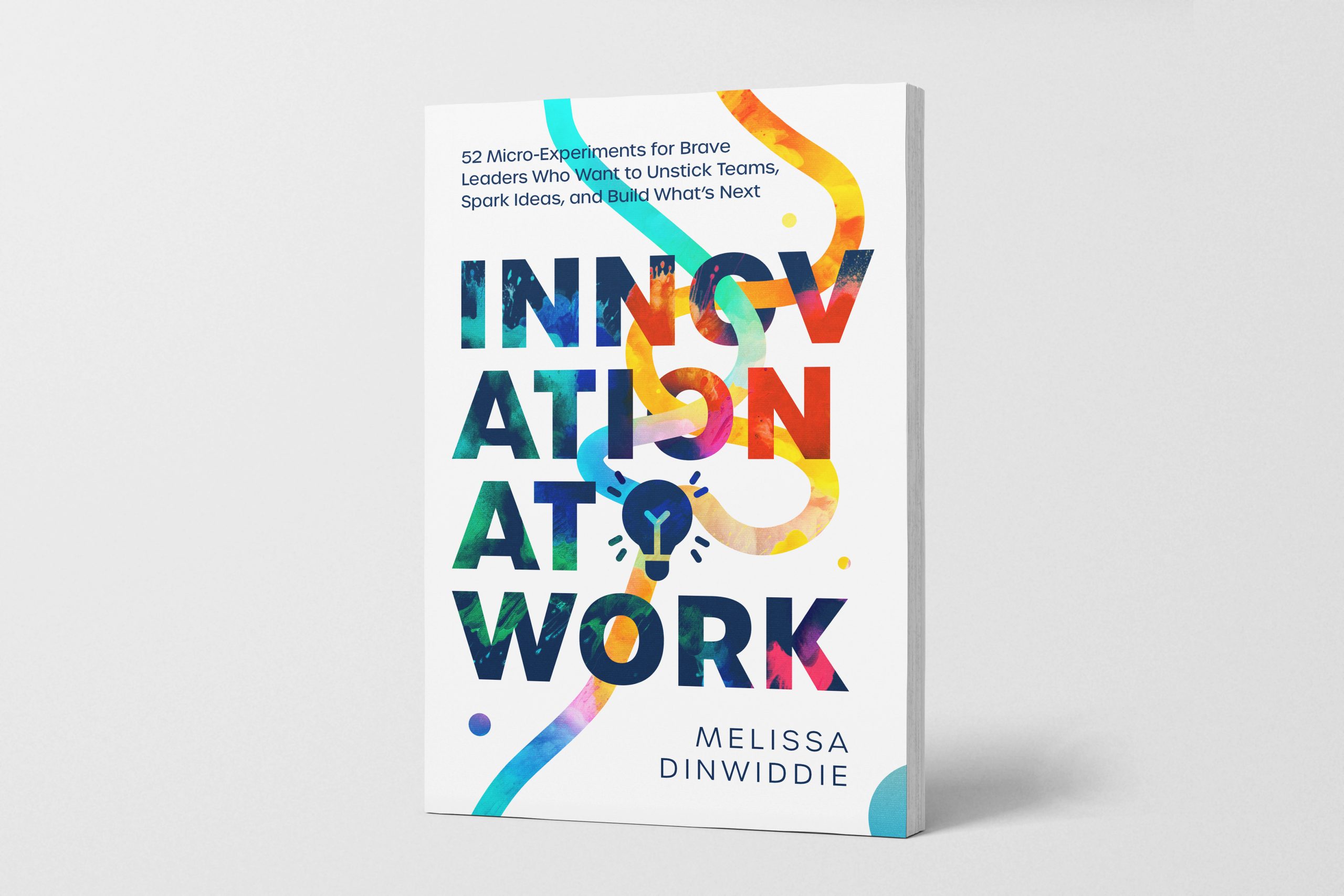
This is the insight behind the micro-experiment model in my book, Innovation at Work.
The experiments aren’t creativity exercises for their own sake. They’re friction-reduction tools — deliberate, repeatable ways to lower the cost of speaking up, trying something, or sharing something unfinished.
A 15-minute “Crappy First Draft Showcase” removes the expectation of polish before sharing.
An “Anonymous Question Box” lowers the social cost of surfacing the concern everyone’s thinking but nobody’s saying.
A simple “Declare a Failure” round at the start of a meeting tells your team: learning from what didn’t work is valued here.
None of these requires a day-long offsite. None requires your team to suddenly become “creative people.” They just require a leader willing to go first — to model the behavior that says it’s safe to be human here.
The team with the brave manager in that session I mentioned? She didn’t have a formula. She just joined in.
That’s where it starts.
The Conversations I Want to Keep Having
I’ve been thinking a lot lately about where this friction lives — and how leaders find their way through it.
There’s a podcast coming soon where I want to dig into exactly this with the people living it. Leaders who’ve seen the tax in action. Leaders who’ve found ways to reduce it. Leaders who are right in the middle of figuring it out.
More on that soon.
In the meantime — if you want 52 structured experiments for reducing the friction that’s quietly taxing your team’s best ideas, download a free preview of Innovation at Work.
And if you want to talk through what this looks like in your specific organization, I’d be glad to think through it with you.
Book a complimentary 30-minute Innovation Strategy Session →
Or click here and tell me: What’s one moment you’ve seen friction quietly kill a good idea? I read every response.
P.S. The hidden tax shows up differently in every organization — but the patterns rhyme. The more I talk to leaders about it, the more I’m convinced it’s the most underleveraged lever in most innovation initiatives. I’d love to know what it looks like in yours.