
/
RSS Feed
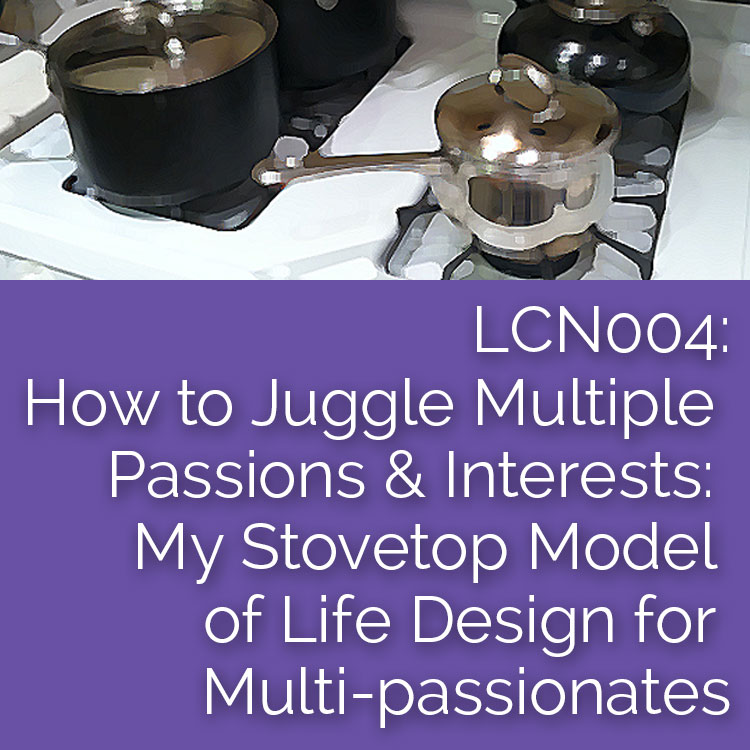
 Do you struggle with how to juggle all your passions and interests? In this episode I share how I learned to embrace my passion pluralite nature, AND how to effectively manage it, using my Stovetop Model of Life Design. [Read more…]
Do you struggle with how to juggle all your passions and interests? In this episode I share how I learned to embrace my passion pluralite nature, AND how to effectively manage it, using my Stovetop Model of Life Design. [Read more…]
 Every so often I dig into the Living A Creative Life archives, and pull out a classic article that feels worthy of reposting. This is one such Living A Creative Life Classic, originally published on May 6, 2010. Enjoy, and let me know your thoughts! ~M
When I got divorced, one of the things that got me out of bed in the morning was knowing that tonight (or the next night, or the next) I was going out dancing.
Dance was my first love. I’d been on a career track as a modern dancer, and only stopped when forced by an injury (a good thing in the end, but that’s another story). Now, years later, even though I could have physically handled going out dancing, I never did while I was married.
Why? Because my husband didn’t like to dance. And because he was so jealous it didn’t even enter my mind to go out alone.
A big, important part of myself, one of my core Blisses, was effectively cut off for years.
And it was 100% my own fault.
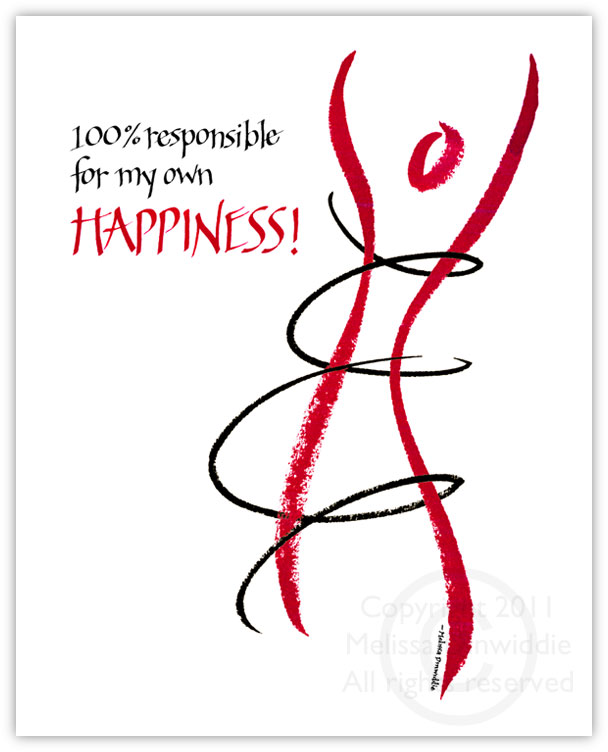
The truth is each of us is 100% responsible for our own happiness, and I didn’t have to let my husband’s jealousy and lack of interest determine my choices. It felt like I had no choice, but in fact that was just me playing the victim and not taking responsibility.
When I finally “rediscovered” dance during my divorce, I was insanely grateful to “get dance back,” and insanely annoyed with myself for ever letting someone else’s preferences dictate my choices.
I swore I’d never do the same thing again.
Yet in my last relationship I did just that. You’d think over a decade of personal growth would have made a difference, but no.
This time the Bliss in question was music, singing jazz to be exact, and before I met my ex, my habit was to get out to a jam session or two at least every week or so, where I could get a microphone in my hand. But during the year-plus of my last relationship, I only went to jam sessions a handful times.
Why? Not because my ex forbade me from going, but simply because he didn’t like jazz, and wasn’t willing to learn to like it. So I was left with the choice of either following my Bliss, or spending time with him.
Now, I’d worked long and hard to find this relationship (57 dates in a 2 1/2 year period, in fact). I thought this man was my life partner, and our relationship was a huge priority in my life. Plus I just plain liked spending time with him! Then there was the fact that, unlike my ex-husband, he did go out dancing with me, even subjected himself to the sometimes excruciating challenge of learning Argentine Tango so that we could dance together.
The man was clearly willing, just not when it came to jazz. (Did I mention he also left the room when I played guitar? You’d think that would have been a clue…)
At the time, my choice to spend time with him rather than following my Bliss seemed tolerable. Now I’m not so sure.
Think about it: much as we don’t like to believe this, relationships come and go. Blisses endure. Perhaps the fact that this man couldn’t muster up enthusiasm for my Bliss was a clue that it wasn’t going to be a good match for the long term.
Are there people in your life who are less than supportive of you following your Bliss? Take a good, hard look. Are those relationships really going to serve you in the end? If there’s a niggling voice somewhere inside, you might want to pay attention to it.
I’m not telling you to break up with someone, but I am telling you, as one who knows, that cutting off an important part of your creative self is not the route to happiness.
You are 100% responsible. Seeking happiness is your birthright, and your Blisses are key to that happiness. Don’t you deserve to have people around you who will support you in your efforts to follow your evolving Bliss?
You bet you do. Don’t settle for less.

PS — Pssst! Know someone who might benefit from seeing this today? Pass it on!
 A couple of years ago I was chatting with friends over a potluck supper at our synagogue, up on my soapbox about empowering folks to follow their passion.
“But what if you don’t have a passion?” one woman asked. “How do I even find one in order to follow it? How do I follow my bliss if I don’t even know what it is?”
[Cue sound of screeching brakes. Cue *cricket*cricket* sound inside my head.]
I confess I was stymied. I had certainly spent years of my own life devoid of a life passion, so I knew what that was like. After finding my bliss — dance — and then losing it to injury, it took almost a decade before I found another one, and for a long time I thought perhaps I never would — that I’d live out the rest of my life in shades of grey.
Many years later, sitting at this potluck table, I felt blessed to have multiple (new) life passions, and yet I had no idea what to say to the passionless woman.
I’ve been thinking lately about how I discovered my passions, and I now realize that part of the reason I had no answer for my seeking friend is that the rhetoric we typically use to talk about life passions is all wrong.
We speak of “finding” your passion, of “discovering” your passion, as if it’s hidden behind a closed door and all you have to do is open the handle, and *wham!* Passion!
When I reflect back at my own life, though, that’s not how it happened at all. I realized lately that the “eureka” stories I like to tell about finding my various blisses are actually lies.
Let’s take a look:
I often say that I discovered dance at age sixteen and fell instantly, madly in love with it.
It makes a great story, but it’s a lie.
In fact, I took a modern dance class with some friends in ninth grade, two or three years earlier, and when the class turned out to be classical modern dance, rather than the MTV, pop culture dance that I think we expected (commonly referred to by the misnomer “jazz dance”), the most enthusiastic movement I think I mustered for those six weeks was some eye-rolling.
That was followed by two years in high school P.E. dance class, though I use this title lightly. The heavyset teacher didn’t teach us any technique to speak of, but we did get to move to music, and it was a godsend alternative to the usual football/basketball/volleyball torture I’d had to suffer through since middle school.
It wasn’t until the summer before my senior year in high school, after two years of P.E. dance, that I finally took a “real” dance class at a local private dance school.
That was the moment when my passion started to blossom, my *wham!* passion! moment, but without my exposure to dance in the years prior, I doubt there would have been a “eureka” right then. I think my earlier experiences were what planted the seed, and repeated exposure over time — with practice and ongoing engagement — was what fertilized its growth.
I’ve also been known to quip that I picked up a calligraphy pen at age 28 and fell in love.
Which also makes a nice story, but is also a lie.
In fact, my brother gave me a set of calligraphy fountain pens years before (high school? college?), which I’d maybe pulled out once or twice before I put the box on a shelf and forgot about it.
After college graduation, while casting about for what to do next with my life, I pulled that box of pens off the shelf and thought maybe I’d be a calligrapher.
Over the course of about a week, I tried my hand at a few letters at the kitchen table, and trotted down to the college career center to see what they had to say about Professional Calligrapher as a profession. Surprisingly enough, there was a file for “Calligrapher,” but from the handful of articles assembled inside it appeared that all calligraphers ever did was address envelopes and fill in certificates.
Bor-ing! This was not nearly an interesting enough end goal to keep me practicing at my kitchen table, so the pens got shelved once more.
It wasn’t until five years later that I pulled out my calligraphy pens again, after I’d started making art. Suddenly calligraphy seemed like a really useful skill for someone looking to somehow turn my art into some kind of a business.
What had previously seemed boring now had a very intriguing glow. I immersed myself in letter forms, pens, ink, books, classes and within a matter of months, another life passion was born.
Again, though I often think of it as a “eureka” moment, my passion for calligraphy grew gradually over a period of years.
Here are the stories of my two big musical passions:
Singing: I discovered jazz at 38 when a friend gave me a home-burned CD with classic tracks by twenty different jazz vocalists. I signed up for a jazz singing class, and was instantly hooked.
Ukulele: Three summers ago, after never having the slightest interest in the ukulele, I took a uke class at music camp, and feel madly in love again.
Yep: lies.
Well, let me clarify — those things did happen. But my passion for making music didn’t spring fully-formed from either incident.
Of course I’d heard jazz throughout my life — I just didn’t realize that those great songs I’d heard somewhere were jazz. And it certainly never occurred to me that I might sing and perform them!
I also had seven years of piano lessons as a kid, and another seven years playing violin and viola. I sang in a choir in fifth and sixth grades, and in a couple of musicals in college, and oh, yeah — there was a summer school guitar class in first grade, too.
So making music was part of my life, but passion? Nope. Definitely not. I was one of those kids who had to be coaxed to practice.
It wasn’t until I was well into adulthood that the music bug bit me hard. When I picked up the guitar at 32, it was ever so much more interesting than it had been in first grade. In my 20s and 30s I enjoyed singing and leading services at my synagogue, and started taking voice lessons because I kept going hoarse, and wanted to learn how to not do that. Which eventually led to the jazz singing class at 38.
In other words, little by little, I gradually wandered into love with music (kinda the way I did with my life partner, actually), until eventually it evolved into a true passion, but that was a loooooong time in coming.
Okay, this one doesn’t really fit in my “4 truths and a lie” structure, but I wanted to include it because it’s just especially ironic.
The truth is that the bulk of what I do “professionally” nowadays is write, and expressing myself in words is one of my core creative pursuits.
Writing definitely qualifies as one of my life passions!
But although I’ve been writing my entire life, it was never something I felt passionate about until just a couple of years ago — after starting my blog, in fact.
Way back in 1995, I started making art in order to procrastinate from writing. I thought I wanted to be a writer, but kinda hated, um, actually writing. As I became more passionate about art, writing dropped completely off my radar (and boy was I relieved at the time!)
For fifteen years the only writing I really did was in my journal. Utilitarian note-taking. Jotting down my thoughts. Brain-dumps. It was a pragmatic endeavor, not a passionate one.
Only when I discovered a larger purpose for my writing (to make a difference! to figure out my thinking on a given subject! to spread my ideas!) did it start to take on the glow of passion.
I actually have a lot more stories than that.
I’m passionate about yoga, even went through teacher training and taught for a bit, but I really disliked it when I first started, over twenty years ago (!) For some reason I kept at it in bits and snatches over the years, until eventually it grew into a passion.
For a number of years I was passionate about Judaism, had an adult bat mitzvah at 31, was on the board of my synagogue, edited the newsletter, chaired the Shalom Committee, and taught myself to read Hebrew. I still help lead High Holy Days services every year. As a kid, though, I was utterly disdainful of organized religion, saw Judaism as “just another patriarchal religion” which had nothing to say to me as a woman. I had less than zero interest — I wanted nothing to do with it. It wasn’t until my late twenties that I discovered Judaism and Feminism were not necessarily mutually exclusive, and got interested in learning more. Another case of “wandering into love.”
What all of these stories have in common is that each life passion was not inborn, nor was it a eureka moment, but rather my passion developed gradually, over time. Because the intensity of passion burns so fiercely, it’s easy to forget that it started off as an ember, not spontaneous combustion.
Serendipitously, right as I was struggling to put words to all of my thoughts around the finding of passions, Jonathan Fields published an article on his blog by Barrie Davenport, a certified life passion coach who has broken life passion down into an equation that resonates powerfully with my own recent conclusions.
She writes:
Let’s look at life passion as an equation for a moment . . .
Strong interest + practice + engagement + purpose = life passion
- You have a strong interest in something.
- You begin to practice it to gain proficiency, and either you do or do not become increasingly engaged in it.
- If you do become engaged, you continue to practice and pursue it more fervently.
- It takes on a meaning in your life and fulfills you in ways that support your values.
- It then has a larger purpose for you.
One day you wake up and realize you are passionate about this something. You love it. It’s part of you, and you will find a way to make it happen come hell or high water.
More often than not, the above-described scenario takes a long time — maybe years.
Hot damn! That is exactly what happened for me, with each of the passions I describe above!
I wish I could go back in time to that potluck dinner at my synagogue. I know what I would say to the woman who wanted to know how to find her passion.
Go try things, I’d say. Follow the tiniest interests that appear on your radar. Do stuff. Work at it for a bit. If it doesn’t engage you, allow yourself to follow your nose to something else. Wash, rinse, repeat, until something tugs at you more powerfully (this may take awhile!)
Davenport has a wonderful point about life passion, which I’d also share:
The process of transformation from investigating a strong interest to waking up and recognizing it as your passion is a passionate experience itself.
You don’t have a passion and wish to find one? Great! Here’s your first opportunity to start bringing passion into your life!
Allow your quest for a passion to be a passionate experience. Take pleasure in the journey. You never know — that pursuit that you dropped years ago because it was boring, or too hard, or god-knows-what, may re-emerge later as an honest to goodness life passion.
If you give it a chance.
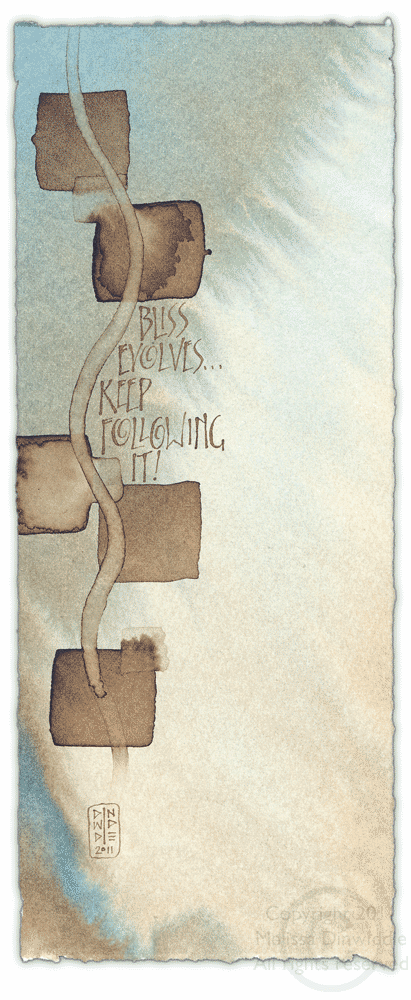
The prescription to follow your bliss can seem ridiculous when you don’t have one. I understand. I’ve been there. But even if you don’t have a bliss, you can follow something.
Do that enough, and you may find yourself gradually wandering into love with one of those somethings, until *wham!* passion!
But watch out — you may also find yourself forgetting that your relationship with your passion was ever less than passionate.
Then you’ll have your own eureka story lie to tell.
I’m curious, if you have a (or more than one) life passion, was yours also an experience of gradually wandering into love?
PS — Pssst! Know someone who might benefit from seeing this today? Pass it on!
When I was 13, I stopped doing art.
Not that I gave up on all creative pursuits. I played viola in the school orchestra, and at 16 I discovered dance, my first Bliss, which I pursued with a manic passion, until I was permanently sidelined by an injury a few years later (long story).
But drawing? Painting? Making cool stuff with my hands? That, it seemed to me at the time, was the purview of other folks.
Meanwhile, while I was focusing on other things, my friend Karen was honing her already-significant drawing and design skills. A visit with her to the art classroom in high school, where other classmates’ works lined the walls and shelves, seemed to offer irrefutable evidence that art was something other people had a monopoly on.
They were the artists. Therefore (or so I believed), I wasn’t.
I forged ahead, through college and grad school, with a rather zombie-like doggedness, and pretty much gave up on my creative spirit. (Academia has a way of sucking creativity out of you.)
The inner creative child cannot easily be suppressed forever, though, and thankfully, finally, at 28, I “re-discovered” mine. She was not dead, as I’d almost come to believe, but just needed some permission and play to spring fully back to life.
I gave my inner creative child art and creativity classes in every form and genre I could find — writing, painting, drawing, ceramics, calligraphy — and that last one, calligraphy, bit me hard. I was quickly hooked, immersed myself in the pursuit of mastering this art form, and gradually, over the years, I turned it into my livelihood.
The “Not An Artist” title, I discovered, had never been an accurate one, although I should say that it took me a number of years to fully claim the title as “Artist” (a fact which deserves, and no doubt will get, its own blog post another time).
Now I can only shake my head and laugh sadly at the pain those years of denying my creative spirit caused me. I now refer to the time from age 13 to 28 as “my 15-year hiatus.”
I’d like to tell you that I and my inner creative child lived happily ever after from that point on, but I’d be lying.
As I share in the video above (and in this post), the reality is that, after I had finally reconnected with my creative spirit, it didn’t take long for the demon of Resistance to rear its ugly head and try and separate us once again.
What helped? That time around (because, dear reader, I hate to tell you, but Resistance comes in a multitude of costumes and is nothing if not persistent), what brought me and my creative spirit together again was the book The Artist’s Way, by Julia Cameron, now known the world over as a classic in the realm of helping people reclaim their innate creativity.
Julia gave me permission to play. To experiment. To discover what was inside me to discover. To be okay with and embrace my own, unique way of dancing with my inner muse.
I still think fondly of that time of re-emergence, and Julia Cameron has my undying gratitude.
If I were to do it all again, though, this time around I wouldn’t go it alone. I’ve learned how powerful it is to go through a transformative process in community with others on the same path.
The really cool thing is that I do get to do it all again. We all do.
I don’t mean re-reading and re-doing The Artist’s Way (although that’s certainly an option!) I mean allowing my creative spirit to grow, re-emerge, shed its skin, become more truly me and shine ever more brightly.
And the best part of all is that now, oh-so-many years later, I get to guide other people on their own journeys of creative re-discovery. That’s my main focus here, in the Circles I run, in my coaching practice, and in the courses and workshops I’m brewing up.
Speaking of which (see how I did that?), I’ve got just such a course coming up in about a month, which I’m super-excited to be co-teaching with my brilliant partner and fellow artist and coach, Kelly Hevel. It’s called Playing Around Online, and it’s our way of introducing ourselves, and our new joint venture, to you.
(It’s also our online version of what we’re brewing up in “3-D”: creative immersion vacations in inspiring locations around the world! Coming September 29-October 7, Playing Around Istanbul — a week-long creativity retreat in (wait for it…) Istanbul! Yeah, you seriously want to mark your calendar and start saving your pennies for that one. But back to Playing Around Online…)
For 12 weeks, from March 14-May 30, we’ll gently lead you in an ongoing “playdate for the big kids,” where you’ll get to shed your inhibitions, try out new techniques, inject your personality into your art, writing, and creative crafts — and learn to use your unique life story as inspiration!
I’ll be sharing more about Playing Around Online over the coming weeks (including the “grand opening” of our website). For now, I invite you just to notice how your body and soul respond to the idea of 12 weeks together, attending to your creative spirit.
Excited? Scared? Raring to go? Resistant?
Any one of those reactions could be your inner creative telling you it’s time for this.
No need to make any decisions right now — just notice. And pay special attention to that voice of Resistance, which might be saying something like “You’re not an artist!” or “You don’t deserve this!” or “You don’t need this!” or “What a ridiculous waste of time!” or “What a ridiculous waste of money!” or “You’re not good enough!”
Um, yeah. (All voices I’ve heard in my own head, by the way, when seeking to dance more fully with my own inner muse. And pretty reliable indicators that whatever is making them shout so loud is probably exactly what I need!)
Ready to battle that Resistance demon? Mark your calendar and fill in the form below to come to the free tele-party* that Kelly and I are hosting on Wednesday, March 7, from 10:30-noon PST, Living the Creative Life: Fact vs. Fiction. We’ll be sharing the stories of our own creative journeys (including how we’ve battled the Resistance demon!), exposing the myths and truths around what it means to live a creative life, and inviting you to join in what we hope will be a lively conversation.
Plus you’ll get a chance to win a free spot in Playing Around Online — how cool is that?
If you’re even the slightest bit interested, just fill in the form below (or if you’re reading this on email and the form isn’t working, just click here to fill out the online form) and we’ll keep you posted on how to register for the free tele-party and the chance to win that scholarship spot.
I hope you’ll join us on March 7th!
What forms has the Resistance demon taken in your life? How have you succeeded in battling it?
PS – Pssst! Know someone who might benefit from seeing this today? Pass it on!
* What’s a tele-party? It’s like a party of creatives (including “wannabe,” and think-they’re-not-creatives), over the phone. We could call it a teleseminar, but that sounds so “markety,” dry and academic — which we definitely are not!
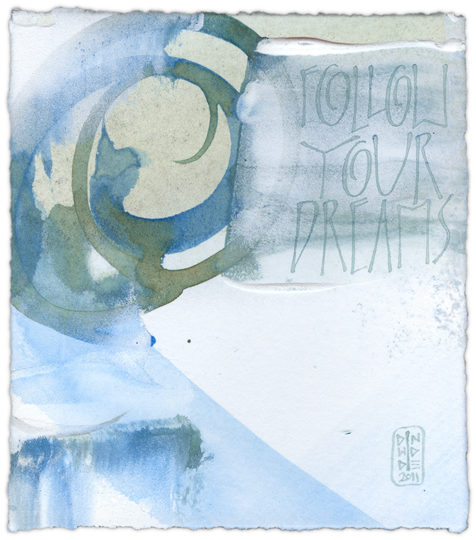 What did your parents model to you about creative Bliss?
Was it seen as important? Or an impossibility, to be shoved aside and boxed away, in favor of more “practical” things?
There’s a legend in my family that when my parents met, my father wanted to be an actor, but that he closed the door on that dream when my mom said she wouldn’t marry someone with the kind of unstable income that an acting career was sure to bring.
How serious my dad was about pursuing the acting bug that bit him in college I’ll never know. Maybe it was a passing phase. Maybe he would have been happier doing community theater and making his income elsewhere anyway. I know he loved the high-tech career he went on to build, and I certainly had a more stable home life with an engineer/systems analyst father than I imagine I would have had with an actor father.
And yet.
What do we model for our children when we “reneg on our gifts,” as my friend B puts it? Her own mother only pursued her inborn talent for art once the kids were all grown and gone, and I could name several other friends off the top of my head whose parents closed the door on their creative dreams in order to support their families.
What message does that kind of self-denial give to a child with a burning hunger to create?
Understand that I’m not casting blame or judgement on any of the adults who made decisions they saw as necessary to support their families. We’re dealt the hand we’re dealt, and we can each only do what we think is right at any given moment.
I am, however, asking us — now — to think about it.
Many of us have the luxury to create lives our parents and grandparents couldn’t have dreamed of. My immigrant great-grandparents escaped pogroms, sailed in steerage across the Atlantic and struggled to survive in a new world so that their children would have a better life. Generations later, I’m grateful for the opportunities in my world that have allowed me to focus on building a business that sustains me financially, nourishes me creatively, and also changes the world.
Imagine!
Time, place and good fortune have made it a helluva lot easier for me to follow my Bliss than it was for my antecedents.
Although “the economy” is in the dumps and this is perhaps the first generation that hasn’t almost automatically surpassed their parents’ standard of living, we still have opportunities that simply didn’t exist for my ancestors in the shtetl.
For most of us, the path to following your Bliss has never been more accessible.
For many people nowadays, at least those with the resources to read a post like this, what’s really getting in the way is not drought, or famine, or living in a war zone, it’s mindset.
The idea that we don’t deserve to pursue our creative passions. Or that doing so is frivolous and unimportant.
If that wasn’t what we were told in words, it’s often what we were told in actions.
Now let me ask you: if the adults in your life boxed up their dreams, imagine, how might your life might be different now if you’d witnessed them making time and space to follow their Bliss instead?
It must be said that a parent who follows her or his Bliss to the exclusion of effectively caring for their family is no better a model than one who closes the door on that Bliss entirely. But there has to be a balance, don’t you think?
—
This is on my mind today because of an email I received from a friend.
A little background:
A couple of weeks ago, in this post, I introduced my friend and business partner, Kelly Hevel, and announced that we’ll be co-teaching a week-long creativity retreat in Istanbul (yes, as in Turkey!) in the fall, and a 12-week online course coming up later this month, Playing Around Online (starting February 29! UPDATE: we’ll be holding a free seminar, Living the Creative Life: Fact vs. Fiction, on March 7, and the first official class meeting will be on March 14, running through the end of May).
We also announced a contest to win a scholarship to do Playing Around Online for free — all that was required to enter was to answer a survey as to time and logistical preferences, and answer the question “Why do you want to win the scholarship spot?”
The response was terrific, and the scholarship entries were all so wonderful it was really hard to pick! Among the entrants were several clients I’ve absolutely adored working with, friends from the online world, and friends from the 3-D world.
The truth is, I wanted all of them in the course!
But we’re running a business, not a charity, and our goal for Playing Around Online is to make money while we make a difference, so that we can do even more cool stuff to change the world. So we gritted our teeth and determined to limit the winner to one.
[Note: There will actually be a second opportunity to win a scholarship to Playing Around Online, plus other ways to potentially do the course for free, so be sure to subscribe using the form at the upper right and stay tuned!]
Ultimately, we chose the person whose entry most spoke to us as embodying the qualities we’re most looking for in our class participants, including:
Here’s the winning entry, from Christine:
It would be so cool to see what my life would be like during the 12 week journey. I am a full-time mum, an emerging full-time artist desperately trying to absorb everything out there in cyberspace to be successful while trying to find what kind of artist I’m going to be. To actually commit to “play” for that length of time. I have a hard time “playing” as my days are so structured trying to manage family, daily paintings, and coming up with a style to jump off from and produce a killer body of work, (I’m taking myself waaaay to seriously!) and I think it would force me to loosen up (omg! scary thought!) and remember why I got a second chance in life to rediscover my first love of making art and not caring who likes it or buys it. 🙂
Kelly and I loved that Christine is already imagining how her life will be changed by the course. That she’s working hard to figure out what she needs to figure out. That she knows she has a hard time playing and is ready to change that. That she understands the importance of making art for the love of it, even while she’s trying to figure out how to make a living from it.
I don’t actually care whether Christine — or anyone — wants to be an artist, or make a living from their art.
And to be clear, Playing Around Online is most definitely NOT limited to artists! As it says on our not-quite-live website,
We know you are supposed to “target your niche”, but really, Playing Around Online is for everybody! If you are interested in making art, or exploring your creativity, and you’re ready for some transformation, you are hereby given permission to come. No expertise required.
We aim to create a safe place to create, period. These are not master classes and the focus is not on perfecting your technique. Our name pretty much says it all, we want you to play and if you want us, we want you!
Please note: experienced artists and creators are welcome as well. We think everyone should take some time to play.
So, no, it doesn’t matter to me whether you want to make art, or make a living from that art. What I care deeply about is that she (and YOU, and everyone) follows her creative Bliss, whatever that Bliss might be.
What prompted me to share this today was an email from another entrant, and friend of mine:
So glad to read that a busy and full-time mum is giving herself permission to follow her art, and that she won! A mother (or father) who follows her (his) bliss is a MODEL for her child/children. Her/his following her/his passion speaks volumes to a child.
Amen.
It moved me so much that this person, who also really wanted that free scholarship, could look past the fact that she didn’t win, and celebrate how wonderful it is that the person who did win will model for her kids the importance of keeping your Bliss at the center of your life.
Yes!
I don’t have children, but I know that following my passion speaks volumes to those who know me, regardless of their age. It’s ultimately the reason why this blog exists.
And I intend to keep doing it.
Now your turn. What do you think? Did your parents follow their own Blisses? How did their model affect your mindset about your creative passions? And what are you doing now to feed your own creative hunger and follow your Bliss(es)?
PS — Pssst! Know someone who might benefit from seeing this today? Pass it on!