
/
RSS Feed
 Do you avoid creating because it feels self-indulgent, even selfish? Here are 8 reasons — including SCIENTIFIC ones — why it’s not self-indulgent, but absolutely essential for you to feed your creative hungers. [Read more…]

Do you avoid creating because it feels self-indulgent, even selfish? Here are 8 reasons — including SCIENTIFIC ones — why it’s not self-indulgent, but absolutely essential for you to feed your creative hungers. [Read more…]
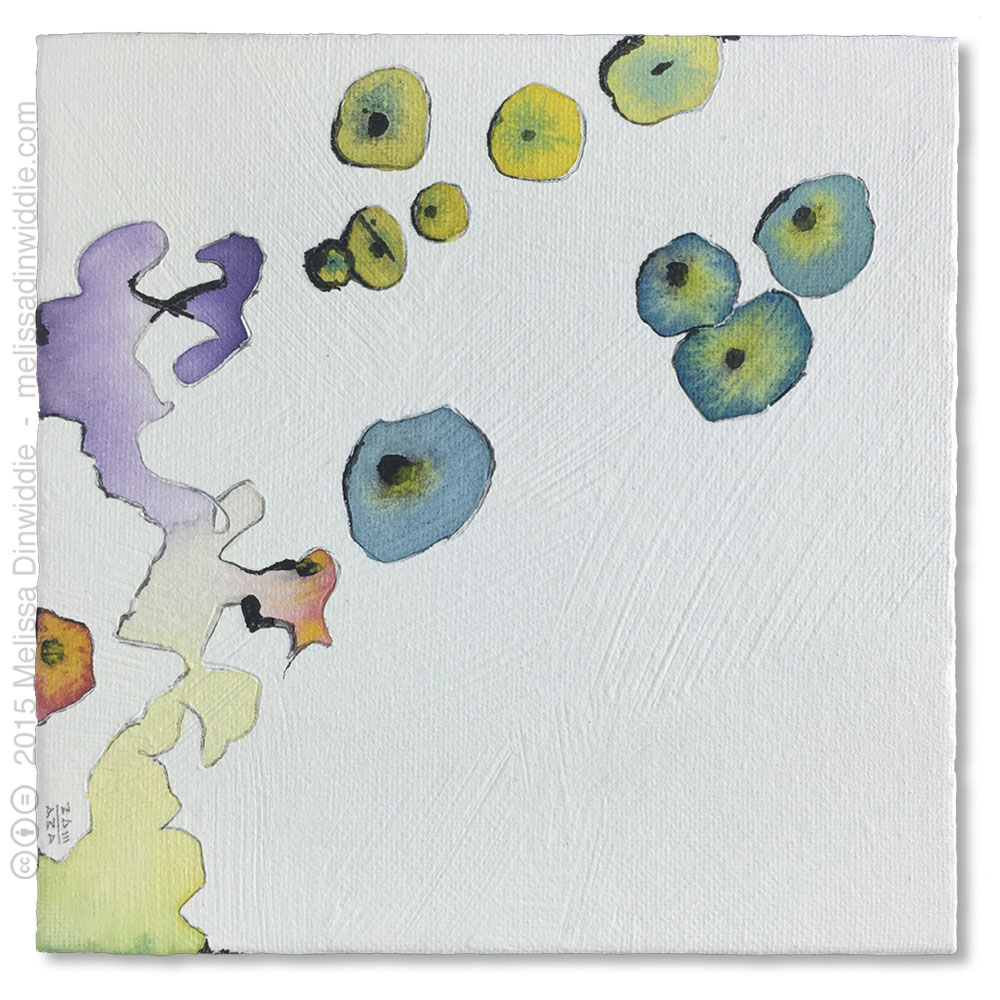
Lately, in my morning meditation sessions, I’ve been doing a mental happydance every time I notice myself absorbed in and distracted by thought.
Huh? Isn’t the goal to focus on my breath and not let my mind run and wander?
No, in fact the goal is mindfulness, and guess what: when I notice that I’m thinking again, that is mindfulness in action.
That moment of noticing is not an opportunity to beat myself up for my monkey mind; that is the golden moment, because every time I notice myself thinking, I now have the opportunity to simply let that thought go, and return to my breath. [Read more…]
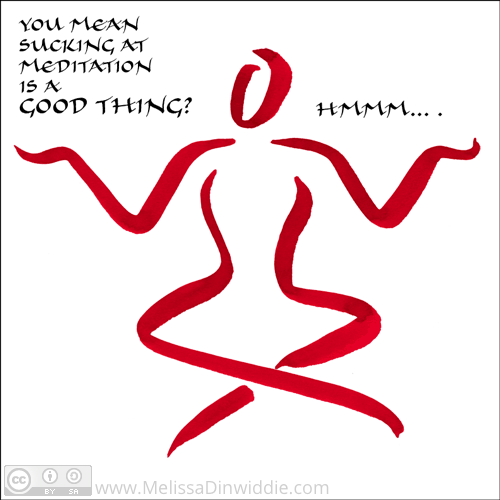
From the archives! I talk about meditation a LOT, so it seemed like this post, originally published on August 2, 2012, was due for re-publication. In Your Big, Bold, Creative Life Academy meditation comes up in almost every class, because it is just such an astonishingly powerful tool to help lean into fear, avoid getting sucked into distractions, practice self-compassion, and so much more! I hope I inspire you to try it yourself, if you aren’t already a meditator. ~Melissa
I am a meditation moron.
I can’t [Read more…]
 Of the two of us, MB is definitely the one with the more “even keel.” Compared to him, my moods are rather like a roller-coaster: high highs, low lows, and a lot of swerving in between.
That said, I’m rarely what I would call depressed.
I might feel down for a short time, but the life-sucks-and-I-don’t-want-to-do-anything-but-read-novels-in-bed-and-the-idea-of-dealing-with-existing-utterly-exhausts-me-and-I’d-like-to-just-disappear kind of depression thankfully doesn’t happen very often.
So I was rather surprised when I felt just that the other day.
My mood had been on a bit of a down trend for a few days, and then I woke up and felt, well, pretty miserable. The temptation was very strong to wallow in the feeling, pull the covers over my head, and shut out the world. But I resisted that temptation.
Instead, I got mindful.
As I like to say, self-awareness + self-compassion = the key to everything good (click to tweet this!), and so I consciously practiced some of both.
Instead of being driven by my depressed feelings, I took a metaphorical step back, and noticed them.
“Hunh,” thought I, “I notice feelings of depression. How fascinating.”
I acknowledged that this kind of feeling was rare for me, and wondered what might be causing it. When I remembered that my period was drawing nigh, I had an explanation that made sense. I don’t normally exhibit PMS symptoms, but very occasionally I have noticed an unusually down mood before my period.
Having an explanation didn’t change my emotional state — I still felt lousy — but it lifted some of the fear that had been creeping in, that I might (egad) get stuck this way.
The biggest thing this mindfulness approach did, though, was to create a separation between me and my emotional state.
Instead of just sitting in the depression, a part of me was able to step outside of it and just notice it. I still felt depressed, but mindfulness gave me some breathing room and a chance to choose my response to the feeling, rather than just sinking into it.
One possible response — and definitely the most appealing one at the moment — was to just spend the day in bed. But in the space opened up by mindfulness, I was able to instead ask myself if that was what I really wanted to do. Would spending the day in bed, reading novels and sleeping, make me feel better or happier at the end of the day?
Unlikely. What makes me happiest (as someone with Achiever as my #2 Strengthsfinder strength) is a sense of accomplishment. So spending the day in bed would have a much higher chance of making me feel more depressed, rather than less, at the end of the day.
So I drew up a list of all the stuff I really wanted to get done, and I asked myself which were the THREE things on that list that I’d feel most pleased to have checked off by the time I went to bed, and most annoyed to have NOT checked off.
Then I pulled myself out of bed, still depressed, and got on with tackling those three things.
Was I magically un-depressed at the end of the day? No, I still felt pretty lousy. But I also had a sense of accomplishment, despite the depression. And I was able to see that the feeling was very likely transitory. It did not define me.
This is the “magic” of self-awareness.
The Universe acts in mysterious ways. The day that I started to write about this experience, I happened to tune into my local radio station right when they were airing a live interview from months back with Jon Kabat-Zinn, the originator of Mindfulness-Based Stress Reduction, or MBSR.
He was being interviewed by Kelly McGonigal, author of The Willpower Instinct, and teacher of The Science of Willpower, a Stanford Continuing Studies course which I’m enrolled in right now.
And it just so happens that I’m running a Willpower Instinct reading circle inside the Creative Ignition Club, starting on Thursday! (There’s still time to join in.)
I’ve never studied MBSR, I’d never even heard of it, but I resonated with Kabat-Zinn immediately. What he and McGonigal were discussing was exactly what I had been practicing the day before, when I was so depressed!
We don’t reduce stress (or depression, or any emotional state) by resisting it, or trying to stuff it away, but rather by noticing it and allowing it to be.
Mindfulness, it turns out, is also a powerful willpower booster. When we can act mindfully, we’re less likely to be driven by unconscious impulse.
The impulses don’t go away (I still want a cookie, I still want to lie in bed instead of getting up and getting on with my task list, I still feel depressed, etc.), but we’re better able to access that part of our brain that is in charge of getting us to do the “harder thing,” the thing we really want in the long run.
Hence my ability to get out of bed, even on a highly depressed day, and get stuff done.
The first piece of homework McGonigal gave us in The Science of Willpower class was to meditate five minutes a day* — one of the best ways on the planet to not only practice mindfulness, but to strengthen your willpower throughout the rest of your day.
(Given that I’ve been meditating daily since last April, ten to fifteen minutes every morning, my homework was kind of a breeze. :))
I can only wonder if I’d have been able to respond with such self-awareness to waking up depressed a year ago, before I started meditating.
Of course I’ll never know, but what I do know is that the lessons I’ve learned from The Willpower Instinct have proven hugely helpful. I’m excited to be going over this material again, little by little, over a period of several weeks, both in class with McGonigal, and in my reading circle inside the Creative Ignition Club. The book was a quick read, but there’s just too much good stuff to absorb in a weekend!
I’ll let you know how it goes.

*That, or get regular, consistent (read: more) sleep. Also a powerful willpower booster.
NOTE: This post is in no way intended to give the message that mindfulness is a cure-all for clinical depression! I was not clinically depressed, and I’m certainly not a medical professional. Simply sharing my own experience.
 Want to learn tools for making it easier to leap past distractions and get to your creative thing? Join the Creative Ignition Club and you can be part of our Willpower Instinct reading circle. Click here for all the details. The cart closes after Wednesday, FYI, so if you want to join in, now’s the time.
PS — Pssst! Know someone who might benefit from seeing this today? Pass it on!
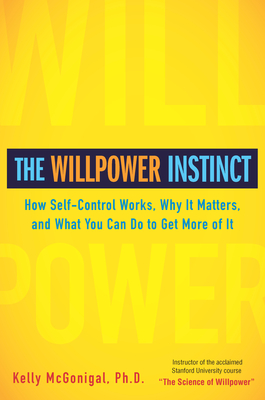 I’m reading this great book right now, The Willpower Instinct, by Stanford psychologist Kelly McGonigal — research for my upcoming program to get women creating, Time to Glow.
There’s such great stuff inside, this book should be required reading for any creative. (In fact, I’m thinking of creating a online course/study group/support group to dive deeper into the book, but that’s down the road…)
Anyone who has a calling to create faces a daily choice about whether to spend their limited time and energy on what really matters to them… or on the bazillion other things that pull on their proverbial sleeves. With so many distractions in our lives, learning to boost and leverage willpower is an essential skill.
In one of the early chapters of the book, Dr. McGonigal looks at why we keep putting off the thing we really want to do. (Sound familiar?)
You know how most exercise equipment people buy ends up gathering dust? Well, two marketing professors were curious about the mistakes consumers make in predicting how much they’ll use their exercise equipment, and decided to study this phenomenon.
They asked a whole bunch of people to predict, “How many times per week (on average) will you exercise in the next month?”
Then they asked a whole bunch of OTHER people the very same question, but with one important preface: “In an ideal world, how many times per week will you exercise in the next month?”
Turns out that everyone assumes an ideal world — the groups’ estimates were no different.
McGonigal writes:
We look into the future and fail to see the challenges of today. This convinces us that we will have more time and energy to do in the future what we don’t want to do [and I would add — what we want, but are not quite yet willing or ready to do] today. We feel justified in putting it off, confident that our future behavior will more than make up for it.
It gets more interesting, though.
Perhaps, thought the researchers, prompting more realistic self-predictions would make a difference.
Nope. When the experimenters gave people the explicit instructions, “Please do not provide an idealistic prediction, but rather the most realistic prediction of your behavior that you can,” those people showed even more optimism about their behavior and reported the highest estimates yet!
Not surprisingly, when the researchers invited these optimists back for a reality check, they reported that the number of times they had actually exercised was lower than predicted.
“People had made their predictions for an ideal world,” writes McGonigal, “but lived through two weeks in the real world.”
And it doesn’t stop there. McGonigal continues:
The experimenters then asked these same people to predict how many times they would exercise in the next two weeks. Ever the optimists, they made estimates even higher than their initial predictions, and much heigher than their actual reports from the past two weeks. It’s as if they took their original predicted average seriously, and were assigning their future selves extra exercise to make up for their ‘unusually poor’ performance. Rather than view the past two weeks as reality, and their original estimates as an unrealistic view, they viewed the past two weeks as an anomaly.
In other words, people use positive expectations — optimism — to justify present inaction.
Kinda depressing, huh?
Thankfully, there are tricks for handling the down side of optimism.
Behavioral economist, Howard Rachlin, offers one: when you want to change a behavior, aim to reduce the variability in your behavior, not the behavior itself.
Huh?
Rachlin did studies with smokers, asking them just to try to smoke the same number of cigarettes every day, not to try to smoke less. Guess what? Those smokers actually decreased their overall smoking.
Writes McGonigal:
Rachlin argues that this works because the smokers are deprived of the usual cognitive crutch of pretending that tomorrow will be different. Every cigarette becomes not just one more smoked today, but one more smoked tomorrow, and the day after that, and the day after that. This adds new weight to every cigarette, and makes it much harder to deny the health consequences of a single smoke.
So how does this apply to your creative thing?
Just this: aim to reduce the variability of your creative practice. Instead of asking “Would I rather do this today or tomorrow?” ask yourself, “Do I really want the consequences of always putting off my passion?”
Then let me know how it goes.
Tell me, how will you apply this willpower lesson to your own life?
 If you’re ready to stop putting off your passion, join me in my program for women, Time to Glow, starting May 24.
We’ll cover more tools for turbo-charging your willpower, for moving forward despite fear & doubt, for taming that Inner Critic Gremlin grumbling away at you that “you’re not good enough” or “you don’t deserve to create” or “everything/everyone else is more important,” and a whole lot more.
If you’re ready to create what’s calling you to be created and share it with the world before it’s too late, click here to join a circle of amazing, generous, warm-hearted women. We’re waiting to welcome you.
Early bird pricing ends at 9pm PDT tonight, May 11. Click here to learn more about the program and to take your place in it.
PS — Pssst! Know someone who might benefit from seeing this today? Pass it on!